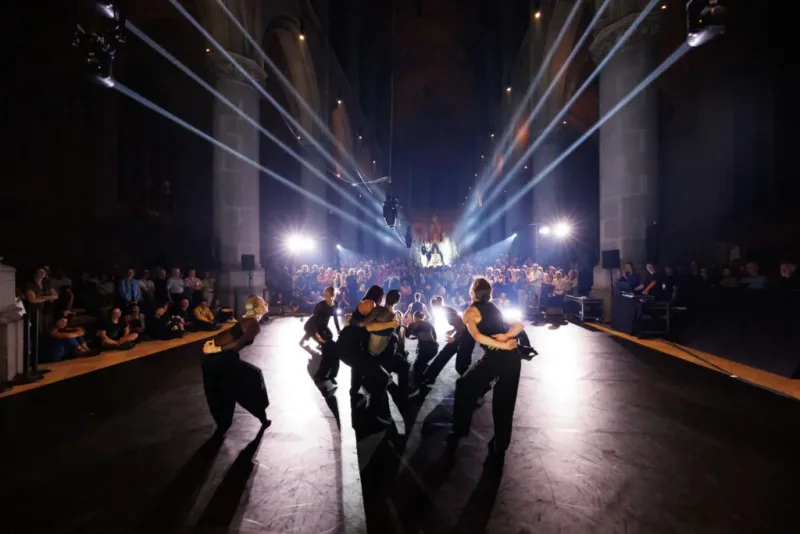
Bucharest will host How to Web Conference 2026 from October 6 to 8, drawing over 3,000 founders, investors and technology leaders. The gathering serves as a crucial networking hub where many founders encounter investors for the first time—whether during keynote presentations, in the Expo Area, or through scheduled one-on-one sessions arranged via the conference app. The previous year's event alone facilitated more than 9,000 business conversations.
The conference kicks off on October 6 with the Investors Summit, a dedicated day for more than 250 international and regional venture capitalists, limited partners, executives and founders. The gathering examines how artificial intelligence is reshaping investment strategy, what criteria define investable companies today, and where emerging opportunities lie across the continent. Participating funds include Atomico, Creandum, Eurazeo, Notion Capital, Credo Ventures and Dawn Capital.
To help founders prepare for these crucial conversations, we spoke with three investors attending the conference about what captures their attention and what causes them to lose interest. Will Orde, a partner at Passion Capital, typically makes the earliest-stage bets in ambitious software and financial infrastructure companies. Raluca Ragab leads growth-stage investments at Eurazeo Growth across AI, data and security sectors, having previously worked with scale-ups including Mobileye and WalkMe as they moved toward New York listings. Piotr Bukański, a London-based principal at Acurio Ventures, focuses on the UK, Germany and Central and Eastern Europe for the Spanish-based, operator-led fund, and established a 200+ member London network connecting CEE founders with venture investors.
Green flags founders don't want to miss
Orde emphasizes that Passion Capital backs founders from day one, making founder quality paramount. He seeks individuals with "serious level of grit & determination, who get stuff done". Most crucially, he values "The kind of people who don't take no for an answer, who receive 'it can't be done' as a challenge to overcome."
Bukański similarly prioritizes founder drive: "That slightly obsessive thing where a founder can't stop thinking about the problem."
How does this obsession reveal itself in conversation? Bukański offers a telling example: when a founder responds to a single question by exploring three layers of depth beyond what was asked. This intensity proves difficult to manufacture artificially—it emerges only when someone has spent months or years immersed in a domain or wrestling with a specific challenge. "They know the details cold, and you can tell it's not a pitch, it's just what they believe."
"The market will move, the product will change ten times over, but that kind of depth is hard to fake. That's why I pay less attention to a deck or an outreach email. I want to meet the founder to understand who they are and why they do what they do, what drives them."
Piotr Bukański
The initial exchange between founder and investor carries particular weight. Ragab identifies her strongest positive signal as a founder who anticipates her questions before they are posed. While most founders prepare responses to predictable inquiries, those who dig deeper—as Bukański noted—have already subjected their own approach to the same rigorous scrutiny an investor would apply. Ragab observes that even incomplete answers matter less than demonstrating thoughtful engagement with challenges. When founders outline strategies they have tested and show they have grappled with obstacles, it "shows they have depth of understanding about what they want to do".
Founders, be honest
The manner in which founders respond to questions carries weight, particularly when they lack definitive answers. Bukański stresses that honesty and transparency rank nearly above all else: "They're what long-term relationships are built on, and that's what we're actually looking to create."
"I can understand a founder rounding up a little, that's part of selling a vision that isn't fully real yet. What kills it is a straight lie; a fake customer, made-up numbers, a deal that was never actually signed, or several small lies piling up. There's a real line between ambition and dishonesty."
Piotr Bukański
Orde identifies this behavior as an immediate dealbreaker: "The founders who don't know the detail and then bluster to cover it up… We want to back founders who'll listen, so it's totally fine to say 'we haven't thought about that in depth' and come back at the next call with more details."
Ragab similarly rejects founders who "someone [is] trying to downplay previous deviations from the plan. It shows lack of intellectual honesty."
"Things not going according to plan is expected, and explaining them away too easily reveals a founder that is not intellectually honest."
Raluca Ragab
Recipe for a mismatch
Beyond instant rejections, certain warning signs can derail investor interest even when other factors align favorably. Orde flags a technology-first pitch as a major concern. "It feels like they first decided what they wanted to build with, then looked around for a problem it could be applied to. First and foremost you've got to solve for customer pain."
Ragab's alarms sound when founders demonstrate poor listening skills or lack humility. "You can operate in the biggest market solving the biggest pain point with the right solution, but a founder that is not introspective, and who doesn't take feedback, will stumble and ultimately deliver at best a mediocre outcome."
One frequently overlooked disqualification factor is a poor fit between founder and investor. Bukański explains: "sometimes the round is simply too large for us to meaningfully participate in, given our check size or stage focus." Many founders neglect thorough research before approaching venture firms, making such mismatches common. However, not all investors communicate this clearly. Bukański takes care to be direct: "That's not a judgment on the founder or the company, so I try to be upfront about it as early as possible, out of respect for their time."
The How to Web Conference app enables founders to review attending investors and arrange meetings in advance, streamlining this preliminary research before in-person introductions occur.
The pitch that ticks all the boxes
How can founders sidestep red flags or trigger positive signals when presenting at How to Web Conference 2026?
Bukański advocates for ruthless editing: "cut your pitch down to what's essential. Even the parts that are hard to let go of. It's a natural instinct, you care about this business and every detail feels earned. But an overloaded pitch buries the strongest selling points under everything else."
Also, don't undersell your story and how you got here, at earliest stages it matters a lot.
Piotr Bukański
Ragab recommends founders approach company evaluation more strategically, not merely to refine their presentation. She proposes conducting a hypothetical post mortem:
"Ask yourself if this company failed, what would have been the reasons and then try to take each of those reasons/obstacles with some strategy."
Raluca Ragab
Orde concludes by reminding founders that performance improves through repetition: "your first pitch will be your worst pitch." Ultimately, "genuine passion for what you're building" proves decisive.
Where to master the pitch
How to Web Conference provides extensive opportunities for pitch refinement. Spotlight showcases 20 leading early-stage startups from Central and Eastern Europe through live presentations, one-on-one mentoring, investor connections and Expo participation.
Accelerate Fundraising delivers direct critique to founders preparing upcoming funding rounds, while Accelerate Sales connects teams with experienced sales leaders to strengthen market entry strategies. The Startup Stage, Startup Showcase and Demo Area expose products directly to investors and potential customers on October 7–8.
On Day 0, the Investors Summit provides dedicated space for investor-to-investor dialogue on early-stage conviction and growth-stage financing, new capital structures and underexplored markets. Attendance is restricted to those holding LP, Angel Investor, Investor and Executive credentials.
For founders, the message is straightforward: investors will be present in Bucharest, and they will pose challenging questions. The most effective pitches will arrive prepared with answers.
Source: The Recursive — Events tag