
Autonomous AI agents now operate on corporate devices using the permissions granted by whoever initiated them. The endpoint management infrastructure designed to monitor installed applications must now establish guardrails around what these agents can execute.
According to Gartner, task-specific AI agents will be embedded in 40% of enterprise applications by year's end, a dramatic jump from under 5% previously.
Current endpoint management systems have fallen behind this shift. Automox's survey of IT professionals revealed that only 46% of organizations have automated endpoint inventory and monitoring in place. The challenge extends beyond traditional software cataloging—it addresses a fundamental change in how software behaves on managed systems.
The Inventory Question Just Changed Shape
Historically, software inventory tracked a static question: what applications exist on a device. This approach sufficed because software remained passive until explicitly instructed by a user or scheduled task. Autonomous agents shatter this assumption. They examine local files, invoke external tools, call APIs, and execute sequences of actions independently between moments of human oversight.
The critical question has shifted from what is installed to what the agent is permitted to do and what actions it has taken. Cyberhaven Labs documented a 509% increase in enterprise adoption of endpoint-based AI-native applications over the past year. BeyondTrust's Phantom Labs measured year-over-year growth in AI agents within enterprise environments at 466.7%. While these figures derive from vendor data rather than comprehensive industry surveys, they indicate a consistent direction.
"Nobody gets everything right. But there's a difference between being wrong and being wrong everywhere at once," says Automox CEO Justin Talerico. "One bad call on one machine, you fix it and move on. That same call pushed across the fleet, suddenly you're not fixing a mistake, you're managing a crisis. Speed without scale is a learning curve. Speed at scale is a bet on your own judgment, every time. That's the part people don't consider until it's too late."
Justin Talerico, Automox CEO
The very characteristic that makes agents valuable—their ability to act without waiting for direction—becomes dangerous when left uncontrolled across an organization's device fleet.
These incidents inevitably reach endpoint teams, yet most lack comprehensive visibility into their infrastructure. Automox found that only 36% of respondents expressed high or very high confidence in their endpoint compliance visibility.
Agents Inherit Privilege, They Do Not Request It
An AI agent possesses no independent permissions. It operates under the identity and access scope of whatever entity launched it. This is BeyondTrust's emphasis regarding agent identity governance. The operating system cannot distinguish between commands typed by a human and those generated by a model. No vulnerability or exploit is required—the system functions exactly as designed.
Revocation represents the overlooked verb in most discussions of agent security. While inventory confirms an agent's presence and scoping defines its capabilities, fleet management tools uniquely address what occurs in the ninety seconds after a decision to disable the agent.
The OWASP Top 10 for LLM Applications categorizes this vulnerability as Excessive Agency, stemming from excessive functionality, excessive permissions, and excessive autonomy. Two of these three are fundamentally permission issues. Recommended mitigations align with endpoint policy: restrict what an agent can access, execute within the user's context, and require approval for high-impact operations.
Most organizations have not implemented these safeguards. IBM's Cost of a Data Breach Report 2026 found that 92% of organizations experiencing an AI-related breach lacked adequate AI access controls. Only 40% apply access controls to AI models and data at all. Teleport's 2026 Infrastructure Identity Survey quantified the difference: systems with least-privileged AI access experienced a 17% incident rate, compared to 76% for over-privileged systems.
The controls required to safely operate an agent are identical to those that secure any automated change. Automox's agent-facing Model Context Protocol integration includes a read-only mode that eliminates all write operations through a single configuration, tool access restricted by role, and correlation IDs logged on every invocation. This represents endpoint governance applied to an intelligent caller, not a new category of control.
Ungoverned by Default
Every governance model discussed assumes organizations know which agents operate on their infrastructure. This assumption does not hold. Verizon's 2026 Data Breach Investigations Report found that 67% of users access AI services through personal accounts on corporate devices. Employees now classified as regular AI users on corporate devices have grown to 45%, up from 15% a year earlier.
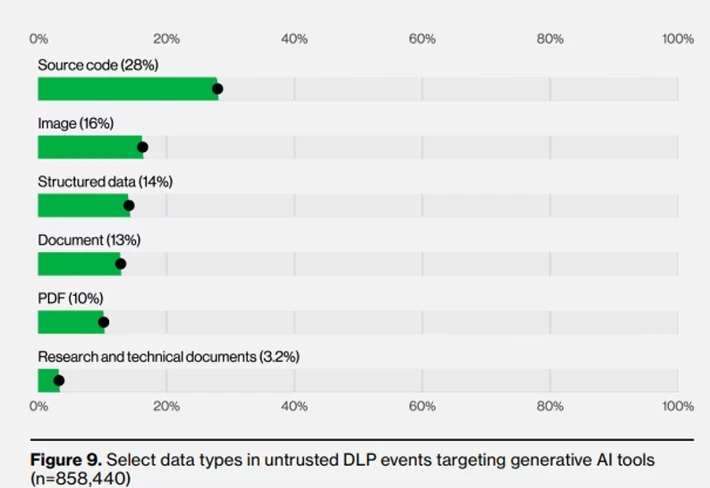
Shadow AI has become the third most prevalent non-malicious insider action in Verizon's data loss prevention dataset, representing a fourfold increase in percentage terms. Source code ranks as the data type most frequently exposed to unauthorized models. IBM's findings parallel this trend: shadow AI incidents more than doubled from 20% to 43%, and 68% of breached organizations lacked policies for managing or detecting it.
Blocking specific tools proves ineffective when the category expands faster than any blocklist. Endpoint teams reached this conclusion about unsanctioned software a decade ago, leading to the standard approach: inventory, policy, and removal capability.
Resistance to autonomous endpoint management does not stem from skepticism about its benefits. When Automox asked IT professionals what prevents them from implementing autonomous endpoint management, 46% cited data privacy and security concerns, 44% mentioned the risk of incorrect or unauthorized changes, and 36% expressed limited confidence in AI-driven recommendations. Their stated priority is safety mechanisms: automatic rollback was named by 43%, and the ability to pause or override by 42%.
Scope, Then Trust
The question of whether AI agents should fall under endpoint management has been answered by their physical location. The remaining question is organizational rather than technical: which team maintains agent inventory, who establishes permission boundaries, and how quickly can access be revoked when those boundaries prove inadequate.
Source: The Next Web