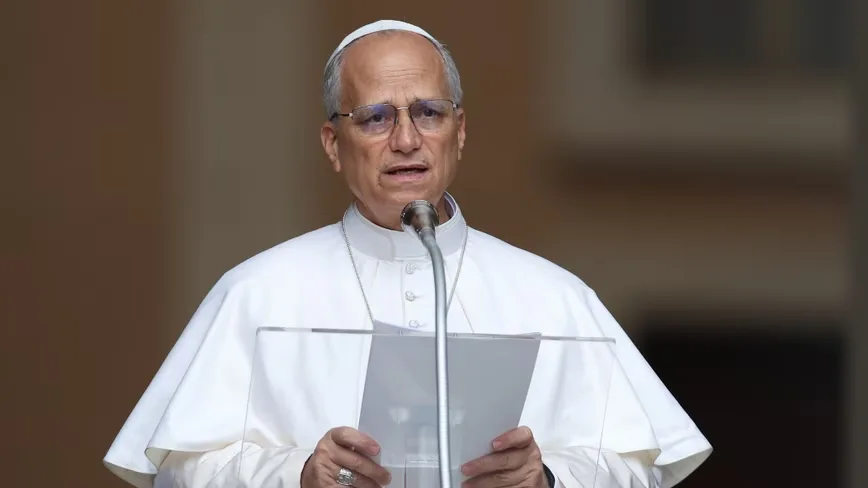
During a Friday gathering in the Consistory Hall, Pope Leo XIV addressed artists and curators convened by the Vatican's Dicastery for Culture and Education, making the case that an ontological gap separates human artistic creation from algorithmic output. His remarks arrive two months after the European Union's AI Act began mandating machine-readable markers on synthetic content, though artistic and satirical works face the lightest disclosure requirements.
The Pope contended that algorithms fundamentally lack what he termed "the spark of the human." He framed this distinction not as an aesthetic question but as a matter of ontology—what something actually is, rather than how it appears. The Church, he indicated, seeks to rebuild its partnership with artists and cultural bodies in response to these technological shifts.
The Pope's position echoes arguments he advanced in a May encyclical running to 42,300 words, which addressed the AI industry in language observers characterized as resembling tech regulation. Friday's address applied the same reasoning specifically to visual content.
What Europe's law actually requires
Under the AI Act, providers must embed machine-readable marks enabling detection of synthetic images, audio, video and text. Violations carry fines reaching EUR 15 million or 3% of global turnover. These labels became mandatory on 2 August, with a grace period extending until December for older systems.
The regulatory framework carves out exceptions for artistic and satirical work. Disclosure requirements for such content must not diminish the viewer's experience, and clearly unrealistic material falls outside the rules altogether. Text that a human has meaningfully reviewed requires no label.
Yet the marking system has already proven fragile. Within days of Anthropic shipping a text watermark on 2 August, removal tools emerged online, with one reaching 14,000 GitHub stars. A machine-readable flag documents production method but cannot establish the deeper claim the Pope is making—a statement about what something fundamentally is.
The gap between marking and meaning
The Pope's own camp has encountered this limitation firsthand. In July, when seeking to demonstrate that his book was human-authored, the Vatican turned to AI detectors rather than relying on any technical mark. The distinction he articulates—between human creation and machine generation—cannot be reduced to a label that a system can read.
The Pope's audience extends far beyond European regulators. The Church claims 1.4 billion members, a constituency vastly larger than any regulatory body. The stakes became apparent when the first AI-generated image to deceive the public at scale depicted a pope wearing a puffer coat—a moment that underscored both the technology's power and the public's vulnerability to it.
Europe has legislated the label. The Pope is asking for something the label cannot prove. Only one of these approaches carries legal penalties.
Source: The Next Web