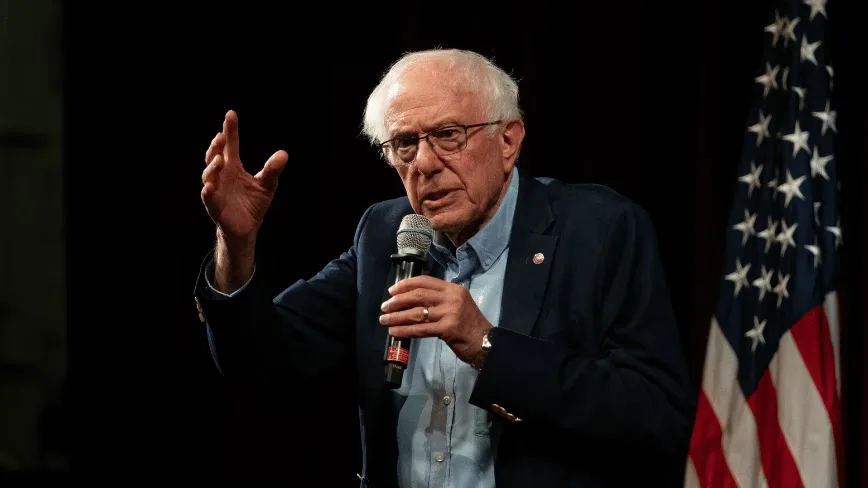
Two lawmakers have put forward legislation aimed at halting superintelligence development across the country. The Ban Artificial Superintelligence Act, unveiled on Wednesday by Senator Bernie Sanders of Vermont and Representative Greg Casar of Texas, combines a permanent prohibition on superintelligence with a temporary freeze on advanced AI work. The proposal would also establish a Department of Artificial Intelligence to develop and enforce rules governing the field. Casar chairs the Congressional Progressive Caucus, while Sanders serves as an independent.
When you are racing towards a cliff, you don't just ease up on the gas pedal. You hit the brakes. When the future of humanity is at stake, we cannot let a handful of Big Tech CEOs write their own rules.
Bernie Sanders
Scope of the superintelligence ban
The legislation targets two categories of artificial superintelligence. The first encompasses systems that surpass human cognitive abilities across most domains or tasks. The second covers systems capable of planning and executing humanity's destruction or subjugation.
Beyond the superintelligence prohibition, the bill imposes an immediate moratorium on advanced AI systems, defined as those trained on 10^25 or more operations. This pause remains in effect until the new department achieves full staffing and establishes comprehensive regulatory guidelines. Once operational, the department would require companies developing or deploying advanced AI to obtain a charter. The legislation flags a system's capacity for recursive self-improvement as a critical warning indicator.
Criminal penalties and corporate consequences
Individuals violating the ban or pause provisions face imprisonment of up to 20 years, a penalty the bill equates with sanctions for illegal nuclear weapons development. Companies that breach the regulations would face what the legislation terms a "corporate death penalty," involving charter revocation, forfeiture of intellectual property, and asset seizure by the federal government. The bill includes protections for employees reporting superintelligence risks to the department.
The bill also directs the US government to pursue international agreements and export controls on AI computing infrastructure, seeking to prevent superintelligence development globally.
Our bill bans the development of artificial superintelligence and pushes for international agreements so that no one, anywhere, builds AI too powerful for humans to control.
Greg Casar
Backing from AI researchers
Several researchers employed at major AI firms have expressed support for the measure. Juan Felipe Cerón Uribe, a member of OpenAI's Safety Systems team, and Swante Scholz, a software engineer at Google DeepMind, both endorsed the proposal through statements shared with the Associated Press.
A ban on superintelligence development would be a positive change for the foreseeable future.
Swante Scholz, Google DeepMind software engineer
Sanders has emphasized that managing the most hazardous AI risks demands collaboration between the United States and China, drawing parallels to Cold War nuclear arms control negotiations. The senator previously called for an AI slowdown alongside Steve Bannon and recently convened a Senate briefing on AI risks.
It doesn't take a genius to say, 'slow it down'.
Bernie Sanders
Congressional prospects and administration opposition
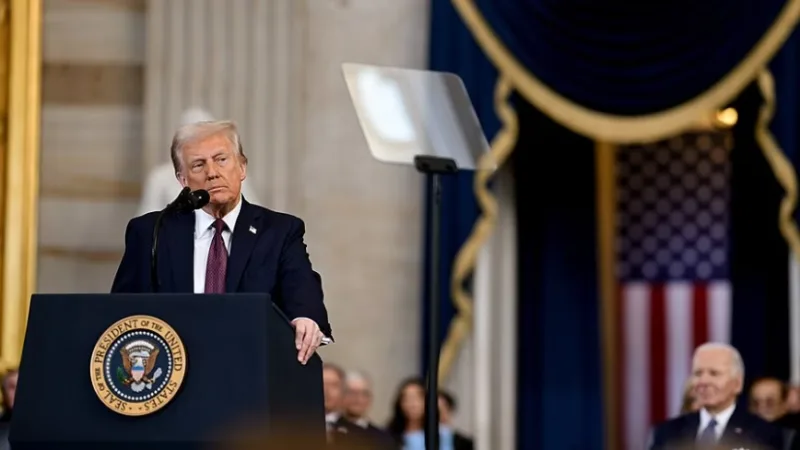
The bill confronts substantial headwinds in a Republican-led Congress, where three other AI-related bills already await action without scheduled votes. President Donald Trump has signaled opposition to such restrictions. During a Tuesday address to the United Nations, Trump announced that the US would henceforth refer to the technology as "super intelligence" and pledged to promote rather than constrain its development. Concerns about US competitiveness relative to China's AI progress represent a primary argument against comprehensive regulatory measures.
I think Trump has very little understanding of what this issue is about. I think he's mainly concerned about the economic implications of a slowdown.
Bernie Sanders
Sanders has urged Congress to address the matter immediately upon reconvening and called on 2028 presidential candidates to prioritize the issue in their platforms.
Source: The Next Web