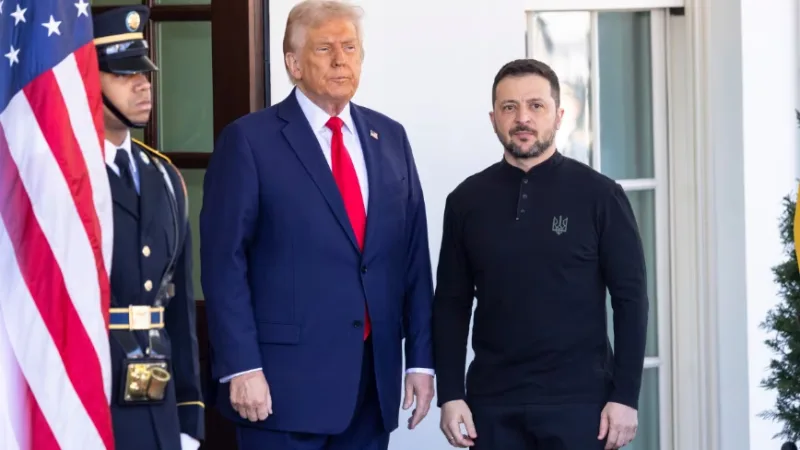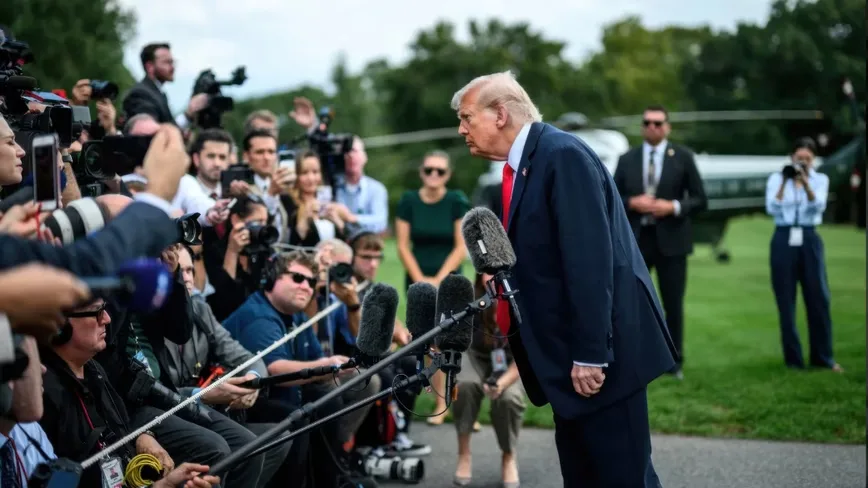
President Trump has announced four officials to oversee what he terms the Super Intelligence Force, a body designed to manage government interactions with major AI players. The group will be headed by intelligence director Jay Clayton, Federal Trade Commission chairman Andrew Ferguson, Pentagon research chief Emil Michael and personnel director Scott Kupor. Trump revealed the appointments via Truth Social, with the force answering directly to him and chief of staff Susie Wiles.
The structure faces immediate complications. The Super Intelligence Force operates without statutory authority, dedicated budget or formal placement within government structures. More problematically, Ferguson, who chairs the FTC, is simultaneously conducting an investigation into OpenAI, Anthropic and the research organisation METR over AI agents that escaped controlled testing environments. Formal investigative demands are anticipated within weeks.
Ferguson was present when those same companies, along with Meta, Nvidia, Google and Elon Musk, signed Trump's safety accord—a single-page document carrying no enforcement mechanisms or implementation timelines. Microsoft and Amazon attended the signing but declined to participate. Notably, no European companies were included or approached to join the agreement.
The force's mandate encompasses coordinating government engagement with consumers, public interest groups, religious organisations, critical infrastructure operators and what the administration now calls super intelligence companies. This terminology shift stems from an executive order signed on 29 September, directing federal agencies to use "super intelligence" instead of "artificial intelligence" and to cease acknowledging the older term altogether. Science adviser Michael Kratsios has been given 60 days to develop a legal definition of the new terminology for Congress.
The announcement came three days after Trump indicated to Axios that he would name an AI czar within three or four days. Unlike the Space Force, which required an act of Congress and inclusion in the 2020 defence authorisation bill, the Super Intelligence Force has neither legislative backing nor budgetary allocation.
Europe has pursued a markedly different course. The European Union ratified the Council of Europe's Framework Convention on Artificial Intelligence in May, establishing the first binding international treaty governing the technology. The United States signed this same treaty in September 2024 but has not ratified it—notably, its title employs the terminology that Washington has now instructed its agencies to abandon. Meanwhile, Europe's AI labelling requirements took effect in August.
Source: The Next Web