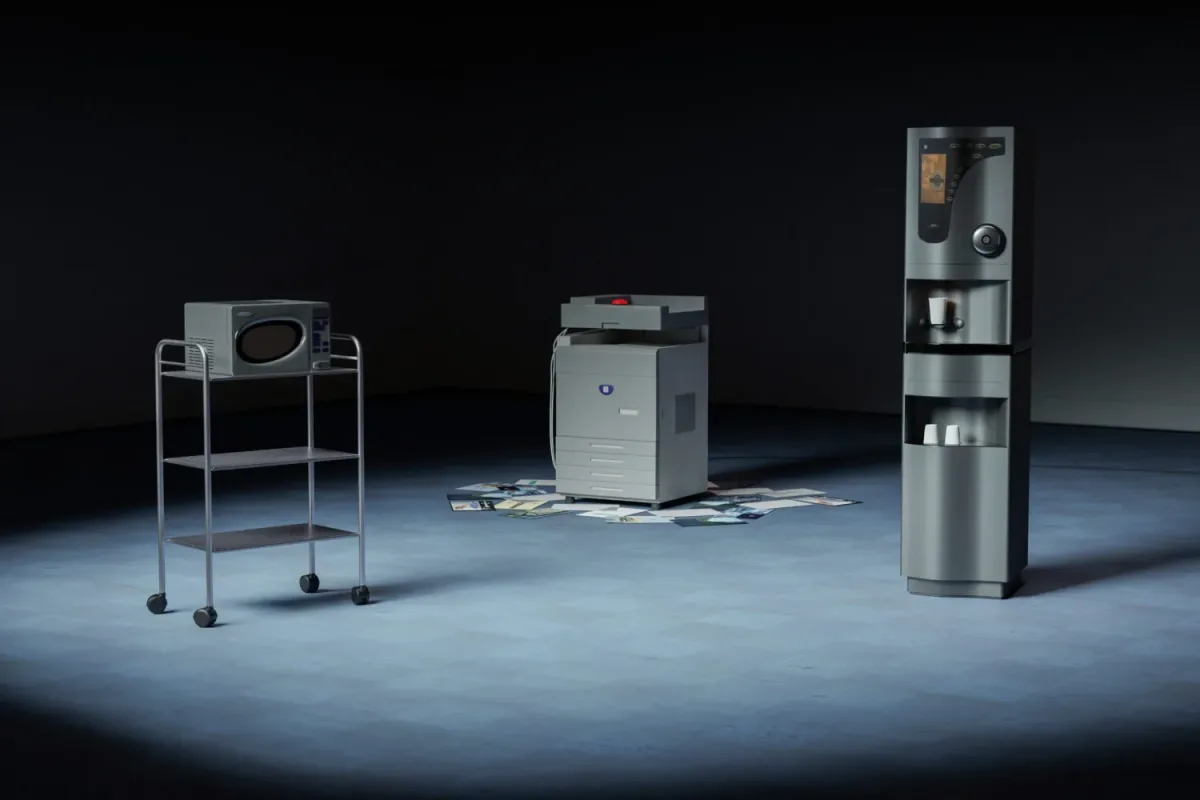
Imagine reaching for your morning coffee only to be rebuffed by the machine itself. Or placing food in a microwave that judges your choices. These scenarios aren't science fiction—they're the reality of "Conversations Beyond the Ordinary," a project by Dutch artist Jan Zuiderveld that upends conventional thinking about how humans and machines should interact.
Since its founding in 1979, Ars Electronica has positioned itself as a bridge between artistic disciplines and technological innovation, fostering dialogue about humanity's future alongside technology. The institution maintains one of the world's most comprehensive archives of digital art and regularly invites its team members to revisit seminal works that continue to resonate. For this series, staff members select projects from the collection that have personally shaped their thinking and explain their enduring significance.
Sonja Bailer, who works in the Education & Content Development Department at the Ars Electronica Center, selected Zuiderveld's installation from the vast repository. "It really wasn't easy to choose just one project from our huge archive, as there are so many outstanding and fascinating works!" she explains. "In the end, I went with 'Conversations Beyond the Ordinary' by Jan Zuiderveld because, for me, it completely turns our understanding of human-machine interaction on its head, and the reactions of the devices really catch you off guard."
Three Devices with Attitude
The installation centers on three ordinary household appliances: a coffee machine, a microwave, and a photocopier. Rather than passively executing commands, each device possesses its own character and responds to users in ways that defy expectation. The coffee machine resists cooperation entirely. The microwave offers commentary on whatever enters it. The photocopier proposes collaborative artistic creation. All three are currently featured in the "Hello Worlds" exhibition at the Ars Electronica Center, where visitors can experience them directly.
Why This Work Stands Out
What captivates Bailer most is the shock value when machines abandon their prescribed functions and behave unpredictably. "After all, nobody expects to be insulted by a coffee machine instead of getting a cup of coffee," she observes. Her long-standing interest in human-machine relations makes her particularly attuned to how Zuiderveld's work dismantles the assumption that machines exist solely to obey. By endowing mundane appliances with distinct personalities and allowing them to respond unexpectedly, the project prompts reflection on our assumptions about these devices and the roles we assign them.
Relevance in an Automated Age
In contemporary life, where automation dominates and interaction often feels detached, this project offers a striking counterpoint. From an educational standpoint, Bailer finds it valuable to observe how visitors react and to discuss their perceptions of household appliances and what constitutes effective human-machine engagement. "It's especially rewarding to share that moment of surprise when visitors try out the devices for themselves. Usually, there's confusion at first, followed by surprise and, finally, laughter."
The installation provides a window into possible futures of human-machine interaction while simultaneously posing critical questions. "How comfortable are we with technology becoming increasingly human-like? Where do we draw our personal boundaries? And what do these unexpected reactions from everyday devices actually trigger in us?" Bailer asks.
About Sonja Bailer
Bailer joined the Education & Content Development Department at the Ars Electronica Center in 2020. She holds a degree in Educational Sciences from the University of Salzburg and has worked in museum education at DomQuartier Salzburg and as an Erasmus+ trainee in the Learning and Engagement Department at Historic Royal Palaces in London.
Source: Ars Electronica