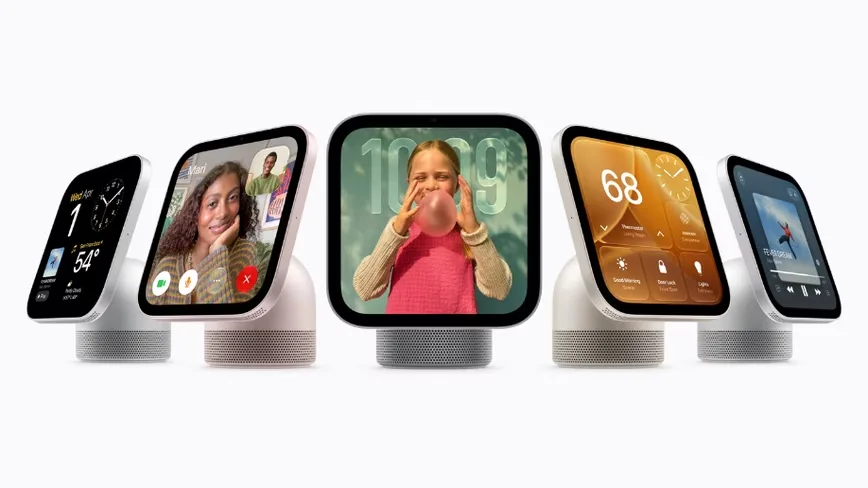
Apple has unveiled HomeView, a $299 smart display centred on Siri AI, with pre-orders active and deliveries beginning 13 November across eight territories. The European Union is notably absent from this list, a direct consequence of regulatory restrictions that have kept Siri AI unavailable on iOS across the bloc since June.
The company itself confirms this limitation in its pricing announcement, citing the unavailability of Siri AI in iOS within EU jurisdictions as the reason for the exclusion. The regulatory block dates back four months; in June, Apple stated that EU authorities had rejected every proposal submitted and provided no indication of when Siri AI might become available for iPhone or iPad users in Europe.
At the heart of the disagreement lies an interoperability question. Apple contends that the Commission's interpretation would compel the company to grant competing voice assistants the same privileged access to messages, files and purchase information that Siri currently enjoys.
European consumers have experienced similar restrictions before. The iPhone 18 Pro debuted in September at an identical $1,199 price globally, yet European buyers received the device without Siri AI capabilities and with a reduced battery capacity.
This time, there is no alternative product available. HomeView will be sold in the US, UK, Canada, Australia, New Zealand, India, Singapore and South Africa—the eight markets where Siri AI operates in English and in beta status.
Industry observers raised concerns about this scenario in July. TNW reported at that time that the hub's appeal fundamentally depended on Siri, and that European customers might acquire the hardware without the assistant that made the purchase compelling.
The device itself represents significant technical ambition. Its seven-inch display incorporates facial recognition for up to six individuals, restricting access to each person's messages and calendar through facial authentication combined with a recently unlocked iPhone. Camera data is processed in an isolated section of the A18 chip.
Diplomatic efforts have not resolved the impasse. Tim Cook and Henna Virkkunen, the EU's digital chief, conducted a video discussion in June that was described as constructive, though no resolution was announced.
Cook now serves as executive chairman, a position encompassing relations with regulatory bodies. John Ternus assumed the chief executive role on 1 September.
The supporting hardware lineup is rolling out regardless. The Apple Home Collection, comprising cameras, thermostats and a lock, was developed in collaboration with LG Electronics and Schneider Electric.
Schneider Electric, a French company, manufactures these products through its Schneider Home division, which also produces three wall mounts designed for a device that cannot legally be sold in France.
Apple maintains that it is engaging constructively with EU authorities to identify a resolution path. The company has reiterated similar statements since June.
Source: The Next Web