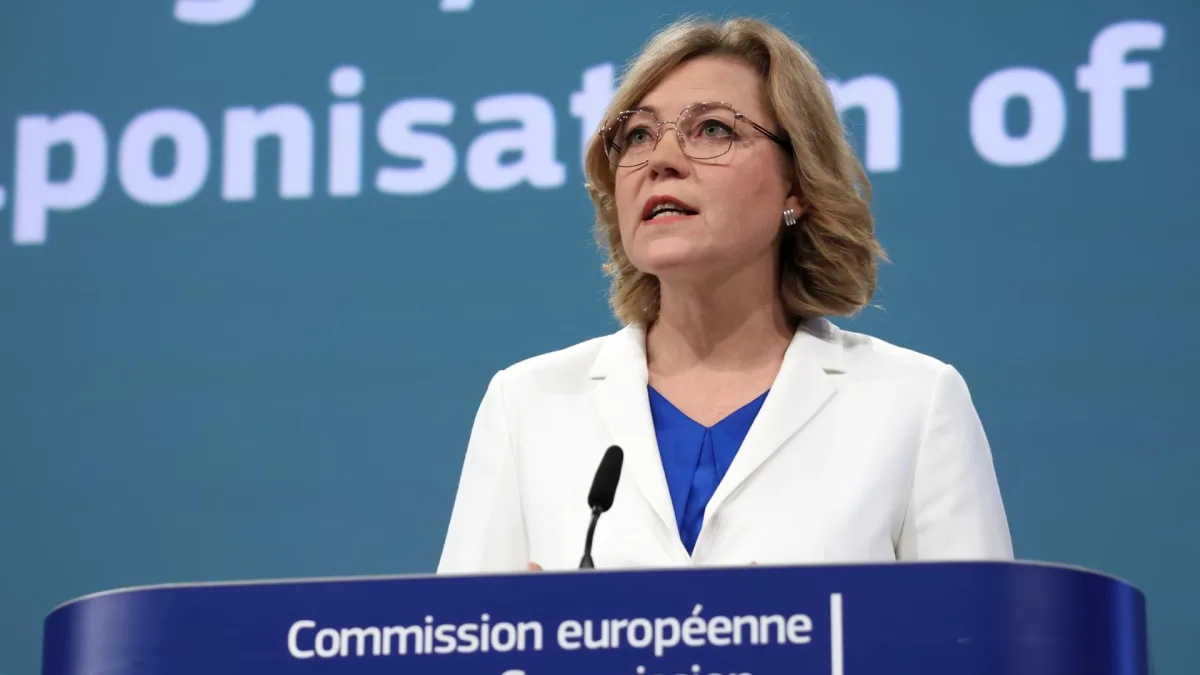
Today marks the formal presentation of the European Commission's Quantum Act in Strasbourg, a legislative effort designed to convert Europe's leading quantum research capabilities into functioning businesses, manufacturing facilities, and commercial offerings. Henna Virkkunen, serving as the Commission's executive vice-president for tech sovereignty, will present the framework at 10:00 CET following adoption by EU commissioners at their regular meeting.
Quantum computing harnesses the behaviour of subatomic particles to solve computational challenges beyond the reach of conventional systems. The field holds significant promise for accelerating pharmaceutical development and creating novel materials, yet it also presents a serious security concern: sufficiently advanced quantum computers could potentially decrypt the encryption systems safeguarding financial institutions and classified government information.
What the leaked drafts reveal
Although the legislation remains unpublished, preliminary versions obtained by MLex in October provide insight into the Act's intended direction. According to these drafts, certain government procurement opportunities would be restricted to enterprises under EU control or those headquartered in nations maintaining reciprocal agreements with the bloc.
The same draft materials would establish eligibility criteria for participation in Europe's major quantum initiatives, as reported by The Quantum Insider. Procurement authorities in essential infrastructure sectors would additionally be required to implement systems capable of withstanding quantum-based decryption attacks, a capability referred to as post-quantum encryption.
The investment gap Europe faces
The core challenge this legislation addresses centres on financial resources. Europe generates world-leading quantum research and hosts roughly one-third of the planet's quantum startups by the Commission's assessment, yet it captures merely 5% of worldwide private quantum investment. By contrast, the United States secures more than half of global quantum funding.
Today's announcement operationalizes the Quantum Europe Strategy, which the Commission adopted in July 2025. This strategic framework aims for European quantum leadership globally by 2030 and envisions substantially increased domestic technology manufacturing.
Quantum might sound like science fiction to some, but it is already a reality
Henna Virkkunen, when launching the strategy last year
Framework, not funding
Commission representatives have characterized the Act primarily as a regulatory framework rather than a direct funding mechanism. Some officials have even advocated for industry consolidation, contending that an oversupply of smaller quantum enterprises compete for identical market opportunities.
Several European nations have already moved independently ahead of any Brussels intervention. France has committed €500mn to supporting its own quantum technology leaders, while companies like Finland's IQM operate the continent's sole privately-owned quantum chip manufacturing facility.
The legislative road ahead
The Act will not produce immediate results, as it must navigate approval processes within both the European Parliament and individual member states. This deliberation and revision cycle typically spans multiple years before legislation reaches final form.
The discussion continues at the European Quantum Technologies Conference, taking place in Dublin from 30 November to 2 December, where the Act will feature prominently on the agenda.
Source: The Next Web