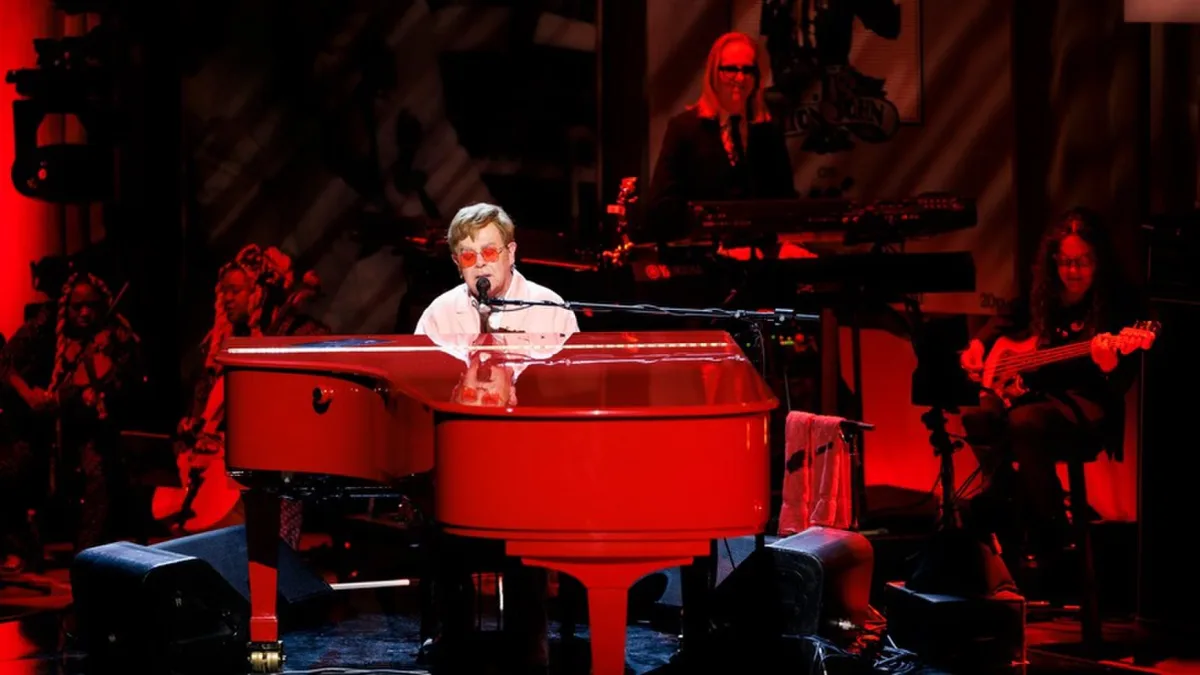
During the Aria awards ceremony in Sydney on Wednesday, Elton John delivered remarks via video supporting Not AI's To Take, an initiative launched by Australia's creative and media sectors to safeguard artists from AI training practices. The campaign seeks to establish requirements that artificial intelligence companies must secure explicit permission and provide payment to Australian artists before incorporating their work into training datasets.
In his message, John stated: "You have a duty to protect Australian artists and their work. Don't let AI use any Australian artist's work without full permission." The musician, who hosted the inaugural Aria awards in 1987, has become a vocal advocate for artist protections in the age of artificial intelligence.
The Not AI's To Take initiative draws backing from major players across Australia's creative ecosystem. Music, film, television and publishing organizations have joined forces with media corporations including News Corp, Foxtel and Seven to amplify the campaign's message. The effort warns that proposed copyright modifications favored by AI developers could jeopardize a creative sector valued at $70 billion annually and employing 600,000 workers. The Aria awards organization itself displayed the campaign's messaging on a billboard positioned near the venue.
Beyond Elton John's remarks, other award winners used their acceptance speeches to voice concerns about artificial intelligence. Tim Minchin and Danny Rogers, co-founder of the Laneway festival, both criticized AI during the ceremony. Musician Ben Lee told media outlets: "If AI companies want to train on Australian music, it's simple: pay us."
The Australian government declined to implement a text and data mining exemption for artificial intelligence in October 2025. However, creative industry representatives worry that policymakers may reconsider copyright protections as they pursue investment from AI firms. Documents that surfaced publicly indicated the government was considering an opt-out framework, under which AI companies could utilize creative works unless rights holders actively objected. Anthropic, a major AI developer, has previously advocated for such a model.
A representative for Attorney-General Michelle Rowland responded to these concerns by stating that any future modifications to copyright law would ensure creators maintain control over their work and receive equitable compensation. The government plans to introduce a comprehensive package of artificial intelligence regulations, including copyright provisions, sometime between late 2026 and early 2027.
Source: The Next Web