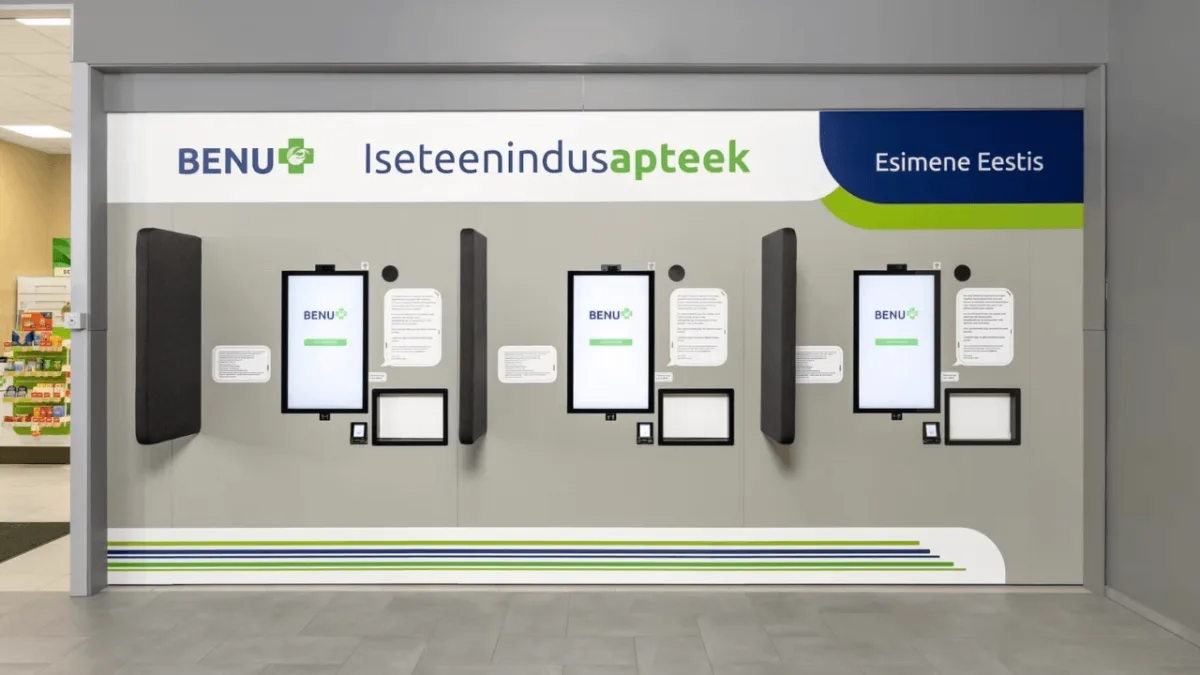
Following roughly thirty months of regulatory negotiation, Grab2Go stands ready to roll out its automated pharmacy system commercially by March 2027. Estonia's government has now endorsed legislative amendments that would permit round-the-clock robotic pharmacies capable of distributing both prescription and non-prescription medications without requiring an on-site pharmacist. The revised Medicinal Products Act would establish automated dispensing stations featuring digital identity verification, live video consultations with qualified pharmacists, and robotic medicine distribution. Parliament must still ratify the bill, with the target implementation date set for 1 March 2027.
Should the legislation pass, Estonia would become the first nation in Europe to permit remote prescription dispensing through robotic systems, surpassing current collection-point models limited to over-the-counter items. The initiative centres on Estonian startup Grab2Go, co-founded by Mart Viilipus and Reio Orasmäe, who encountered legal requirements mandating pharmacist presence during medication dispensing. Rather than shelving the venture, they engaged Accelerate Estonia, a state-backed innovation initiative overseen by the Ministry of Economic Affairs and Communications. In partnership with the Estonian Medicines Board and Ministry of Social Affairs, the programme identified the regulatory modifications necessary to bring the system to market while safeguarding patient welfare.
A pharmacy at 2 am
Robotic pharmacies could expand medication access beyond standard business hours. As Orasmäe observes:
Whether you're a parent with a sick child, an elderly person or someone who suddenly needs medicine, accessing a pharmacy late at night, early in the morning or on a Sunday can be difficult. Online pharmacies are becoming more popular, but delivery may take a day or two. That doesn't solve the problem when someone needs medication immediately.
Reio Orasmäe, co-founder and CSO of Grab2Go
The operational flow mirrors self-service ordering at fast-food restaurants, according to Orasmäe. Users navigate a touchscreen to select their medicine, then connect with a licensed pharmacist through video. The pharmacist assesses the request and approves the dispensing. During Grab2Go's half-year trial in Estonia, a mandatory video consultation with a pharmacist formed part of the procedure, allowing the pharmacist to inquire about intended use and confirm appropriateness for the customer.
Estonia's sophisticated digital identity framework enables verification through ID cards or other digital methods. The robotic apparatus stores and dispenses products within a locked steel cabinet accessible solely to authorised staff. Throughout the pilot, no robotic failures occurred, though Orasmäe notes that encouraging customer comfort with digital identity verification proved more demanding.
In many ways, the robotics is the easiest part. Some people are very familiar with digital services, while others need more assistance. We even had an 82-year-old woman using the system. Having someone available to help customers during the first few months when introducing a new service can make a significant difference.
Reio Orasmäe
The regulatory catch-22: How do you test something that's illegal?
Grab2Go's journey exposed a fundamental challenge confronting innovators building technologies that current legislation does not address. Authorities typically demand real-world data before modifying law, yet companies cannot lawfully generate such data without authorisation to pilot their innovations.
The Ministry of Social Affairs needed data before it could consider changing the law. But we couldn't collect that data because we weren't allowed to test the technology. It's a circular problem.
Olari Püvi, Head of Accelerate Estonia
This predicament led Accelerate Estonia to establish an experimentation protocol permitting companies to evaluate novel products and services in authentic settings, even where standing rules would normally forbid them. Instead of enacting permanent legal reforms before confirming a technology's viability, authorities could greenlight restricted trials and leverage findings to evaluate safety, feasibility and financial impact.
We regularly encounter entrepreneurs who are frustrated because regulations prevent them from testing new ideas. Some projects succeed, and others fail, but without experimentation, potentially valuable innovations can remain stuck for years. If we'd had this framework when Grab2Go first approached us, robotic pharmacies might already have been on the market.
Olari Püvi
Püvi envisions the framework benefiting additional startups navigating comparable regulatory obstacles, extending its relevance well beyond robotic pharmacies.
Can robotic pharmacies solve Estonia's pharmacist shortage?
Beyond operational convenience, robotic dispensing could mitigate workforce deficits and broaden medication access in underserved regions. Püvi notes that Estonia contains rural territories and island communities where pharmacy availability presents genuine hardship. Automated systems could strengthen medicine accessibility for these populations.
Accelerate Estonia partnered with PwC to conduct an impact assessment evaluating the financial and societal consequences of introducing self-service pharmacies. The analysis revealed a maturing workforce: 53 per cent of pharmacists and 43 per cent of pharmaceutical technicians exceed age 50, signalling staffing concerns as retirements accelerate. Automation could permit pharmacists to serve clients remotely across multiple sites, optimising workforce deployment. Püvi additionally perceives scope for alleviating strain on urgent care systems.
People sometimes seek emergency medical assistance for relatively minor problems because they cannot access medication or pharmacy services when they need them. If someone can obtain appropriate medication from a pharmacy operating 24 hours a day, seven days a week, that could help reduce some of that pressure.
Olari Püvi
The business case for automated pharmacies
Grab2Go projects a payback window of roughly two to three years for pharmacy operators. Labour expense escalation constitutes a principal driver, as rising costs shorten automation's financial recovery timeline. Simultaneously, robotics and component expenses have diminished as adoption broadens, according to Orasmäe.
Grab2Go intends functioning primarily as a technology vendor, furnishing hardware and software to pharmacy operators with bespoke commercial terms. The company recognises overseas expansion potential. Püvi indicates that Canada, Sweden, Norway and Austria have expressed curiosity about Estonia's framework.
The proposed legislation maintains technology neutrality, permitting competing automated pharmacy developers to enter the space. Püvi states:
We work with pioneering companies to identify regulatory barriers and create opportunities for entirely new markets to emerge. Grab2Go may be the first, but we hope other companies will follow.
Olari Püvi
Yet launching a product for a market that does not legally exist presents formidable funding obstacles. Accelerate Estonia staff occasionally quip that founding such a business demands a measure of audacity. Orasmäe emphasises that while warehouse automation, robotic logistics and pharmaceutical storage expertise already exists, customer-facing robotic pharmacies demand distinct competencies.
The processes, customer interactions and even the robotics themselves have different requirements. We've invested in developing our technology to the point where we have a third version ready, but until the regulatory framework changes, customers cannot actually operate it commercially. That's a significant barrier to investment. Once the market becomes legally accessible, other companies will have a reason to start developing competing solutions.
Reio Orasmäe
Changing the law without compromising patient safety
Regulators faced a crucial question: whether robotic pharmacies could match conventional pharmacy standards of care. The impact assessment examined roughly 30 to 40 considerations, spanning patient safety, professional duties and whether the technology addressed a genuine requirement, according to Püvi.
One important finding was that automation could actually improve the quality of the pharmacist's interaction with customers. Pharmacists do much more than hand over medication. They're responsible for inventory, ordering products, managing the pharmacy and, in some cases, preparing or compounding medications for individual patients.
Olari Püvi
Automating the dispensing function could liberate pharmacists to concentrate on patient consultations rather than administrative chores. Significantly, the pharmacist maintains ultimate authority over dispensing, encompassing routine over-the-counter items.
Demonstrating that the system was safe, beneficial and could improve existing services took considerable time. In a democratic country, regulatory change requires consultation and evidence. You need to demonstrate that the proposed changes genuinely improve the system.
Olari Püvi
Following parliamentary ratification, Estonia's Ministry of Social Affairs will require approximately three to four months to establish necessary digital and administrative infrastructure and brief pharmacy operators on the new rules. Grab2Go targets March 2027 for deployment. Püvi notes that discussions occurred regarding earlier implementation, but postponing the rollout prevents undue strain on all stakeholders.
There was discussion about allowing the changes to take effect as early as January, but that would have created unnecessary pressure for everyone involved. We've been working on this for approximately two and a half years, so a few additional months to ensure everything is properly implemented makes sense. It gives regulators, pharmacy operators and Grab2Go time to prepare.
Olari Püvi
Grab2Go's platform could potentially extend to other regulated substances demanding secure containment, identity authentication and professional clearance, including medical cannabis, contingent on relevant legislation. Orasmäe contends that robotic pharmacies strengthen stock management through AI-driven demand forecasting, inventory tracking and autonomous replenishment.
Customers shouldn't routinely have to visit a pharmacy only to discover that a common medication is unavailable and needs to be ordered. For people managing chronic conditions, such as asthma or allergies, reliable access to medication is particularly important. The goal is not simply to automate dispensing. It's to make the entire process of accessing medication more convenient, reliable and efficient.
Reio Orasmäe
For Accelerate Estonia, the overarching takeaway involves the necessity for governmental structures enabling emerging technology assessment without permitting existing regulations to obstruct responsible testing. Püvi asserts:
We need ways to test new solutions responsibly, gather evidence and determine whether they can deliver genuine benefits. Grab2Go is an important example of what becomes possible when entrepreneurs and the government work together to address those barriers.
Olari Püvi
Source: Tech.eu