The Fraunhofer Institute for Solar Energy Systems (ISE) has successfully tested battery cells featuring silicon-rich anodes through more than 1,000 complete charge-discharge cycles, with the cells preserving over 83% of their initial capacity. The laboratory-produced cells achieved an energy density of 280 watt-hours per kilogram, with projections suggesting that an industrially scaled version could reach approximately 330 watt-hours per kilogram. Applying an external compression pressure of 1,000 kilopascals proved essential to achieving these results.
Silicon-enriched anode materials offer the potential for substantially higher energy densities in lithium-ion battery systems, making them particularly valuable for electric vehicle applications, aerospace systems, and grid-scale energy storage. Until now, the relatively short operational lifespan of these materials has prevented their widespread commercial deployment.
Pressure as a Performance Factor
Within the StrOboBatt research initiative, scientists evaluated two different levels of axial compression: 300 kilopascals and 1,000 kilopascals. Both test configurations involved one-hour charging and one-hour discharging cycles. The higher pressure setting enabled cells to sustain their rated capacity beyond 1,000 full cycles, whereas the lower pressure resulted in more rapid degradation of usable capacity. External mechanical pressure enhances the electrical interface between components and helps prevent the physical separation of electrode materials during cycling.
As cycling progressed, the researchers observed an expanding divergence between capacity measurements taken at reduced discharge rates and the capacity available during standard operation. This finding indicates that real-world applications must evaluate battery performance under the specific operating conditions they will experience in service.
Cell Design and Manufacturing
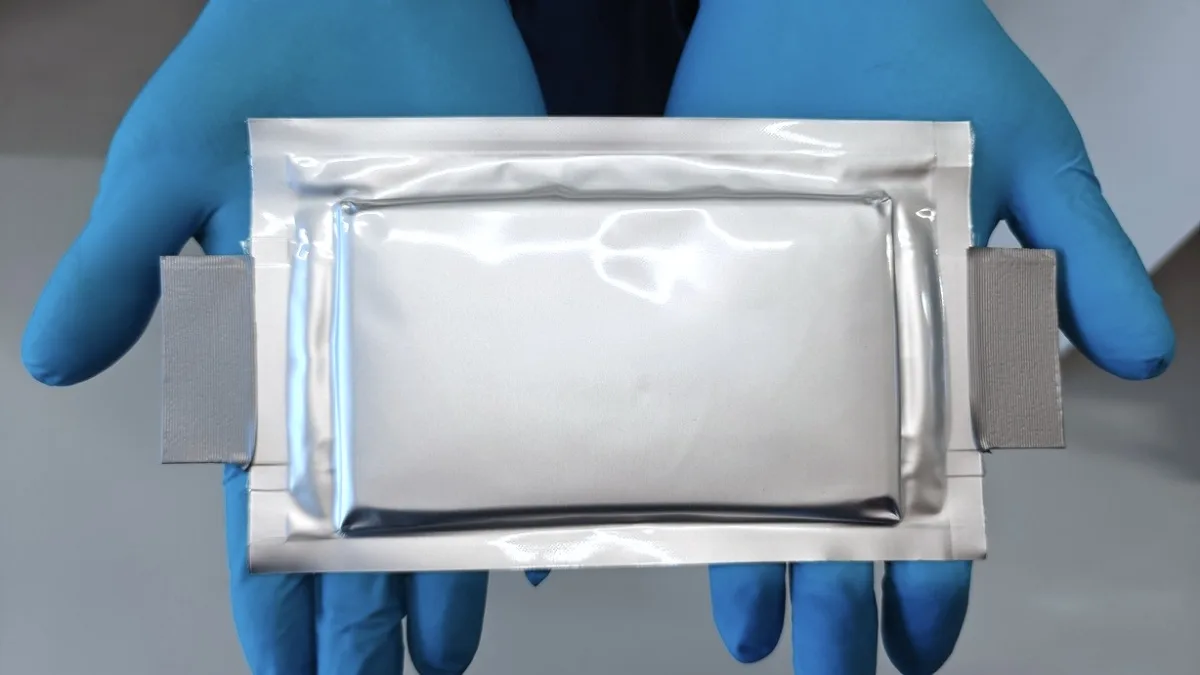
The experimental pouch cells contained 40 individual layers and held a nominal capacity of 25 amp-hours. The design paired a silicon-carbon/graphite anode with a nickel-rich nickel-manganese-cobalt oxide cathode. Silicon-carbon composite material constituted 51% of the anode's active material composition. Fraunhofer ISE manufactured these cells using semiautomated production equipment on-site, establishing them as baseline references for evaluating alternative materials, structural configurations, and operating parameters.
Source: Battery-News