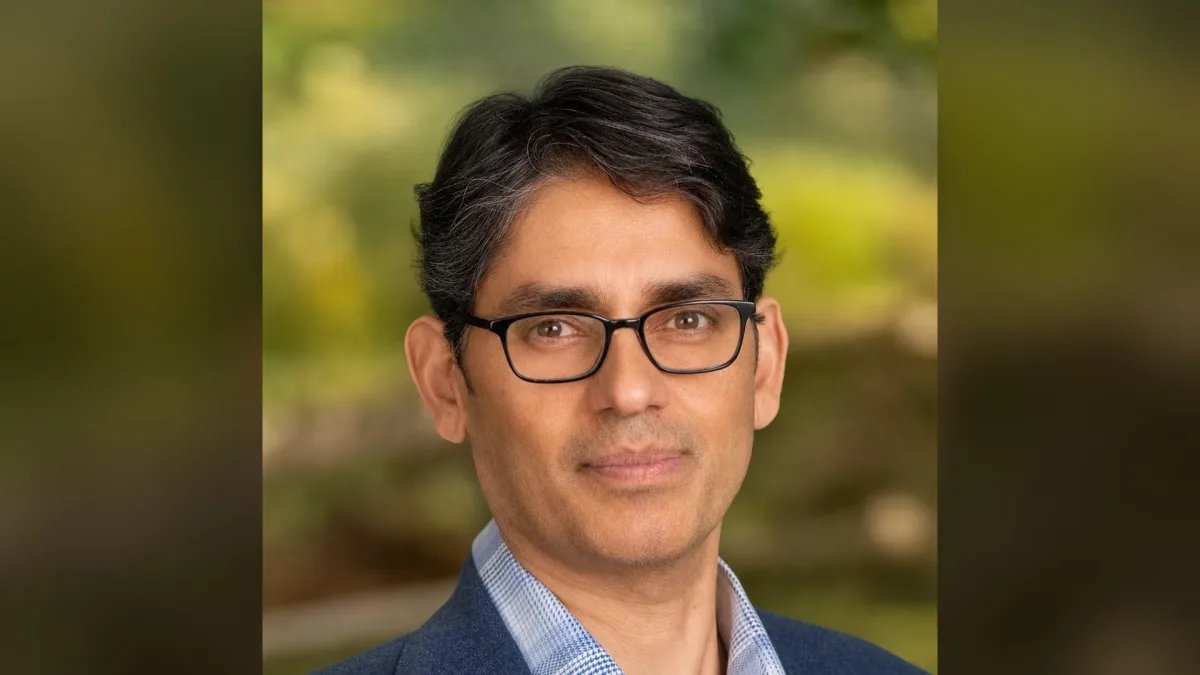
The departure of Jasjeet Sekhon from Google DeepMind's top strategy role marks another shift in the competitive landscape of AI labs. Sekhon announced his move to Anthropic on X late Monday, taking on work centered on making Claude more rigorous about distinguishing between what it knows and what it does not. An Anthropic spokesperson confirmed the hiring to The Information's Ryan Barwick, though Sekhon's announcement did not specify his title, start date or reporting structure.
The timing of Sekhon's switch comes just days before Anthropic's planned initial public offering on Thursday, adding to the week's significant developments in the AI sector.
https://x.com/Jas_S_Sekhon/status/2122460665407525045?ref_src=twsrc%5Etfw
Career path from academia to hedge funds to AI
Sekhon's appointment to DeepMind occurred in March, as announced by chief executive Demis Hassabis, according to Reuters. Before joining the Google subsidiary, he served as chief scientist and head of AI at Bridgewater Associates, the prominent hedge fund where he had worked since 2018. During his tenure there, he established and led AIA Labs, the firm's AI research and investment division, and later joined Bridgewater's board when departing.
His background spans multiple prestigious universities. He held faculty positions at Harvard, the University of California, Berkeley, and Yale, where he served as the Eugene Meyer Professor of Statistics and Data Science. His scholarly work has concentrated on causal inference, machine learning and experimental design. Among his technical contributions is the Matching package for R, a statistical software tool he developed.
Self-improving AI and the investment thesis
While at DeepMind, Sekhon addressed the topic of recursive self-improvement—systems that enhance their own capabilities—at a UC Berkeley summit in August. The Information first reported his remarks on the subject.
Recursive self-improvement is "becoming a key component of the AI investment thesis,"
Jasjeet Sekhon
During the same discussion, Sekhon noted that current AI industry revenue has not yet reached the level of spending being invested in the field, as TNW reported at the time. Following these discussions, DeepMind established the DeepMind Institute, which publishes essays examining artificial general intelligence and its associated risks.
Source: The Next Web