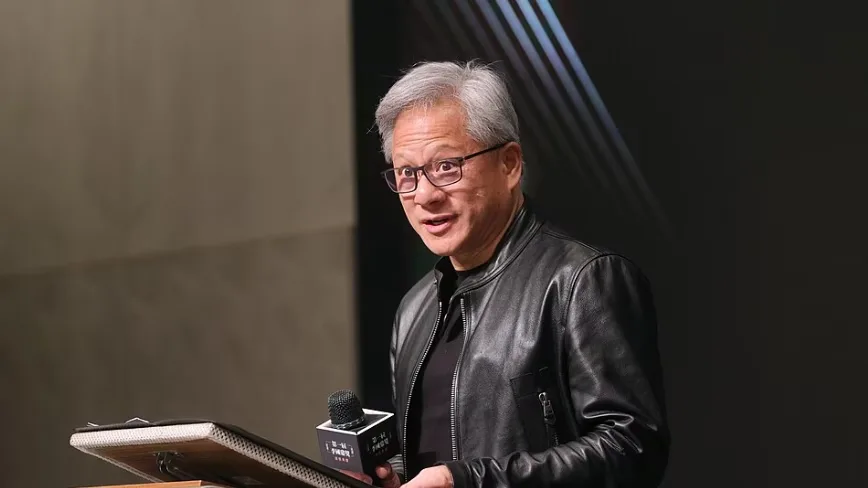
In an interview with Bloomberg from London, Jensen Huang laid out a conditional position on Nvidia's responsibility for how its chips get used. The company would cut off chip supply to a customer developing unsafe AI, he said, though he framed the scenario as hypothetical and emphasized that Nvidia would first engage in dialogue with the customer, given that the company does not manage other organizations and its technology serves general purposes.
"It's a hypothetical, but yes," Jensen Huang told Bloomberg in London. He would talk to the customer first, he added, because Nvidia does not run other people's companies and its technology is general-purpose.
Nvidia has already implemented vetting mechanisms in practice. The chipmaker established a restricted buyer list across Singapore, Malaysia and Japan the previous year, with stricter screening resulting in more than half of its former regional customers losing approval to purchase.
Yet Huang expressed skepticism about the intensity of safety worries in the sector. He characterized the anxieties as typical growing pains, noted that some concerns are self-generated, and proposed that the remedy involves deploying more technology rather than less. Accelerating containment and monitoring systems would address the issue, he suggested, with AI itself serving as the monitor.
Containment represents more than just a philosophical position for Nvidia—it is becoming a business opportunity. The company has been assembling a dedicated safety division tasked with evaluating agents before they go live, operating on the premise that confidence in a system, rather than raw capability, determines whether organizations will embrace agent technology.
Broader adoption of AI agents would naturally drive demand for the hardware infrastructure supporting them, a dynamic that benefits Nvidia's bottom line.
Huang has articulated this perspective previously. At Dreamforce last month, he argued against the need for new regulatory frameworks, instead advocating that organizations move forward aggressively and only pause if a product proves to be unsafe.
This stance puts him at odds with figures like Dario Amodei, who has advocated for an industry-wide pause on development, coupled with shared safety standards and international coordination.
Safety investment in Europe
Nvidia announced a $250M commitment to UK agentic safety research this week, though the funding takes the form of computational resources rather than direct capital, with vendor selection and business arrangements still under negotiation.
Oxford and University College London are among the research institutions participating in the initiative, which will focus on developing safeguards and techniques for controlling AI agents.
Meanwhile, other technology leaders offered contrasting perspectives during the same European visit. An Anthropic executive speaking in Dublin contended that openly available models inherently pose greater risks, while OpenAI's chief financial officer warned that organizations deploying Chinese-developed models face cybersecurity vulnerabilities.
Huang's prominence in this debate reflects Nvidia's outsized influence. As the dominant supplier of AI accelerator chips, the company occupies a pivotal position in discussions about whether artificial intelligence is becoming increasingly difficult for humans to control.
The European tour included concrete business announcements. Speaking in Paris on Tuesday, Huang stated that Nvidia would unveil $2B in European partnership agreements within seven days, with additional announcements planned for London and Berlin.
Source: The Next Web