OpenAI has introduced ChatGPT Wallet, a payment system that permits its AI agents to conduct transactions for users while keeping sensitive card information hidden. The rollout involves collaboration with American Express, Mastercard and Visa, announced by the company on Friday.
The feature is initially available only to ChatGPT Pro subscribers in the United States who are 18 or older and possess eligible US-issued payment cards. OpenAI is deliberately limiting the initial scope to gather insights from actual usage patterns.
Security and approval workflow
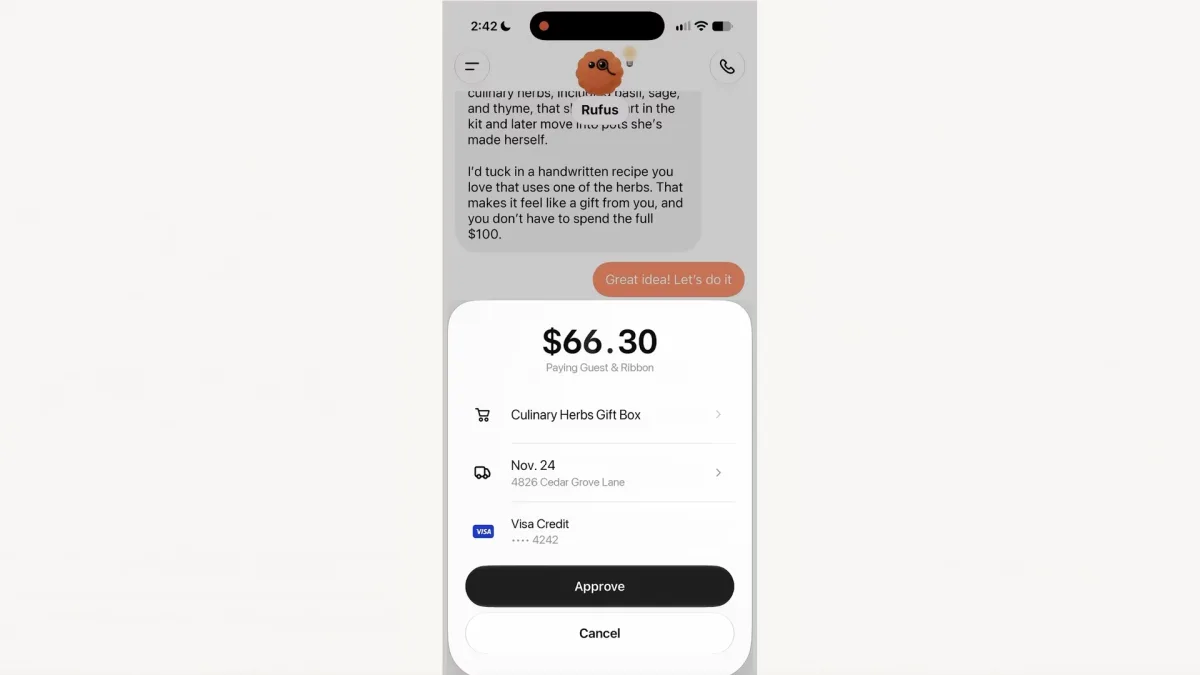
The process begins with users registering a single card. Prior to any transaction, users examine the items being purchased, review the amount and confirm the card being used. Approval requires biometric authentication such as Face ID or fingerprint recognition. This creates an audit trail documenting each purchase the agent was permitted to execute.
Once the user approves, the payment network generates a unique token representing the card. This token contains its own card number, security code and expiration date, ensuring that merchants and agents never access the actual card information, according to OpenAI.
Cardholders retain access to rewards programs and dispute protections for issues like defective merchandise. Retailers maintain authority over pricing, shipping arrangements, refund policies and customer relations.
Our goal here is to really focus on merchants and our network partners and start building out a really great foundation that's safe and easy to use
Chaya Nayak, product lead for monetization and payments at OpenAI, speaking to CNBC
Currently, OpenAI is not collecting transaction fees, though the company anticipates generating revenue eventually. Looking ahead, OpenAI envisions a model where users grant agents broader purchasing authority within parameters they establish, such as spending caps, product categories or time windows.
Obstacles to agent commerce
OpenAI acknowledges that certain retailers may inadvertently prevent agent-initiated transactions. Fraud detection systems can also misidentify legitimate agent purchases as suspicious activity, resulting in transaction rejections or order cancellations.
In response, OpenAI has distributed guidance for merchants covering topics such as configuring firewalls to permit ChatGPT agents, integrating product catalogs and establishing merchant profiles within ChatGPT. The company is simultaneously partnering with fraud prevention specialists including Forter, Riskified, Sardine and Signifyd, as well as payment infrastructure firms Adyen, Checkout.com and Stripe.
Several major companies have already taken restrictive positions. United Airlines announced Wednesday that it will prevent agents from purchasing airline tickets. Amazon has implemented blocks preventing agent transactions on its platform, according to CNBC. Financial institutions Schwab and JPMorgan have similarly restricted AI agents from initiating money transfers for customers.
OpenAI previously experimented with checkout functionality within ChatGPT. An Instant Checkout feature debuted in autumn 2025 but was discontinued shortly thereafter, CNBC reported. A recent Visa test involving 22 AI models attempting purchases resulted in a 42.8% failure rate.
It just makes sense to watch it, start it in a contained environment, and then keep rolling from there
Luke Gebb, global innovation head at American Express, to CNBC
Walmart has adopted a more permissive approach, enabling agents to make purchases through dedicated agent profiles equipped with individualized spending restrictions.
Source: The Next Web