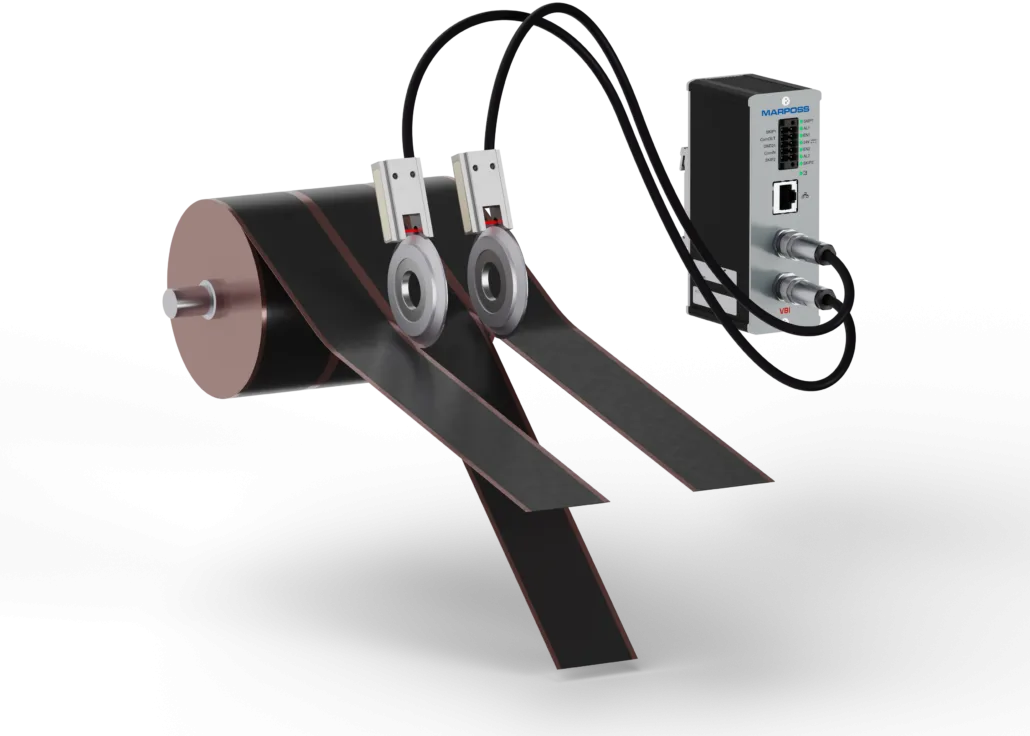
Tool degradation during electrode cutting poses a genuine threat to battery safety and performance. Marposs GmbH has created an optical sensor system that identifies tool damage instantaneously as cutting happens. The technology is currently operational in anode and cathode production at a German battery cell manufacturer.
Manufacturing battery electrodes demands extreme precision. Even small imperfections in cutting tools—whether during web slitting or tab notching—can degrade electrode edge quality. Worn or dulled blades produce burrs, particle fragments, or delamination, where the active coating peels away from its metal base. The consequences can be severe: such flaws may trigger internal short circuits and thermal runaway events in finished cells.
According to Andreas Leichsenring of Marposs GmbH, "wear, minor damage and chipping are inevitable when cutting tools are used over many kilometres of cutting length."
Continuous monitoring of tool condition
Conventional practice relies on scheduled blade replacement or periodic microscopic inspection. This approach leaves a critical window: a damaged tool can go undetected between checks, generating defective electrodes in the interim.
Marposs employs optical sensors positioned directly at the cutting zone—typically within the blade holder or drive mechanism—to track tool status in real time. The company reports the system can identify edge chips as small as ten micrometres. To minimize false positives from normal process fluctuations, the analysis incorporates mapping that adjusts for varying web speeds and blade rotation rates. When readings cross a customer-defined threshold, the machine can halt within milliseconds or trigger an alert.
Deployment at a German cell manufacturer
Marposs indicates the solution is production-ready and currently deployed in anode and cathode lines at a German battery cell manufacturer. Integration into existing equipment required only modest adjustments to blade holders. The sensors' compact U-shaped form factor was designed to simplify retrofitting into established machinery.
Michael Unterste of Marposs describes the validation process: "data from different tools initially collected during test runs was analysed and compared with the results of manual inspections and optical microscopy. The data analysis was then adapted to the specific application."
The system integrates with existing manufacturing execution systems (MES), allowing monitoring data to feed directly into production control and quality assurance workflows.
Economic benefits and use during production ramp-up
Condition-based monitoring enables tool replacement decisions tied to actual blade wear rather than fixed schedules. This avoids both premature disposal and continued use of damaged tools. Marposs reports measurable gains: lower scrap rates and reduced labour spent on manual visual checks. Manufacturers gain the ability to compare blade lifespans across suppliers and evaluate tool quality.
Marposs identifies production ramp-up as a secondary use case. When sensors operate during machine builder testing, the measurement data supports selection of optimal cutting tools and parameters. Michael Unterste notes this approach "can lay the groundwork for a reliable production ramp-up before the machine is handed over."
Source: Battery-News