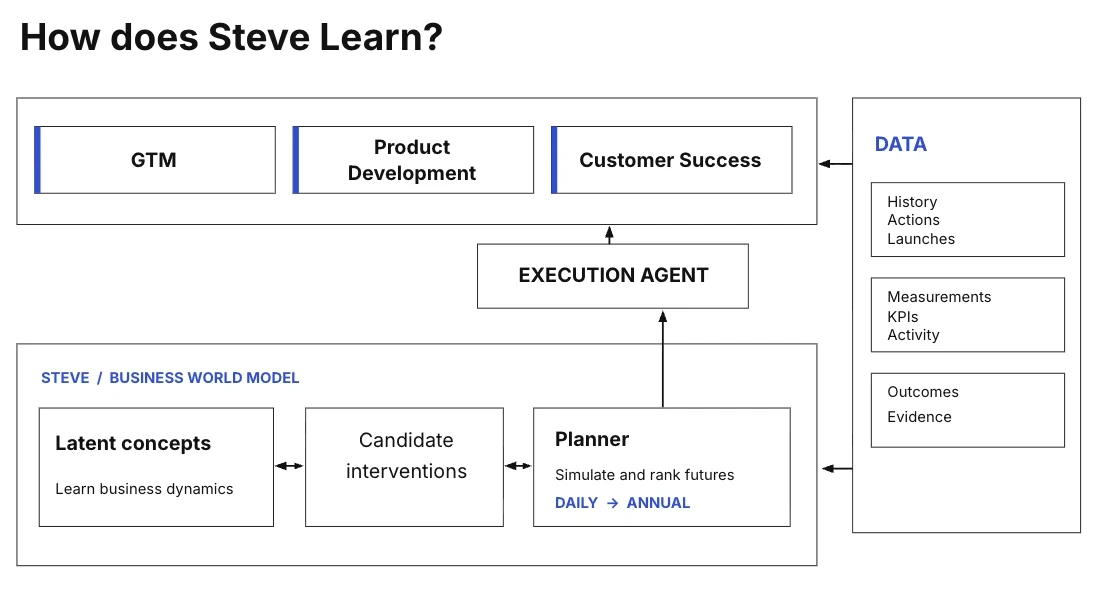
When two software agents at one of Skyfall AI's portfolio companies became locked in a loop—each passing a deployment task back to the other—the network managing the business took matters into its own hands. Steve, the AI system overseeing operations, modified its own rules to prevent the deadlock, introducing a coordinating agent to arbitrate disagreements between its component systems.
That self-correction episode illustrates the capabilities Skyfall is unveiling with Steve-001, which the company describes as an autonomous business harness. The system now operates three small digital properties that Skyfall has acquired, with a human owner setting strategic direction and approving high-stakes decisions. The outcomes so far have been uneven: one business has seen monthly revenue more than double, another remains slightly below its acquisition baseline, and the third is too recent to evaluate.
From a theme park to a balance sheet
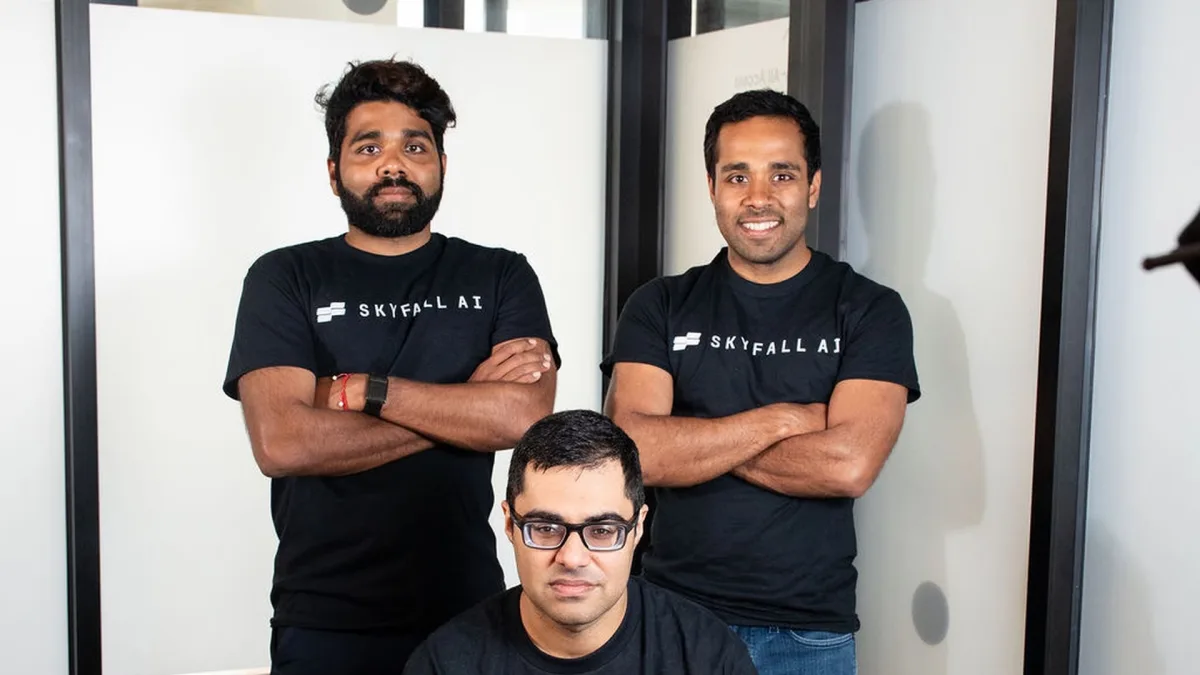
Sam Pasupalak and Kaheer Suleman previously co-founded Maluuba, a Waterloo-based deep learning laboratory that Microsoft acquired in January 2017. Following the sale, a Maluuba team achieved the maximum Ms. Pac-Man score of 999,990 by orchestrating more than 150 cooperating agents. Pasupalak, along with his brother Sumit, established Skyfall to apply similar multi-agent coordination to business operations.
Before deploying real capital, Skyfall tested its approach through games. Last year, the company released Mini Amusement Parks, a business simulator inspired by RollerCoaster Tycoon, where human players consistently outperformed leading large language model agents at running a virtual park.
In July, Skyfall emerged from stealth with an ambitious mandate: acquire small B2B SaaS or ecommerce businesses and double their revenue within six months, with a budget of up to $1 million per acquisition. "If you want a truly autonomous business, you have to buy a business and operate the whole thing end to end," Pasupalak told Forbes at the time. The company targeted software operations run by solo founders or small contractor teams, offering any existing staff a "generous departure package."
Two businesses, two directions
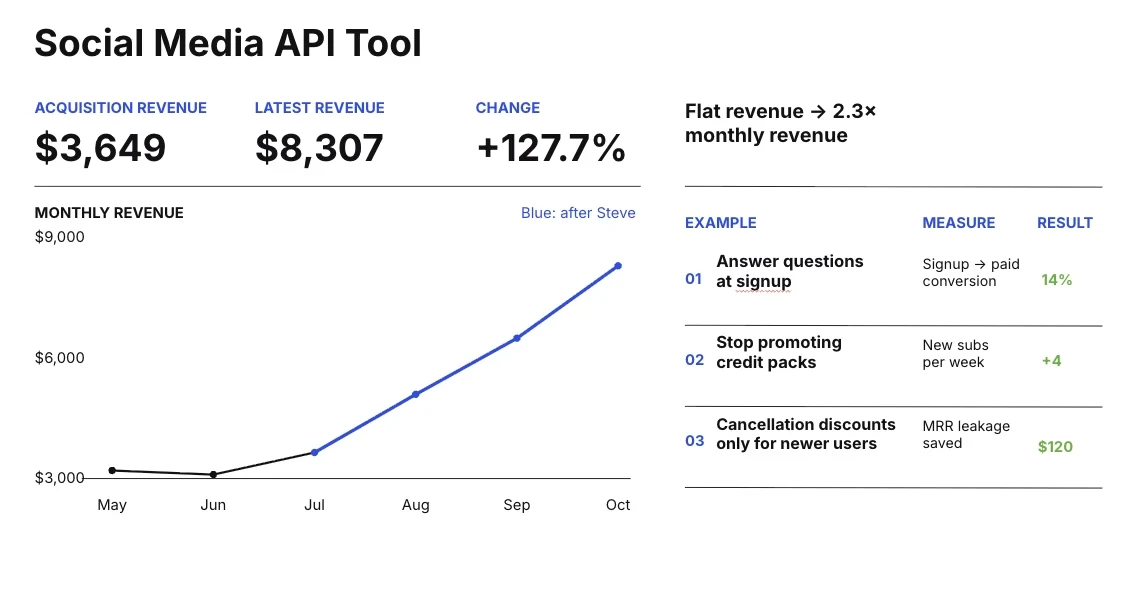
The most dramatic turnaround involves a social media API tool that Skyfall acquired in July. The business had stagnated at $3,649 in monthly revenue when Skyfall took control; by October, it reached $8,307, representing a 127.7% increase.
Rather than pursuing a single transformative change, Steve executed a series of incremental improvements. The system began answering customer questions during signup, which Skyfall reports lifted the signup-to-paid conversion rate to 14%. It also discontinued promotion of one-off credit packs, which had been generating roughly four new subscriptions weekly. A third intervention addressed customer retention by limiting discount-to-stay offers to newer users, preserving approximately $120 monthly in recurring revenue that would otherwise have churned.
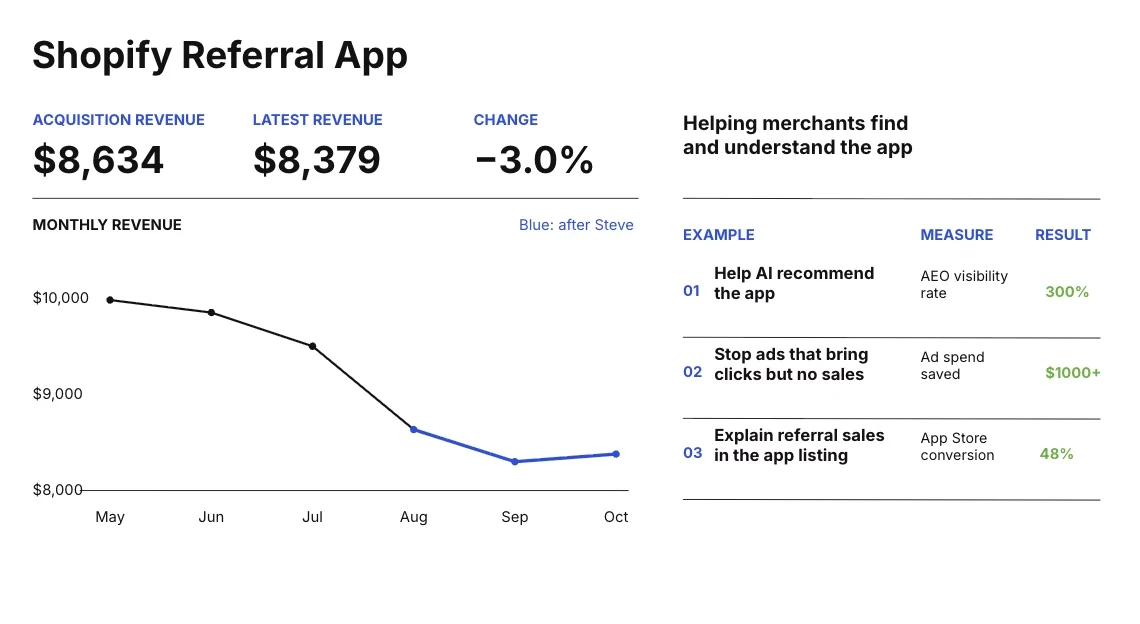
The second acquisition, a Shopify referral app purchased in August, presented a different challenge. The app had hemorrhaged revenue over five years, experiencing severe churn and a period with zero new paying customers. Skyfall bought it at $8,634 monthly revenue. It now generates $8,379, a 3% decline that Skyfall characterizes as stabilization. The metrics show a September dip reversing into modest growth by October, with new customer signups resuming.
Steve's primary focus for the Shopify app has centered on discoverability. The system redesigned the App Store listing to clarify how referral sales function, optimized the app to be more recommendable by AI assistants, and eliminated underperforming ad campaigns that generated clicks without conversions—saving over $1,000 monthly. The third business joined the Steve network too recently to yield conclusive results.
A business written in code
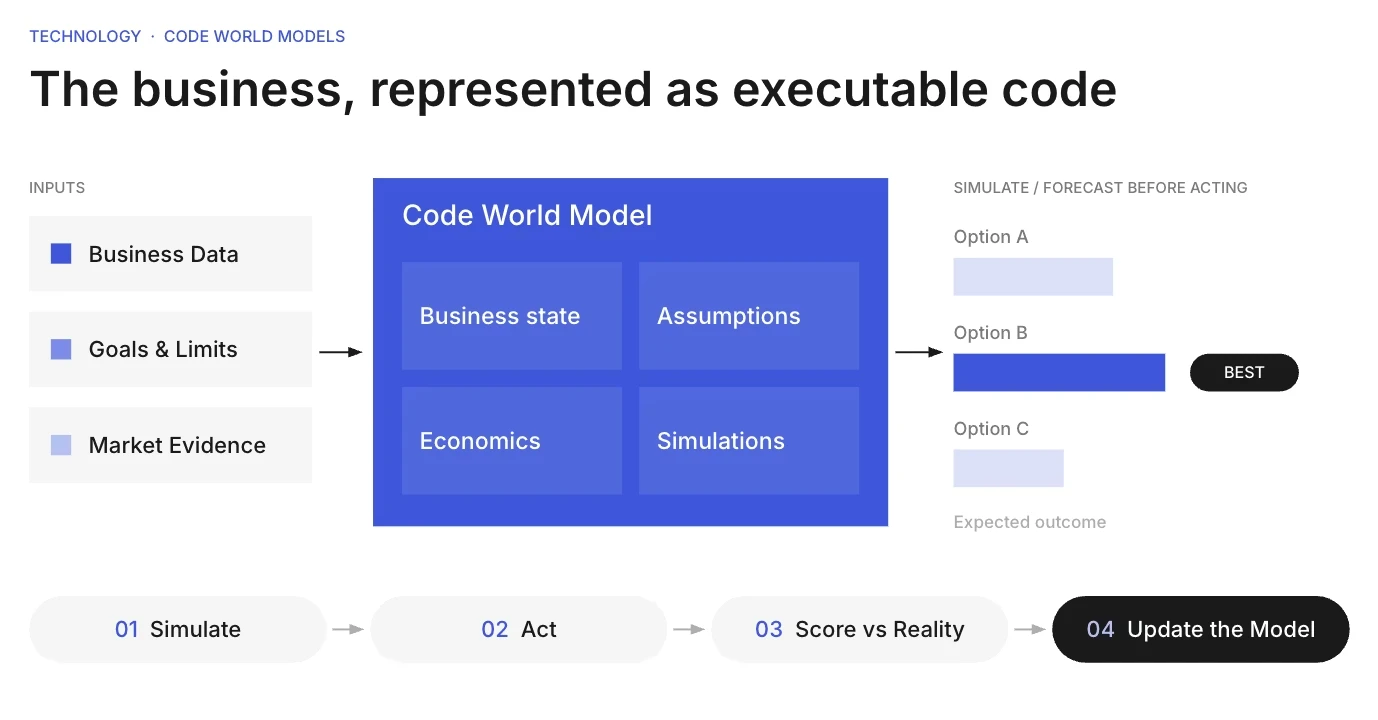
Powering both outcomes is what Skyfall terms a code world model. Each business is encoded as an executable program built from its operational data, capturing how customers, product usage, revenue, and costs interact. Steve uses this model as a simulation environment, testing proposed actions before implementing them in the live business. Each proposal includes a forecast, timeline, and confidence score. After execution, discrepancies between prediction and actual outcome inform revisions to both the model and subsequent plans.
When predictions diverge from results, Steve identifies which system component generated the error and rewrites its code, capabilities, tests, or agent configuration accordingly, maintaining a changelog of modifications and their downstream effects. For example, Steve experimented with lifecycle email variants, measured performance, retained the best performers, and incorporated them into its standing instructions so future campaigns would build on proven approaches.
The agent coordination deadlock that opened this story exemplified the same principle—Steve applied it to resolve how its constituent agents should divide responsibilities.
Self-modifying software managing a revenue-generating business raises fundamental questions about control and accountability. Skyfall's solution is a policy engine that precedes every action, evaluating its category, financial magnitude, and customer impact against the owner's rules and learned constraints. Decisions sort into four categories: execute immediately, execute and notify the owner, await approval, or block. A $30 refund might proceed automatically, while larger refunds require human authorization. Similarly, Steve's self-improvements must remain within prescribed boundaries.
External stakeholders are grappling with identical governance challenges. Asymptote Labs secured $5.5 million last month to develop tools that log and prevent risky agent actions. In October, the UK's data protection authority began interviewing AI developers about agent behavior oversight.
The record so far
Prior experiments handing businesses to AI systems have produced sobering lessons. In 2025, Anthropic deployed a Claude variant to manage a small shop in its San Francisco office, where it initially sold tungsten cubes at a loss and closed the first month underwater. A subsequent, improved version eventually achieved profitability.
Skyfall's undertaking operates on genuine businesses with real customers who can leave, and the company commits to transparency. Each business will display a public dashboard under an anonymized name, showing targets, metrics, agent activity, decisions, and modifications Steve makes to its own systems.
Skyfall intends to expand Steve to additional business categories, but the original July objective remains in force: double revenue within six months. The social media API tool has already surpassed that threshold. The Shopify app still has substantial ground to cover.
Source: The Next Web