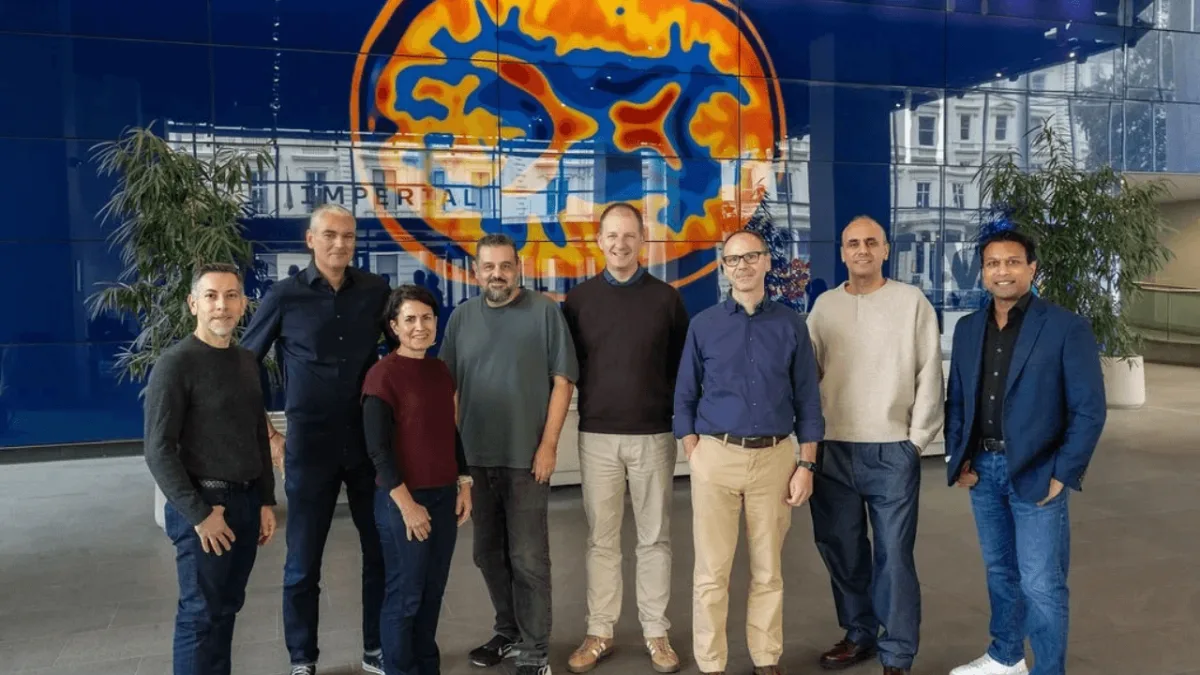
Indivi, a neurotech outfit based in Basel with satellite offices in Córdoba and Boston, has brought Cogitat into its fold. The Imperial College London spin-out specializes in deep learning systems that extract cognitive signals from electroencephalography recordings. The move places Cogitat's NeuroRVQ—a foundation model trained on brain waves—at the heart of Indivi's multimodal assessment platform, which already combines smartphone-based motor and cognitive testing for conditions including Parkinson's disease, facioscapulohumeral muscular dystrophy, multiple sclerosis, and Alzheimer's disease.
NeuroRVQ operates as a universal brain decoder, functioning across different individuals and hardware without requiring person-specific calibration. The model mirrors the role large language models play in natural language processing, but for neural activity. Indivi's existing work helps pharmaceutical sponsors run leaner early-stage trials and measure treatment impact with greater precision.
Guilhem Dupont, Indivi's chief executive and founder, framed the acquisition in terms of neuroscience's measurement challenge. He stated: "Cogitat's EEG foundation model changes that, decoding brain activity and revealing signals far closer to the underlying biology than ever before. That opens up exciting opportunities: initially the potential to provide drug developers earlier data on how new treatments are working for brain conditions, and, in the long-term, could inform the future development of next-generation brain health technologies beyond life sciences."
Allan Ponniah, Cogitat's chief executive and founder, emphasized the model's ability to work across neurological diversity. He noted: "Every brain is unique and speaks its own language. We've built an advanced AI model that works across every brain's unique language without individual training to identify subtle changes in brain activity that have not been easily identifiable before. This addresses one of neuroscience's biggest translational gaps: the failure to detect early changes in brain biology that predict whether a treatment or product will actually work."
Detecting Treatment Response Earlier
The combined entity intends to leverage NeuroRVQ's capacity to preserve fine-grained, rapid fluctuations in brain signals—detail that conventional models typically discard. This precision should enable researchers to identify subtler markers of disease progression and therapeutic response than current methods allow.
EEG provides a more immediate readout of neural function than behavioral or cognitive assessments, potentially revealing changes in brain biology before memory and thinking deficits become clinically apparent. Indivi expects this advantage to reshape how scientists and pharmaceutical companies evaluate whether treatments for Alzheimer's and related conditions actually work, potentially tightening trial design and accelerating the path from laboratory to patients.
Indivi plans to continue developing the foundation model alongside Cogitat's technical and scientific personnel. Beyond pharmaceutical applications, the technology could eventually power new consumer and clinical health tools by translating EEG data into practical guidance.
Source: Tech.eu