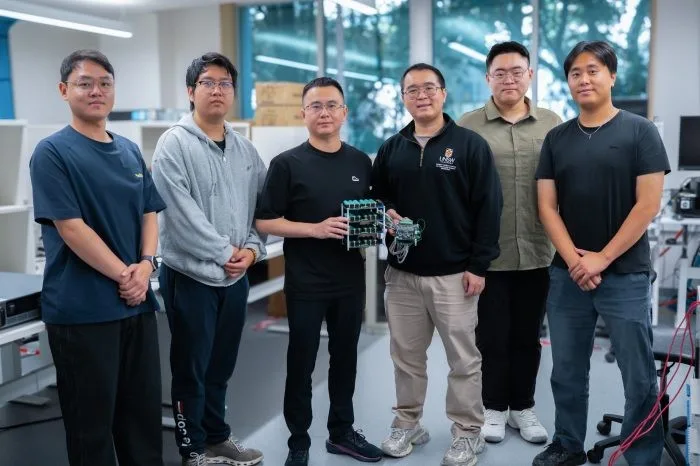
Scientists at the University of New South Wales (UNSW) in Sydney have created an experimental diagnostic procedure capable of evaluating the state of health of lithium-ion cells in fewer than three minutes. The approach represents a 95.5% reduction in testing time compared to standard methods, which demand a ten-hour charge-discharge cycle. Malaysia-based battery recycler DY New Energy has partnered with the research team on this initiative.
The testing approach operates by transmitting brief electrical pulses into each cell, capturing how the cell responds, and then applying statistical models to determine its condition. The technique is compatible with LFP, NCA, and NMC battery chemistries and integrates with the existing systems used by recyclers and energy storage operators. Laboratory testing has demonstrated accuracy exceeding 90%. The researchers project that testing expenses could decrease from approximately AUD 120 (roughly $85) per EV battery pack to under AUD 25 (approximately $18). These findings remain preliminary, based on controlled laboratory settings, and no peer-reviewed study has yet been published.
A real-world field trial with funding of AUD 1.3 million (approximately $920,000) is planned to evaluate more than 500 batteries in operational environments. The research partners intend to develop a machine-learning system that will guide decisions on whether retired batteries should be reused or recycled. They are also designing a battery management system module designated iBMS to enable continuous real-time monitoring.
Under the EU Battery Regulation, information about the state of health for both EV and stationary batteries must be made available to stakeholders, enabling them to evaluate possibilities for second-life applications.
Source: Battery-News