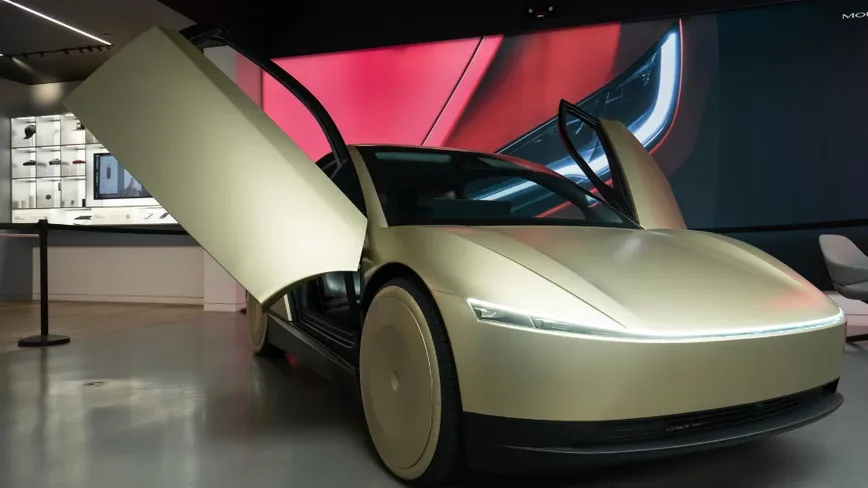
The Cybercab's battery architecture includes deliberate design margins that will allow Tesla to transition toward more economical LFP chemistry as the robotaxi moves into higher-volume production, Tesla battery engineer Robert Sumpf revealed during an appearance on the YouTube channel Munro Live. Currently, the vehicle relies on Tesla's proprietary 4680 cells, which use nickel-based chemistry. The spare capacity sits both alongside and beneath the battery modules themselves.
Sumpf, who leads mechanical design efforts for Tesla's battery modules and packs, explained the reasoning: "So, we protected this pack to go to an even lower energy dense chemistry as we scale and need to bring LFP into the platform."
LFP cells deliver several advantages over the nickel-based alternatives currently in use. They carry lower material costs, demonstrate greater thermal stability, and endure substantially more charge cycles—a critical consideration for a vehicle Tesla positions as capable of traveling 500,000 miles. The tradeoff involves reduced energy density per cell, meaning the same cell count would diminish driving range. However, Tesla can offset this by populating the available space with additional LFP cells to maintain performance targets. Last year, LFP emerged as the world's most prevalent battery chemistry for electric vehicles.
Tesla vice president Lars Moravy offered an additional explanation for the extra room: "we didn't need as many batteries as we thought we did." The Cybercab's modular design means each battery unit operates independently, allowing individual modules to be replaced if they fail—a departure from the Model Y's integrated pack construction.
Moravy also highlighted a production advantage, noting that "We don't run every day because the line can run so fast, it's currently outpacing our deployments." The manufacturing facility can produce vehicles at a rate exceeding Tesla's capacity to deploy them into service.
Every Cybercab manufactured to date remains part of Tesla's internal fleet. The company announced that Cybercab rides would commence in Dallas during November. In Nevada, regulators approved only 10 of the 5,000 robotaxis Tesla had requested for Las Vegas deployment.
The Cybercab operates without a steering wheel or pedals. In September, U.S. regulators initiated an investigation into Tesla's certification procedures for the vehicle.
Source: The Next Web