The Arduino UNO Q Dream Lab Challenge, run jointly with DigiKey, invited makers to explore what the dual-brain Arduino UNO Q board and Arduino App Lab could accomplish. Among numerous inventive submissions that leveraged the board's distinctive dual-brain design, Atmosis stood out as a top winner.
Environmental data is everywhere—weather services offer detailed readings on local conditions at no cost. Yet interpreting those numbers remains difficult for most people. When a PM2.5 measurement reads 54, is that acceptable or alarming? Next Builder created Atmosis to solve this problem by automatically flagging when sensor values cross into concerning territory.
Hardware and sensing
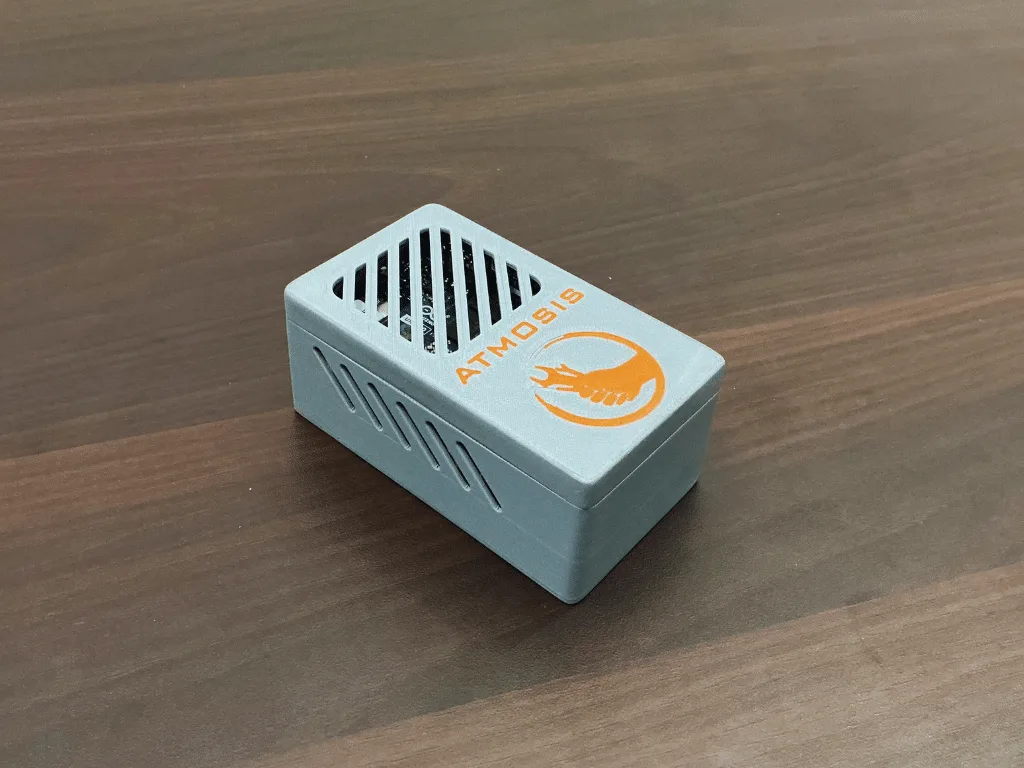
The device's physical components resemble other homemade environmental monitors. Atmosis contains an UNO Q paired with an Adafruit DPS310 sensor for barometric pressure and altitude, a Waveshare X6 sensor for gas detection, temperature and humidity readings, a Waveshare dust sensor, and an LED strip that signals status. Everything sits inside a compact, 3D-printed housing.
Intelligence at the edge
What distinguishes Atmosis from typical sensor devices is its reliance on edge AI, implemented via Edge Impulse, to process readings directly on the hardware. Rather than simply displaying raw numbers, the system analyzes all sensor inputs and alerts users when it detects values warranting concern.
For deeper exploration, Next Builder integrated Google's Gemini LLM into Atmosis. When users want nuanced analysis or answers to specific questions, Gemini can examine the sensor data, consult references, and provide detailed responses.
Access and delivery
Users access Atmosis findings through a web interface or opt to receive notifications via a Telegram bot, depending on their preference.
Local value
While established weather stations typically offer more comprehensive data than Atmosis can gather, the device targets situations where local conditions matter most. Microclimates or site-specific factors—such as dust at a construction site—may differ significantly from broader regional readings. In these cases, Atmosis delivers environmental intelligence tailored to a specific location and presented in a format users can readily understand.
Source: Arduino Blog