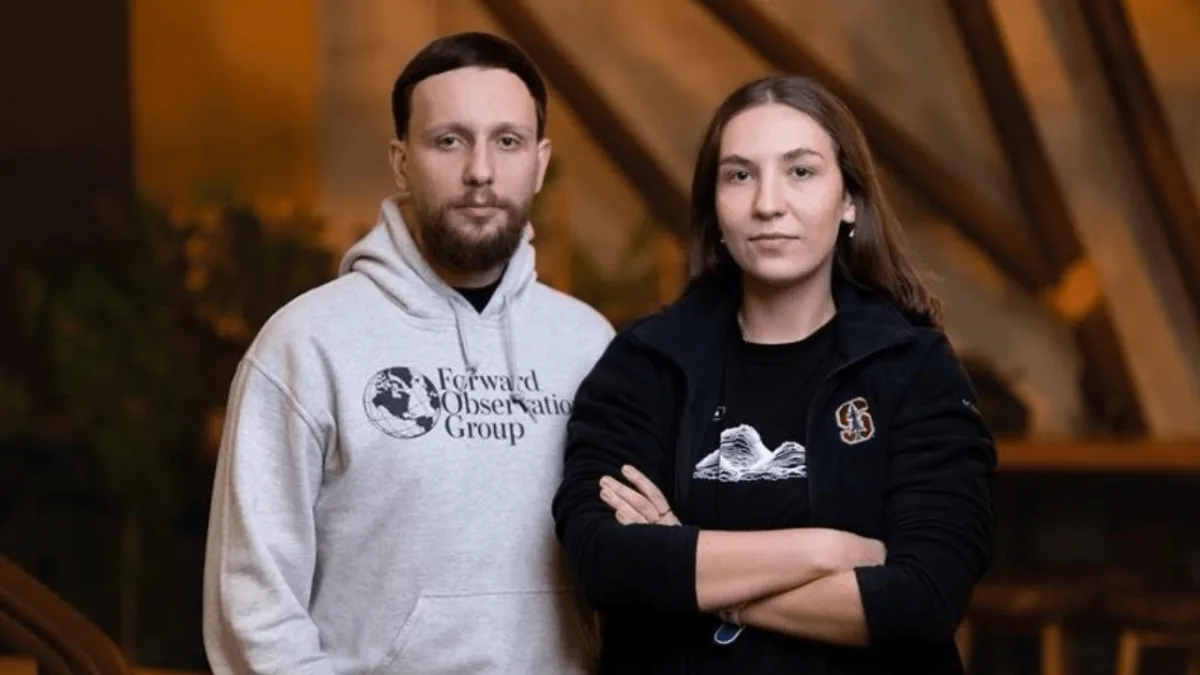
Pai Defence, a British-Ukrainian venture founded by military commander Dmytro and aerospace engineer Tonia Zakorchemna, has closed a $5 million pre-seed funding round. The round was led by Gardar, a Nordic venture capital fund, with participation from Ukrainian investors including UA1, D3, Green Flag, Defence Builder, 1991 Ventures, Motanka, WildField, TA Ventures, and Angel One.
The startup, established in 2025, has built a situational awareness platform designed to transform the chaos of drone warfare into a structured, predictable defence system. Operating at both tactical and operational levels, Pai Defence gathers real-time radio-electronic signals to identify drone presence, activity and classification. By processing thousands of drone flights daily through machine learning, the company extracts behavioural patterns from enemy drone operations.
The platform tracks flights across contested airspace in real-time, constructing a digital record of each sortie. Machine learning algorithms then analyse this data to pinpoint enemy pilot locations, predict drone flight paths, identify optimal defensive windows and categorise drone types. This approach aims to provide Ukrainian and allied forces not merely with detection, but with actionable intelligence about adversary tactics.
Tonia Zakorchemna, CEO and co-founder, highlighted the urgency of early warning: "For the most lethal weapon on the frontline, a detector's beep when the drone is almost overhead is far too late."
At Pai, we've built the situational awareness layer that finds drones while there is still time to counter them. We've tracked over 100,000 drone flights and turned them into data on how enemy drones behave, and that is only the start. The adversary will adapt, and our machine learning is already preparing the system for the next threats. With this investment, we will scale the technology and make the skies over Ukraine predictable.
Tonia Zakorchemna, CEO and Co-founder of Pai Defence
Despite Ukraine's advances in battlefield coordination through systems like Delta, a critical gap remains: no existing technology provides a unified real-time display of both friendly and hostile drones, with much detection still performed manually by operators. Following successful combat trials and endorsement from high-performing military units, Pai's founders recognised they had developed the missing component in drone detection and predictive defence.
Erlend Prestgard, managing partner at Gardar, underscored the scale of the problem: "We all know that FPV drones are the biggest killer in Ukraine. Depending on where you are 70-90 per cent of fatalities on the frontline come from them. In other words, this is a critical problem to solve, but has proved to be highly complex. We believe Pai Defence has cracked the code for a major part of this problem, and that they can contribute to saving many lives on the frontlines."
The capital injection will enable Pai Defence to expand sensor coverage across frontline positions, refine its machine learning algorithms and deploy solutions throughout Ukraine. The funding is intended to strengthen military defensive capabilities, reduce equipment losses for units facing constant drone threats and boost operational effectiveness. The company will also deepen its analysis of drone behaviour patterns to devise more sophisticated countermeasures.
Headquartered in Ukraine, Pai Defence plans to expand its workforce and engineering capacity. As drone deployment accelerates globally, the company sees applications extending beyond battlefield use into counterterrorism and civilian security operations.
Source: Tech.eu