A fresh London artificial intelligence venture launched today by Thore Graepel, the former Google DeepMind researcher and co-architect of AlphaGo, is charting a different course from the frontier model builders. Metis Reasoning is raising tens of millions of dollars to develop what it describes as a "compute-efficient" approach to AI that diverges fundamentally from the strategies pursued by Anthropic and OpenAI.
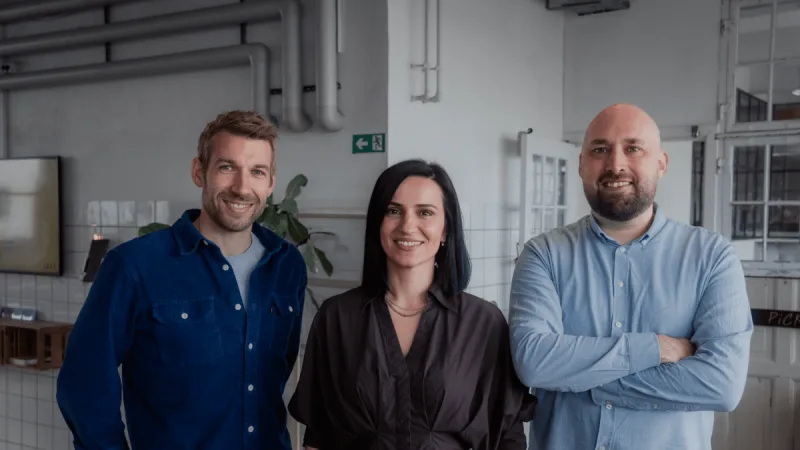
Graepel departed Google DeepMind this summer to establish the venture alongside a founding team of twelve members spanning research, mathematics, robotics and entrepreneurship. His co-founders include Piers Ingram, a serial technology and biotech entrepreneur responsible for raising over $350m; Michael Warren, a robotics and autonomous systems specialist with Boeing experience; and David Berman, formerly head of AI at Cambridge Consultants and an advisor to UK government and NATO on artificial intelligence matters.
The company's name references the Greek goddess associated with reasoning and wisdom. Metis positions itself as particularly suited to industries demanding rigorous verification, such as robotics, engineering, and scientific research.
The reasoning versus pattern-matching divide
Metis distinguishes its work from large language models by focusing on AI reasoning—the capacity of systems to work methodically through problems and connect information—rather than pattern recognition based on training data. The company contends that while LLMs have demonstrated considerable progress in generating fluent responses, following instructions and managing certain multi-step tasks, they suffer from fundamental reasoning constraints that render them unreliable and lacking transparency in their decision-making processes.
This limitation, Metis argues, represents a significant obstacle to broader adoption. Many sectors remain hesitant to deploy AI systems because verifying their outputs remains difficult. Ingram, who encountered Graepel at a Cambridge social gathering where they discussed Turing machines, explains the stakes: "When you think about higher-stakes cases in engineering or science, or medical or legal reasoning, the arguments that the models come up with basically can't be trusted. I don't think that's a good foundation for what we want our AI to be."
Metis's architectural approach draws inspiration from Graepel's prior work on AlphaGo, applying similar design principles to the reasoning problem. The company asserts that its method delivers greater verifiability, robustness and safety compared to existing frontier models.
Efficiency over scale
Rather than pursuing the path of ever-larger models with correspondingly massive training budgets, Metis is emphasizing computational efficiency. Ingram characterizes the company's architecture as "much much more" compute efficient than frontier models, noting that Metis has already demonstrated "encouraging" results on frontier reasoning challenges while consuming only a fraction of the computational resources required by leading alternatives.
When asked why Anthropic and OpenAI have not adopted similar strategies, Ingram responded: "I think they are thinking about it differently." He declined to confirm specific fundraising figures but stated that "We have been able to fund the company more than adequately to date."
The timing of Metis's launch remains uncertain, with no announced date for the public release of its first AI model.
A crowded London AI landscape
Metis joins a growing cluster of AI startups based in London. Ineffable Intelligence, founded by David Silver—Graepel's former colleague from the AlphaGo project—and Recursive Superintelligence, co-founded by prominent German computer scientist Richard Socher, represent other recent entrants to the city's AI ecosystem.
Regarding potential overlap with these competitors, Ingram noted: "We obviously don't know exactly what they are doing; they don't know exactly what we are doing." He emphasized, however, that Metis's direction represents "really a very different, almost philosophical approach" to the AI challenge.
Source: Tech.eu