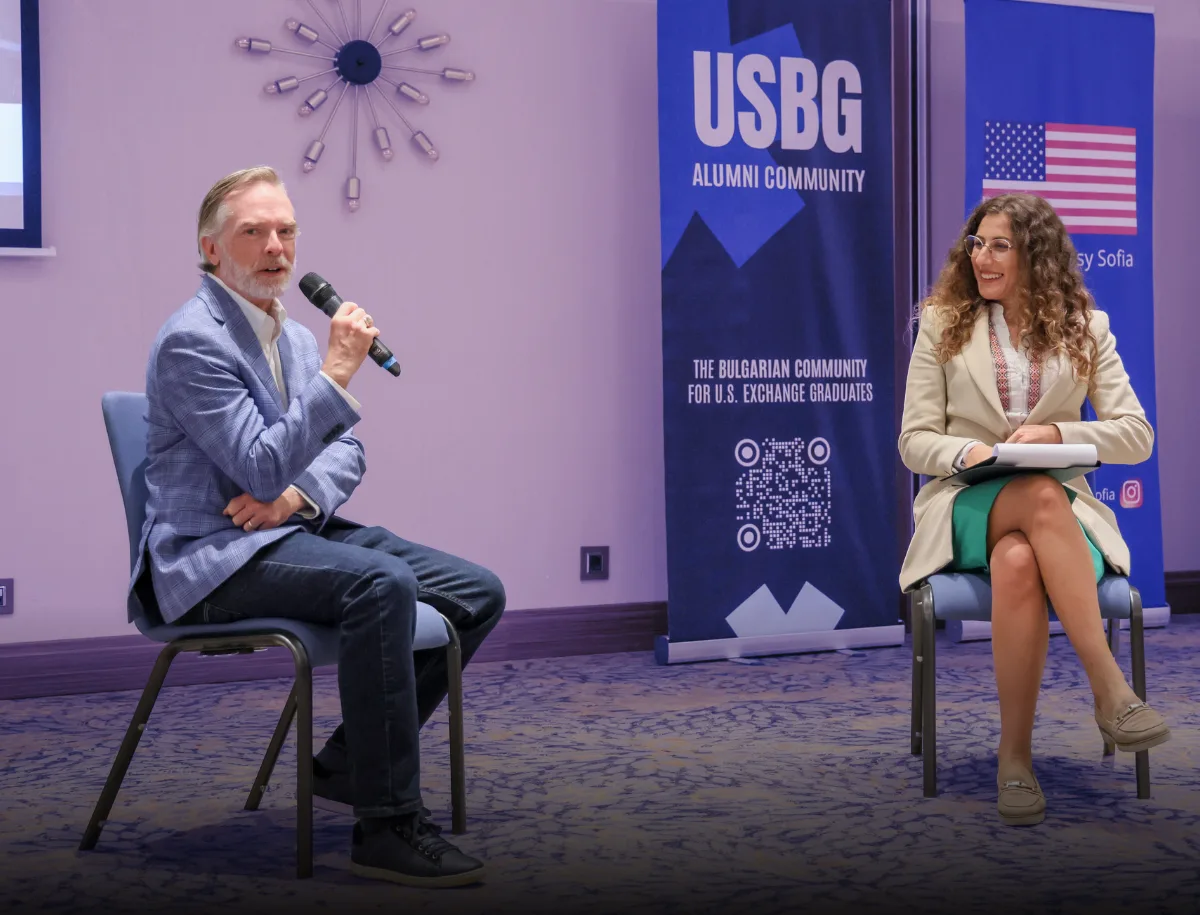
Scott Fox recently shared insights into the challenges facing non-US founders seeking to raise capital from American investors at the Freedom250 Alumni Innovation Summit in Bulgaria, an event hosted by the USBG Alumni Community alongside the U.S. Embassy Sofia. Fox highlighted a recurring pattern: while Central and Eastern European entrepreneurs demonstrate genuine drive, their approach to entering the US market frequently diverges from what venture capitalists actually demand.
The Delaware discount and why legal governance matters
A European startup's first structural obstacle involves legal incorporation. Regardless of product quality or customer traction, US venture investors demand governance frameworks they recognize and can trust. For most foreign companies, this requirement translates into a single mandate: establish a Delaware corporation.
US investors in particular require US governance these days. So, a company starting here would probably need to incorporate in the US state of Delaware, so that US investors would feel comfortable with the legal protections and the capital protections.
Scott Fox
This is far more than bureaucratic formality. Companies that skip this step encounter what the investment world terms a valuation discount. The core issue: US legal counsel lacks familiarity with foreign corporate statutes, creating perceived risk that venture funds cannot accept. For startups targeting business-to-business partnerships or acquisition pathways, legal alignment becomes non-negotiable.
"Having someone on the ground"
Many founders wrestle with whether relocation to America is mandatory for credibility. While permanent US residence represents the gold standard for deep market immersion, it is not a prerequisite from day one.
Instead, it is about being present when it matters. Fox advises that founders need to be where their customers are, as often as their customers want to see them.
Scott Fox
A viable alternative involves scheduled, predictable trips to the US market. This cadence allows investors and partners to anticipate founder availability and builds the interpersonal relationships that underpin deals. Between visits, video conferencing provides continuity, yet on-the-ground representation carries substantial value. Fox cites his experience with an Australian startup that brought him on as an advisor to maintain market presence while the chief executive remained abroad. This arrangement transformed periodic founder visits into high-impact engagements.
Whether a startup secures US funding before market entry or bootstraps with local revenue first, the objective remains identical: establishing credibility with American stakeholders.
If you've got cash flow in dollars in America, in our time zones, in our markets, you look like an American company.
Scott Fox
Calculated failure and the venture capital timeline
The most fundamental divide between US and European startup cultures concerns attitudes toward risk and failure. European founders tend toward caution, a posture that clashes directly with the Silicon Valley venture model. Venture capital functions as growth accelerant, engineered for explosive expansion.
Venture funds operate within rigid timelines—typically six to twelve years. Capital must deploy and return rapidly to satisfy the fund's own limited partners. Fox emphasizes this temporal constraint: "What we're looking for are companies that can go really big, really fast. And something that founders miss a lot is they don't realize the time element of this." This urgency necessitates a high casualty rate. A typical venture portfolio might contain ten companies with an expectation that nine will fail, with the single breakout success generating returns that offset all losses. Founders must therefore reframe failure as a calculated experiment rather than a career-ending event. Excessive risk aversion signals to investors that a founder lacks the appetite for the aggressive scaling venture capital demands.
Stop spamming investors
When startups pivot toward US expansion, they frequently underestimate both the country's geographic scale and the fragmentation of its investment landscape. America's venture ecosystem is not monolithic; it comprises numerous specialized capital providers.
A widespread error involves mass outreach campaigns. Founders equipped with pitch decks frequently contact every investor they locate, betting that capital availability equals compatibility. Fox counters this approach directly: "If you meet someone and they say they're a venture capitalist, they still are going to have a specialty within a specialty, within a specialty." A seed-stage software investor will have no interest in a mature aerospace venture.
Avoiding wasted effort requires founders to conduct substantially deeper research before reaching out. Identifying the right partner demands alignment across stage, sector, and strategic priorities. Fox concludes that while forums like the Freedom250 Summit democratize access to Silicon Valley expertise, founders bear ultimate responsibility for applying that knowledge to build legally compliant, scalable, and strategically focused enterprises.
Source: The Recursive — Events tag