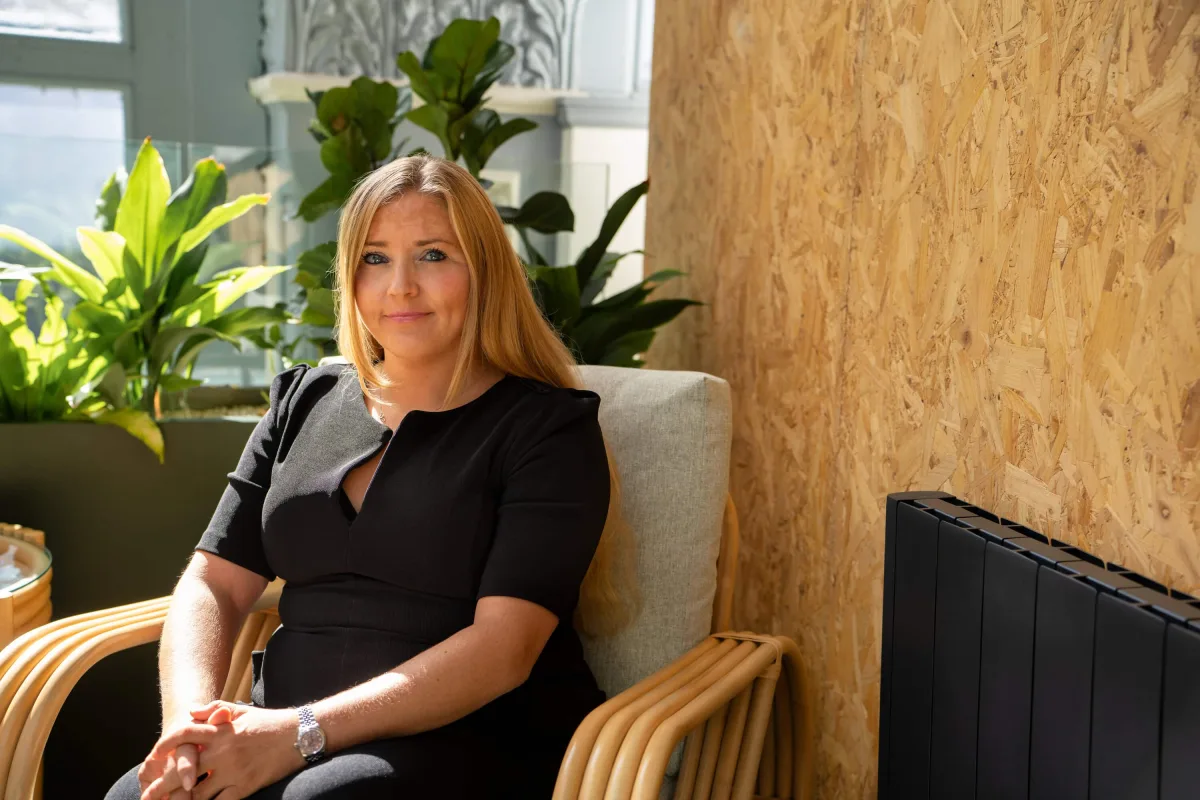
For nearly two decades, Laura Harrison immersed herself in the education sector, driven by witnessing how targeted intervention could transform a student's trajectory and self-belief. That experience led her to found Education Lifeguards, a digital tutoring service connecting students and families with qualified educators while handling the operational complexity behind the scenes.
Based at Campfield in Manchester through the Campfield Exchange founder programme, Harrison collaborates with other early-stage business builders who provide mentorship and strategic guidance. Her mission focuses on developing a sustainable model that remains affordable for families while offering teachers genuine flexibility to apply their expertise.
Ahead of World Mental Health Day, Harrison spoke about the administrative pressures driving educator burnout, her own approach to founder wellbeing, and her vision for Education Lifeguards' future.
From Education to Entrepreneurship
Harrison's transition to founding Education Lifeguards emerged from observing a fundamental frustration: teachers spend enormous amounts of time on paperwork and compliance rather than their core work. "The idea really came from seeing how much of teachers' time gets swallowed up by admin and box-ticking, when what they actually want to be doing is teaching and supporting students," she explains.
Having operated Education Lifeguards as a sole trader for over six years before formalising the venture, Harrison witnessed the pain points across all stakeholders. Teachers craved flexibility and better work-life balance; parents sought assurance about their child's safety and the instructor's qualifications; students needed individualised attention rather than standardised instruction. "We could give teachers the independence of tutoring without expecting them to build an entire business infrastructure around themselves at the same time, while giving parents more confidence in the quality, accountability and specialist support their child is receiving," she says.
The Changing Face of Teaching
Over her 19 years in education, Harrison has witnessed the profession expand dramatically beyond classroom instruction. "The amount of administration, accountability and additional responsibility surrounding the job has grown significantly," she observes. Teachers now manage more documentation, justify decisions more frequently, and navigate competing institutional demands—all while delivering quality lessons and supporting young people through critical developmental stages.
The cumulative weight of these layers, rather than any single burden, creates the breaking point. "It's rarely one form, one policy or one extra responsibility that pushes somebody to the limit, but the way those demands build up over time on top of a job that was already intensive." Harrison emphasises that the profession's sustainability crisis stems not from teaching itself, but from the bureaucratic ecosystem surrounding it.
She also notes a troubling shift in how experienced educators are treated. "I've also seen experienced teachers feel that their professional judgement increasingly has to be justified and documented. Accountability is important, but unnecessary levels of bureaucracy risk making highly trained people feel that their expertise isn't being trusted."
The Hidden Workload
Much of what teachers do remains invisible to those outside the profession. Beyond classroom hours lie lesson preparation, assessment marking, written reports, staff meetings, parent conferences, professional development, safeguarding responsibilities, extra tutoring sessions, and ongoing family communication. This work typically extends beyond the school day.
Equally significant is the emotional labour involved. "There's also an emotional responsibility that's difficult to explain unless you've worked in education yourself. You're supporting young people through really important stages of their lives, and good teachers carry that responsibility very seriously." The combination of practical demands and psychological weight creates exhaustion that outsiders often underestimate.
How Education Lifeguards Removes Friction
Education Lifeguards handles the operational machinery that independent tutors would otherwise manage themselves: matching educators with families, processing bookings and payments, managing cancellations and absences, and providing the digital learning platform. This arrangement lets teachers dedicate energy to lesson design and student support rather than diary coordination, payment chasing, or administrative tasks.
However, efficiency cannot compromise standards. "At the same time, making the process easier can't come at the expense of quality. We still have clear expectations around safeguarding, standards and accountability, because parents need to feel confident about who is teaching their child and the support they're receiving."
Mental Health Beyond Initiatives
While Harrison welcomes increased public discussion of educator mental health, she cautions against treating wellbeing as separate from job structure. "There's only so much a wellbeing initiative can do if teachers are still dealing with excessive workloads and constant administrative pressure. Telling people to be more resilient only gets you so far if the things making the job difficult haven't changed."
True progress requires prevention: streamlining unnecessary processes, expanding teacher autonomy, and ensuring professionals feel safe acknowledging when conditions become unsustainable. "For me, supporting teachers' mental health has to start with making the profession more sustainable in the first place."
Founder Burnout Versus Teacher Burnout
Harrison's dual perspective—as both educator and entrepreneur—reveals a crucial distinction. Founder life demands intensity: long hours, constant decisions, and a business that never fully disconnects. Yet founders typically retain agency over their choices and direction. "If I'm working late on Education Lifeguards, I understand why I'm doing it and I have a say in where I put my time and energy. That doesn't remove the pressure, but it changes how that pressure feels because I'm working towards something I genuinely believe can make life better for teachers, students and families."
Teachers, by contrast, often experience pressure as externally imposed. "In education, a lot of the pressure can feel much more imposed on you. You can be working incredibly hard while still spending huge amounts of time responding to processes, expectations or priorities you haven't chosen yourself, and that lack of control can be really draining."
This insight reframes burnout itself: "You can be extremely busy and still feel motivated if you have a sense of purpose and agency. At the same time, founders aren't immune to burnout either. If anything, having complete ownership can make it harder to know when to stop because there is always another decision to make or problem to solve." Sustainable work requires control, clarity of purpose, and recognition of when pressure becomes counterproductive.
Protecting Wellbeing as a Founder
Harrison acknowledges the ongoing challenge of maintaining her own wellbeing while building an early-stage venture. A critical skill has been distinguishing urgency from genuine importance. "When you care deeply about the business, every email, idea or opportunity can feel like it needs dealing with immediately, and that can become overwhelming very quickly." She has learned to focus on activities that truly advance the business rather than measuring productivity by volume completed.
She also recognises that exhaustion undermines decision-making quality. "If you're building something for the long term, you have to find a pace you can actually sustain rather than treating every week like an emergency." For Harrison, this means firm boundaries: no client work on weekends, automated responses outside business hours, and protected time with her young children.
Her motivation remains rooted in lived experience. "I'm incredibly grateful for the work I've built up over the years because that experience is what has given me the understanding to create Education Lifeguards in the first place. I've seen the problems teachers, parents, students and business owners face first-hand, and that's what keeps me motivated."
The Value of Community
Being embedded in Campfield's founder community has proven invaluable. Rather than solving problems in isolation, Harrison benefits from conversations with other entrepreneurs tackling different challenges. "Sometimes you can get completely stuck in your own head with a problem, and then one conversation with someone building a totally different business makes you see it differently. I've found that really useful."
The broader Manchester technology and creative ecosystem also expands her perspective. "Campfield also brings together people working across technology, media and creative industries, so you're constantly hearing different ideas and approaches. It gives me a much wider view of what's happening in Manchester and has helped me feel more confident about the decisions I'm making and where Education Lifeguards goes next."
Looking Forward
Education Lifeguards' next phase focuses on expanding reach to more families and creating a credible alternative pathway for experienced teachers to apply their expertise outside traditional schools. More broadly, Harrison advocates for smarter deployment of teaching talent. "Technology and better systems should make their working lives easier and remove unnecessary friction, rather than creating another layer of admin or complexity."
She also envisions a profession that trusts and empowers experienced educators. "If we want talented people to stay in education for the long term, we have to create careers that feel sustainable and give them a genuine reason to stay."
Source: TechRound