
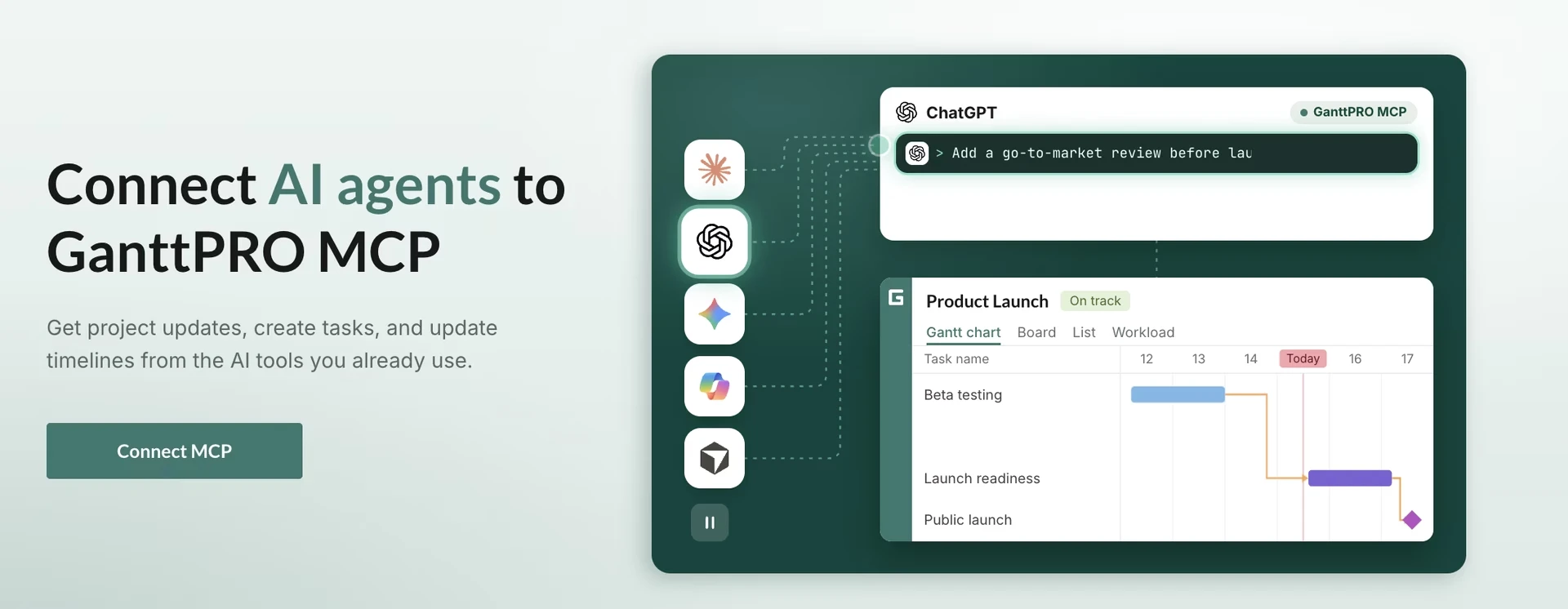
Asking an AI assistant to delay a deadline now triggers an automatic cascade of rescheduling across an entire project plan. GanttPRO, a Kraków-based project management platform, has rolled out GanttPRO MCP to make this possible, connecting live schedules to AI tools like Claude and Cursor. Through conversational commands, project leads can request deadline shifts, task reassignments, or delay investigations—and the system recalculates dependencies for the whole team.
The technology relies on MCP, the Model Context Protocol, which creates a standardized bridge between AI assistants and external applications. Adobe recently opened Photoshop and Premiere to outside agents using the same approach.
MCP essentially turns the manual task of updating the plan into something akin to messaging with a colleague
Dzmitry Dudzin, GanttPRO's CEO
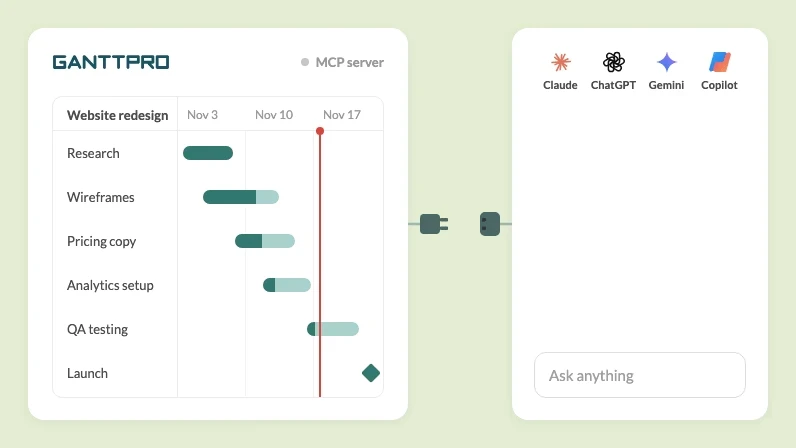
According to Dudzin, artificial intelligence has evolved rapidly from simple text interfaces into systems capable of executing actions within production tools. He pointed out that maintaining current plans becomes increasingly difficult once execution begins, as team members shift between initiatives and unforeseen events force task postponements.
That's why a good plan has to be both alive and anchored to its original goal. I can think of GPS as a perfect example. When there's a traffic jam, it reroutes you, but the destination stays the same, and you can see whether you'll still arrive on time
Dzmitry Dudzin
Current use cases
A project manager might instruct the assistant to extend testing by seven days and reassign it to another team member. Once automatic scheduling activates, GanttPRO's engine shifts all connected activities accordingly, simultaneously evaluating whether the project can still hit its original targets and stay within budget.
In practice, teams have adopted the tool primarily for rapid plan adjustments and early risk detection, Dudzin explained. Another frequent application involves generating status summaries for stakeholders or senior leadership.
The assistant responds to inquiries about project health by listing overdue items and upcoming checkpoints. It can identify bottlenecked tasks, unassigned work, and at-risk milestones. Additional capabilities include workload assessment, comment insertion, status updates, and time tracking.
Guarding against mistakes
A critical question emerges: what prevents a single misguided command from cascading failure across an entire schedule? MCP implementations have faced security vulnerabilities in the past—TNW documented in October that Google, JPMorgan, and two government entities patched an identical flaw.
Dudzin outlined three protective layers. The assistant operates with permissions matching its user's role, which administrators can restrict to read-only, edit, or delete functions. Second, the system immediately alerts users if a modification would delay dependent activities. Each set of changes undergoes validation before execution; if any single change cannot be applied, the entire batch is rejected.
Third, GanttPRO maintains a complete audit trail. Users retain the ability to restore their project to any previous state.
The access flow begins with user authentication to GanttPRO, team selection, and explicit assistant authorization using the user's existing permissions. Administrators retain granular control, specifying which sections of the platform the assistant can access and modify, with the ability to revoke permissions instantly.
Why specialized tools matter
Larger platforms such as Asana and monday.com are integrating AI capabilities into their existing feature sets. Dudzin acknowledged both as formidable competitors worthy of their market positions, yet noted their comprehensiveness can overwhelm users seeking focused functionality.
GanttPRO's differentiation centers on specialized planning methodology grounded in Gantt chart visualization. Since its founding in 2014, the company has prioritized automatic task rescheduling when dates shift and critical path analysis to surface potential bottlenecks. For sectors like construction and manufacturing, calendar placement alone proves insufficient; teams require hierarchical task structures that expose interdependencies and identify critical failure points.
And this matters directly for AI: it's no smarter than the tool it works with. If a tool doesn't know how tasks are connected, AI will move one card and leave the rest of the plan as it was, drifting even further from reality
Dzmitry Dudzin
When the assistant adjusts a date within GanttPRO, the entire schedule recalculates around task relationships. Dudzin recommends that organizations abandon broad platforms in favor of specialized solutions addressing their particular needs.
If deadlines, budget and dependencies between tasks are critical for you, that's our territory
Dzmitry Dudzin
GanttPRO MCP comes bundled with the company's existing subscription tiers, starting at $7 monthly per user when billed annually. The company introduced AI Project Planner in August, which generates initial schedules from text descriptions, voice recordings, documents, or visual materials. MCP addresses the subsequent phase of plan management. That same month, OpenAI and four partner organizations established a unified standard for AI agent interoperability.
Source: The Next Web