Fusion reactors, hypersonic aircraft and construction robots represent the kinds of capital-intensive ventures that Plural now has the resources to support. The early-stage investment vehicle, steered by experienced founders and operators, has closed a €1 billion fund aimed at backing the entrepreneurs Europe needs to build its technological future.
Plural's stated goal is to deliver economic impact at the scale of a nation's GDP. The fund targets founders tackling what the coming decade demands most urgently: energy systems, artificial intelligence infrastructure, defence capabilities, healthcare innovation and other cutting-edge technologies.
For the past twenty years, the world's most valuable tech firms have predominantly emerged from the United States and China, positioning Europe as a consumer of technology rather than an originator. This dynamic has diminished the continent's wealth and its influence in global affairs. Yet the accelerating pace of technological disruption now presents Europe with an opening to close this gap. Plural contends that Europe possesses the entrepreneurial talent, scientific capacity and momentum to generate numerous globally significant enterprises.
Backing Europe's next generation of global tech companies
When Plural launched in 2022, European founders pursuing breakthroughs in defence, energy, space and AI infrastructure faced substantial obstacles in securing investment. Plural's partners invested early in these domains, and their portfolio now includes standout firms such as Helsing, Proxima Fusion, OLIX and The Exploration Company, which rank among Europe's most heavily funded startups.
The €1 billion fund will enable Plural to commit more capital to early-stage ventures tackling exceptionally difficult challenges, with each partner overseeing a limited number of new deals annually. Simultaneously, Plural intends to continue supporting its most successful portfolio companies as they expand and mature.
Portfolio companies by sector
- Compute, quantum and AI: OLIX, Callosum, Oriole, Orbital Industries, Phasecraft, Metaview, Validio
- Energy: Proxima Fusion, Rivan, Ore Energy, Molyon
- Defence: Helsing, Hypersonica, Frankenburg Technologies
- Automation and manufacturing: Monumental, Sunrise Robotics, CircuitHub, Gigaton
- Space: The Exploration Company, Karman+Health: Robeauté, Teton, IXI, Everlab
What €1 billion makes possible that €500 million couldn't
Sten Tamkivi, a Partner at Plural, explains that the expanded fund size permits the firm to back hardware-intensive and research-driven concepts with substantially larger initial cheques, while maintaining capacity to participate in subsequent funding rounds as portfolio companies mature.
A software company can often prove its idea with a $/€1.5 million seed round, but a fusion, hypersonics or chip company may need well over $20 million just to build and test the hardware that reaches its first milestone.
Sten Tamkivi, Partner at Plural
Over the past year, Plural's portfolio companies have collectively raised more than €3 billion in subsequent funding rounds, creating fresh opportunities for the fund to deepen its commitments as these firms scale.
With so many breakout companies, we want to make sure we can keep doubling and tripling down on them. We're still backing the same number of companies and are aiming to make roughly the same number of investments per fund, so the extra capital goes deeper into each company rather than spreading us thinner.
Sten Tamkivi
Tamkivi emphasised that Plural's commitment to investing at the earliest stages remains unchanged. What differs is the magnitude of capital that certain frontier technology ventures require before generating revenue.
Building a hypersonic vehicle, a fusion reactor or a new chip architecture costs much more before revenue than building a software product - and we want to make sure good companies are properly capitalised from the outset. Take Proxima Fusion, for example: Ian backed it as a spinout from the Max Planck Institute at pre-seed, and it's now the best-funded private fusion company in Europe. Being properly capitalised from the start means founders can spend their time building rather than constantly fundraising to stay alive.
Sten Tamkivi
Europe's funding ceiling is rising, but gaps remain
European deeptech enterprises are increasingly demonstrating their capacity to reach technical milestones at startup velocity. Hypersonica executed Europe's first privately financed hypersonic test flight nine months after completing its design phase. Robeauté became the first organisation to deploy a microrobot inside an animal brain, while Monumental's bricklaying robots have reportedly constructed 0.5 per cent of new residential buildings in the Netherlands during this year.
Historically, European frontier technology firms have encountered difficulty assembling the capital required to establish themselves as global leaders, not necessarily due to insufficient ambition or talent, but rather because of constrained access to large-scale funding.
This situation is shifting. In 2026, more than 100 European companies have secured funding rounds exceeding $100 million, and roughly one tenth of Plural's portfolio—including Helsing, Proxima Fusion, OLIX and Callosum—belong to this category.
Yet Tamkivi observes that this expansion reflects not only an enhanced funding landscape but also capital concentrating within a relatively narrow set of enterprises. He proposes that an ecosystem's sophistication can be gauged by examining the geographic distance founders must travel to access capital at various stages.
Today you can raise a pre-seed round in perhaps a hundred European cities. You can raise $5 million or more in a couple of dozen, and $20 million in six or eight hubs such as London, Paris, Stockholm, Tallinn and Munich. Ten years ago you had to call American investors for a $10 million Series A - today, that usually happens at around $200 million.
Sten Tamkivi
Tamkivi contends, however, that capital availability at the market's uppermost tier remains constrained. He argues that Europe possesses "far less brave, high-conviction capital for companies whose milestones are technical rather than commercial, such as fusion, defence systems and new chips."
Those are exactly the companies Europe most needs. The gap is closing as returns come through and repeat founders reinvest, but scaling up late-stage capital is the continent's next big task.
Sten Tamkivi
How Plural identifies promising frontier technologies
When assessing enterprises developing intricate hardware or research-driven innovations, conventional software investment frameworks often prove inadequate. Tamkivi described Plural's approach: the fund seeks founders capable of decomposing ambitious technical obstacles into discrete, quantifiable milestones and demonstrating rapid achievement of those targets.
That's what made SpaceX so capital-efficient, and it's what we see at Hypersonica. Nine months after finalising its design, and just a few months after we backed it, the company completed Europe's first privately funded hypersonic test flight.
Sten Tamkivi
A second critical factor is demonstrated customer or stakeholder demand. For Proxima Fusion, this has manifested through strategic partners committing resources to finance its initial facilities. In the defence sector, demand surfaces through government procurement strategies and capability assessments, while other ventures can showcase commercial appetite through customer purchase orders.
Tamkivi noted: "Companies like Frankenburg, Karman+ and Monumental may need to do very complex engineering to ship, but their order books have piled up with eager customers years ahead of scaling."
From robots on construction sites to industrial-scale deployment
Monumental illustrates both the promise and the challenges inherent in introducing frontier technologies into established sectors. The company progressed swiftly from research to operational deployment, launching its first machines in under two years. This acceleration came with obstacles.
Construction is a conservative industry, and trust is earned one project at a time. The robots have to deliver a reliable financial case for contractors on every site.
Sten Tamkivi
Expansion demands that Monumental transition from managing a small number of units to manufacturing and operating an entire fleet, while securing adequate capital to grow ahead of market demand.
The company also needs enough capital to run ahead of demand, which is what Plural exists to provide.
Sten Tamkivi
Tamkivi believes deeptech entrepreneurs gain significant value from the perspective of seasoned business builders. "Every Plural partner has built and scaled a company, and we bring the scar tissue to help them avoid mistakes."
I advise all founders as they scale to keep the bar for talent high, no matter how big their company is, and to keep up the fast iteration and pace that got early results.
Sten Tamkivi
Founders backing founders: why Plural is keeping its investment model small
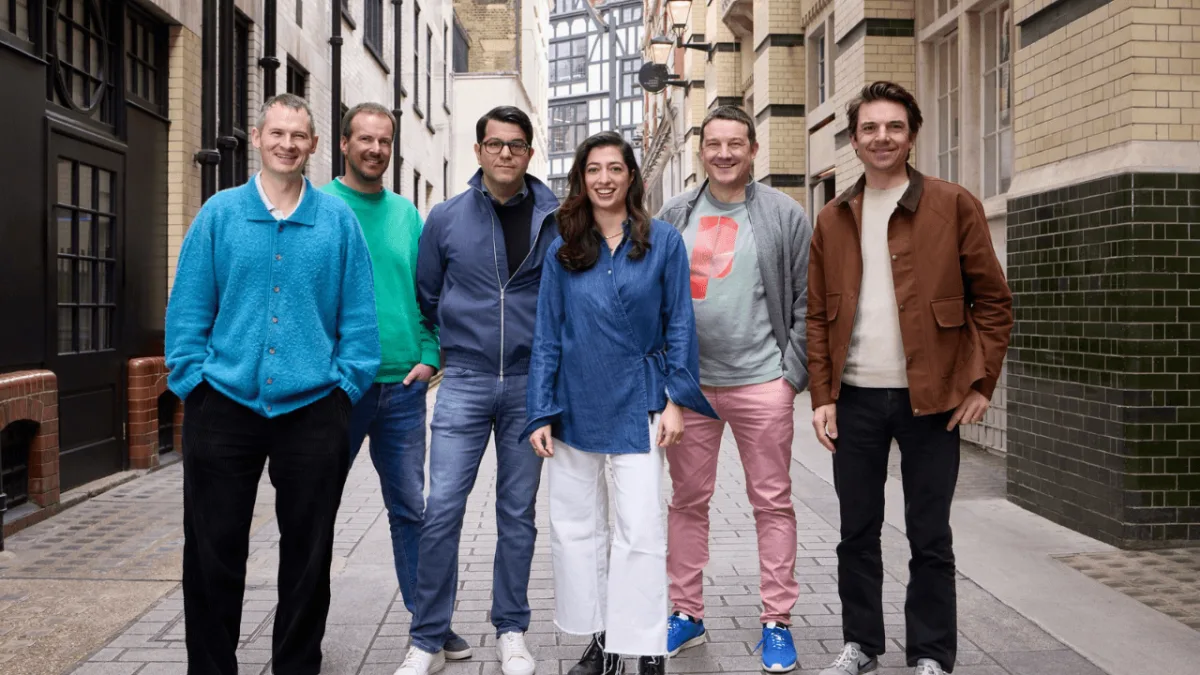
Plural operates under the leadership of six equal partners, each of whom has founded and operated technology enterprises:
- Taavet Hinrikus (co-founder of Wise; first employee at Skype)
- Sten Tamkivi (co-founder of Teleport; early Skype executive)
- Ian Hogarth (co-founder of Songkick; co-founder and Chair, UK AI Security Institute)
- Khaled Helioui (former CEO of Bigpoint)
- Carina Namih (co-founder of HelixNano)
- Pierre-Dimitri Gore-Coty (former Uber executive who launched Uber in France, ran Uber EMEA and led Uber Eats globally; joined Plural full-time in October 2025)
Even as Plural manages substantially larger assets, the firm remains committed to avoiding the structure of conventional venture capital operations that it originally sought to challenge.
According to Tamkivi, the firm's primary competitive advantage lies in the time and expertise its partners dedicate to founders—a resource that cannot be scaled indefinitely.
Each partner leads only a couple of investments per year so that they can spend deep time with their companies. Fund I made 31 investments with five partners. We expect Fund III to make between 25 and 35, with six partners.
Sten Tamkivi
The firm's economic alignment with its founders has remained consistent. Partners rank among the fund's largest investors, and each commits personal capital to every transaction they lead.
We still go against the industry norms that don't make sense, for example, paying our own legal fees rather than charging them to founders.
Sten Tamkivi
Plural's institutional investors span university endowments, philanthropic foundations, international funds of funds, insurance companies, pension funds and family offices across Europe and North America. Endowments and foundations represent the largest segment of the investor base, with many directing returns toward scientific research, education and philanthropic initiatives.
From overlooked to oversubscribed: Europe's frontier tech shift
Tamkivi contends that at Plural's inception, European entrepreneurs pursuing fusion, defence or space technologies operated in relative isolation, with many encountering resistance from investors. Today, several lead the continent's most generously funded technology ventures. Nevertheless, Tamkivi argues that Europe's dependence on imported energy, semiconductors, defence equipment and industrial systems represents a strategic weakness, particularly amid escalating geopolitical tensions.
But this new generation of founders isn't waiting for policymakers to fix their problems - they're building the answers themselves. If the right technologies get the right backing, in ten years Europe could have energy, peace and prosperity on its own terms. That takes a trillion-dollar company built here, and we intend to help build it.
Sten Tamkivi
Source: Tech.eu