The gathering that mattered
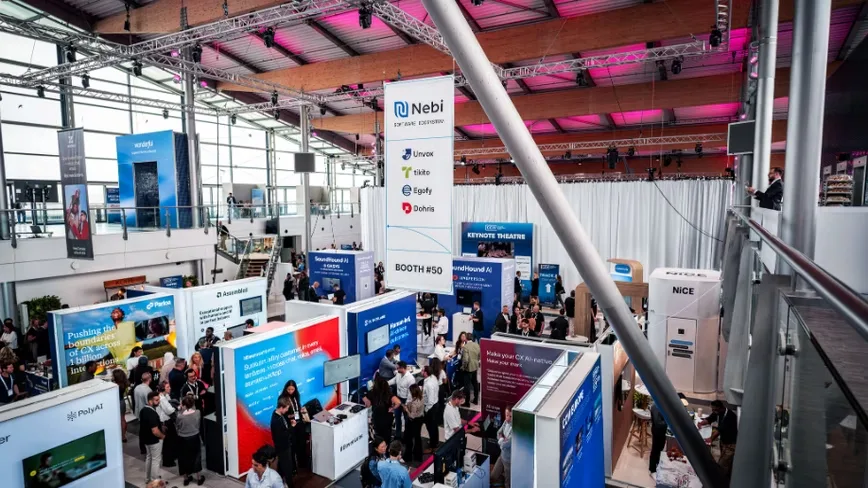
Early October brought the customer contact industry to Amsterdam for three days. Customer Contact Week Europe 2026 assembled roughly 700 participants alongside 50 vendors, creating the kind of focused professional atmosphere that defines Europe's flagship event in this sector. The attendee mix—practitioners, decision-makers and innovators directly shaping how organizations interact with customers—meant conversations moved beyond surface-level networking into substantive territory. For vendors like Nebi, whose intelligent customer support platforms include Unvox and Tikito, this concentration of relevant expertise created genuine value.
The sector's momentum was palpable throughout the venue. Customer contact operations are undergoing rapid transformation, and those working within the space understand the stakes. That sense of forward motion sustained engagement across the three-day program.
AI became unavoidable
Scanning the exhibition floor made one thing unmistakable: artificial intelligence has moved from emerging technology to central concern across customer contact operations. Every vendor booth, every panel discussion, every floor conversation circled back to AI in some form—whether as autonomous agents, insight generation, workflow automation or personalization engines. The enthusiasm was genuine, and for companies positioning AI as a core capability, the environment felt welcoming.
What practitioners actually worry about
Direct conversations with industry practitioners surfaced two persistent concerns.
First came questions about risk. Beyond understanding what AI systems can accomplish, attendees wanted to grapple with failure modes and consequences—particularly acute in customer-facing contexts where trust and experience directly affect business outcomes. Alongside this, practitioners raised measurement challenges: how to determine what's working, how to extract meaning from the data streams that customer interactions generate. Both Unvox and Tikito address these areas directly, making such discussions especially relevant.
The second concern centered on organizational readiness. Multiple organizations described the same obstacle: transformation's hardest part is not the technology itself, but bringing teams through the change. This difficulty intensifies for established operations managing legacy infrastructure built over years or decades, now expected to operate under entirely different principles. Adopting new processes and systems represents substantial organizational friction—a challenge that emerged repeatedly across conversations.
What the event clarified
The conference delivered something more useful than motivation: a clearer picture of what the industry actually requires at this moment. Organizations need partners who engage with the complete picture—both the genuine possibilities and the real complexity of implementation. That conversation, grounded in both aspiration and pragmatism, is what matters now.
Source: The Next Web