For the past decade, ESERO Austria has leveraged humanity's fascination with space exploration to kindle enthusiasm for mathematics, computer science, natural sciences, and technology among children and teenagers. Established in June 2016 at the Ars Electronica Center in Linz as Europe's tenth Space Education Resource Office under the European Space Agency, the organization has trained more than 3,200 educators, engaged more than 28,000 students through hands-on workshops and projects spanning from Vorarlberg to Vienna, and reached over 125,000 people via talks, exhibitions, and interactive experiences. The milestone will be celebrated on Thursday, October 8, 2026, at the Ars Electronica Center with attendees from government, academia, industry, and the education sector.
According to Bettina Anderl, ESERO Austria Manager, "The fascination of space opens doors and can get children and young people excited about STEM. At ESERO Austria, students craft their own satellites, learn how to build on the Moon, program experiments for the ISS, train like astronauts, or come to understand Earth using real satellite data. Space makes STEM tangible and shows what's possible. It broadens perspectives and prepares young people for the challenges of tomorrow."
Federal Minister Peter Hanke emphasized the importance of nurturing young talent, stating: "Young people are the key to innovation. In order for curiosity and ideas to become the technologies of tomorrow, it is crucial that we provide opportunities for all children and young people. But these young talents also need the chance to test out their ideas. ESERO Austria makes that possible."
Teachers as multipliers
Educator training stands at the core of ESERO Austria's mission. The program has brought 3,243 teachers through its curriculum, equipping them to integrate space-based learning into their classrooms through experiential approaches that transcend conventional fact-based instruction.
Students explore space
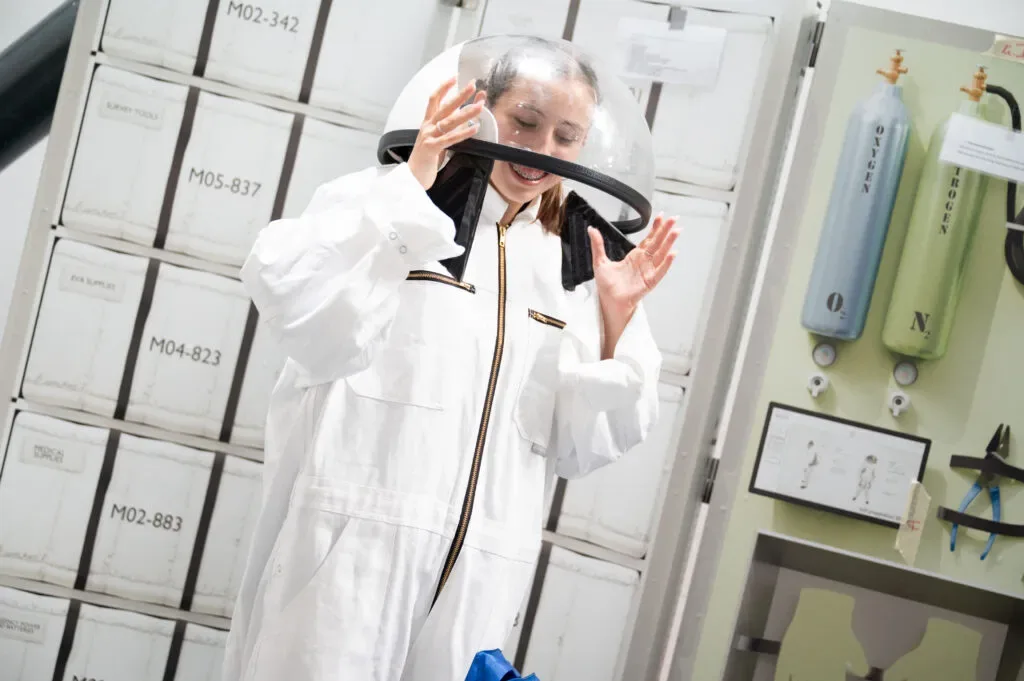
Over its ten-year history, 13,647 students have participated in recurring initiatives, workshops, and competitions that position them as researchers and engineers. The CanSat program saw 345 students across 79 teams construct and launch miniature satellites the size of beverage cans. Mission X, among the most popular offerings, attracted 11,701 participants who trained using astronaut protocols. Additional programs included 848 Climate Detectives investigating regional environmental issues, 981 students designing a lunar settlement through Moon Camp, and 865 learners programming experiments via Astro Pi that were executed aboard the International Space Station.
Space for everyone
ESERO Austria extends its reach beyond traditional educational settings to public venues where large audiences gather. At the Kinderklangwolke in September 2026, an interactive sound event drew 5,000 participants to experience space exploration firsthand. During the Living Planet Symposium 2025 in Vienna, the world's premier Earth observation conference, 2,500 students attended workshops about planetary science. In March 2026, the 18-meter SpaceBuzz installation in Innsbruck's Sparkassenplatz attracted more than 1,300 visitors across five days, with over 600 of them being students and educators who experienced virtual space journeys.
Materials to take home
The organization has produced 206 teaching resources to date, encompassing worksheets, video content, and digital learning platforms, all distributed at no cost and downloaded more than 33,000 times. Video initiatives such as Space Career Videos hosted on whatchado have accumulated over 80,000 views in the past year alone.
Anniversary celebration on October 8
The ten-year milestone will be commemorated on Thursday, October 8, 2026, at the Ars Electronica Center. The day begins with two ESERO workshops in the morning, followed by facility tours for representatives from government, business, and the space industry. A centerpiece of the celebration is the "Space for All" exhibition, showcasing Austria's space sector development and heritage through displays from Austrian space companies and historical artifacts.
From 10 a.m. to 12 p.m., a panel discussion titled "How Space Travel Shapes Education and Innovation in Austria" will feature Peter Hanke (Federal Minister for Innovation, Mobility and Infrastructure), Clara Cruz Niggebrugge (ESA Education), ESA reserve astronaut Carmen Possnig, Doris Arztmann (Federal Ministry of Education), Hans Steiner (Austrospace/Terma), and Bettina Anderl (ESERO Austria). A Deep Space 8K screening will follow.
The evening program commences at 6 p.m. with another Deep Space screening and informal gathering. At 7 p.m., a formal ceremony will launch the anniversary festivities, featuring a retrospective of significant moments from ESERO Austria's decade of operations. Speakers will include Monica Talevi and Clara Cruz Niggebrugge (ESA Education), Andreas Geisler (FFG), Margit Mischkulnig (BMIMI), Carmen Possnig (ESA reserve astronaut), and Raphaela Egger (PLIA, Klagenfurt). The evening concludes with a celebration open to all attendees.
Separate registration is required for morning and evening programs. Details and registration are available at https://esero.at/en/invitation-to-the-anniversary-celebration-10-years-of-esero-austria/
About ESERO Austria
Operating on behalf of the European Space Agency, ESERO (European Space Education Resource Office) assists educators in harnessing space exploration's appeal to motivate young learners in STEM disciplines. Since 2016, ESERO Austria has been based at the Ars Electronica Center in Linz, operating under the mandate of ESA and with support from FFG/BMIMI.
Source: Ars Electronica