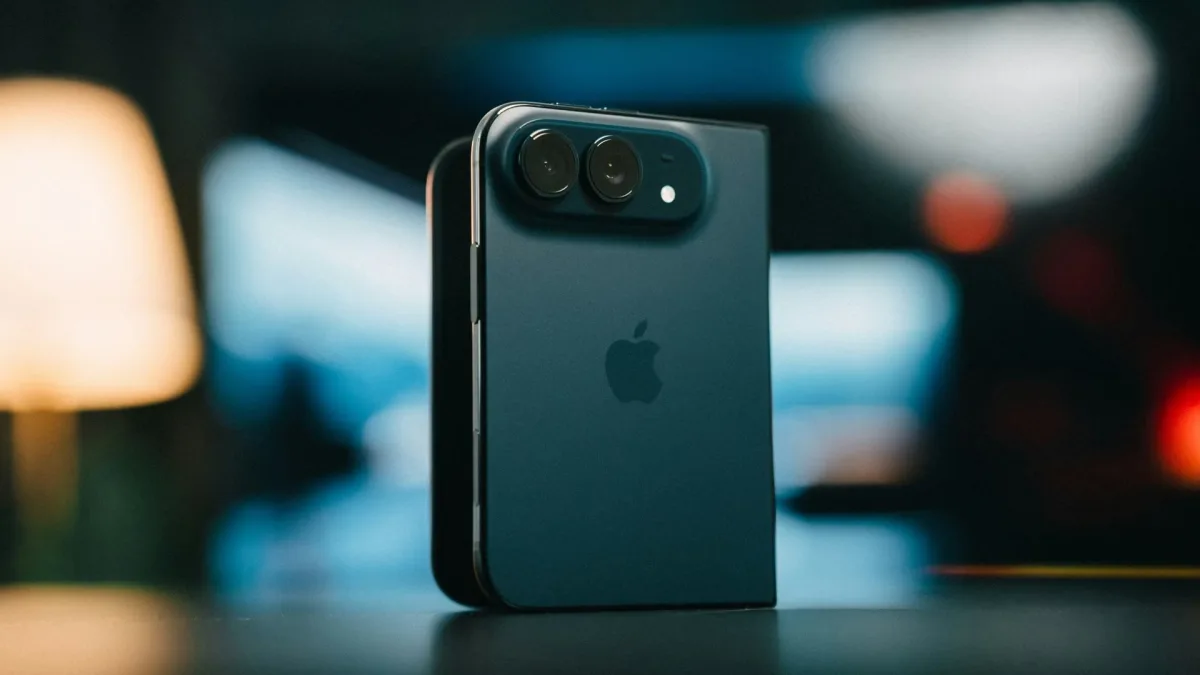
Apple introduced its inaugural foldable device, the iPhone Duo, to retail channels on Friday, October 23, with an entry-level price of $1,999. The Sydney location of Apple's retail network became the first to stock the device, welcoming customers from 08:00 local time (21:00 GMT on Thursday) as they queued to purchase. According to Reuters, this launch represents a significant moment in determining whether Apple can establish itself in a market segment that competitors like Samsung and Huawei have cultivated over an extended period.
The timing carries particular significance for John Ternus, who assumed the role of Apple's chief executive on September 1 and presented the Duo just eight days into his tenure.
Availability constraints across major markets
Securing a device through conventional retail channels will prove challenging for most prospective buyers. Apple disclosed that in-store inventory remains restricted across the United States, Canada, Mexico, Australia, and substantial portions of the United Kingdom and European continent. For China, France, Hong Kong, India and Japan, the company has implemented a policy limiting phone distribution exclusively to those who placed advance orders.
At the Sydney store, 48-year-old engineer Simon Krishnan purchased a 512GB variant for A$3,899 (approximately US$2,734). He explained his decision to Reuters, stating: "This is a bit of a luxury item for me, because it's so expensive, but I just think, you know what? Life's too short."
Demand for pre-orders proved substantial enough that delivery windows for newly placed orders extended to late January within moments of the pre-order window commencing on October 16. Apple conveyed to the Financial Times: "The pre-order demand for iPhone Duo, our first foldable iPhone, has been nothing short of extraordinary."
Mixed critical reception
Initial assessments from technology reviewers highlighted the device's aesthetic qualities and its hinge mechanism, which produces virtually imperceptible creasing on the folding display—a persistent limitation in competing foldable phones. However, critical enthusiasm diminished when examining other aspects of the hardware and software experience.
The Duo lacks a telephoto lens, incorporates Touch ID biometric authentication rather than Face ID, and requires ongoing optimization from numerous third-party applications to function optimally on its 7.6-inch internal display.
John Gruber of Daring Fireball characterized the experience of operating the Duo as resembling "an extraordinarily polished prototype," suggesting it falls short of being a fully realized product worthy of daily use and transportation.
Marques Brownlee assessed the device in his YouTube video as "probably a no" for consumers whose primary activities center on messaging, social media engagement, and internet browsing.
Analyst outlook
Market research firms paint a more optimistic picture. IDC projects that Apple will command 44% of the foldable device market's monetary value in 2026 while accounting for 31% of total units distributed, and forecasts the company will dominate both metrics by 2027.
Francisco Jeronimo, vice president at IDC, told Reuters following his evaluation period: "Apple has made a convincing case for this form factor." He identified the subsequent challenge as "turning excitement into availability, adoption and a lasting new chapter" for the smartphone category.
Source: The Next Web