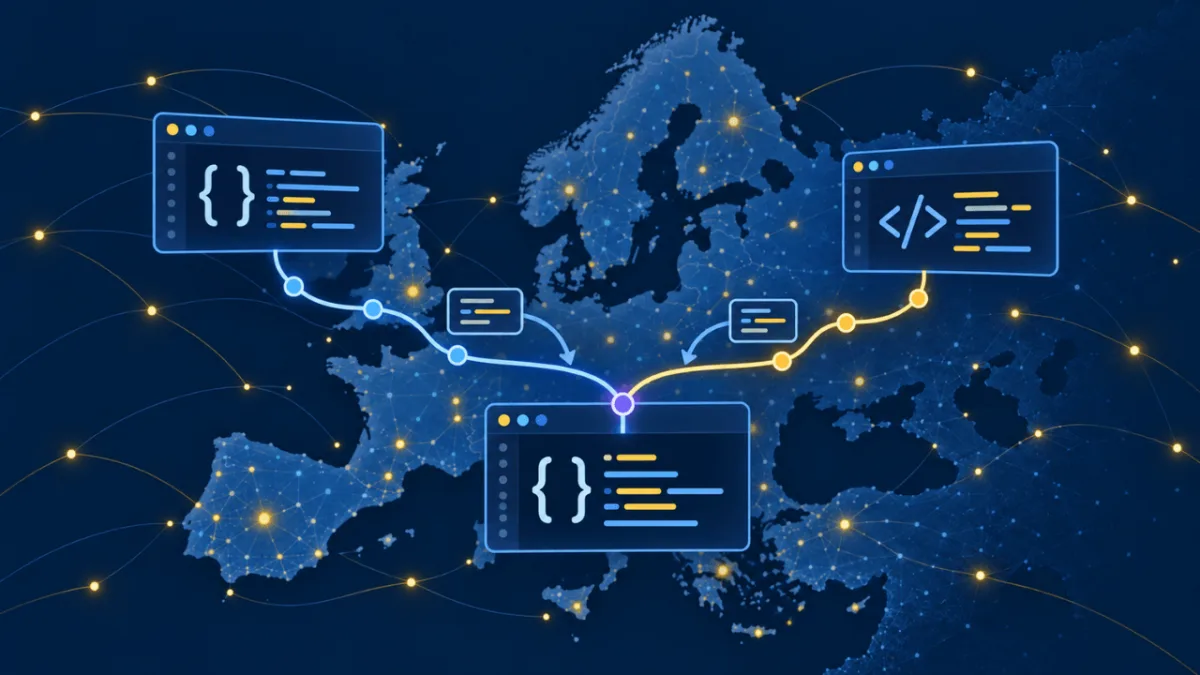
Participants at the Open Source Summit Europe, held in Prague and organised by the Linux Foundation, emphasised that European organisations need to strengthen their engagement with open source development. The gathering highlighted digital sovereignty as a central concern for the continent's technology strategy, particularly given persistent worries that Europe remains overly reliant on technology originating from the United States.
Thierry Carrez, general manager at Linux Foundation Europe, underscored the role open source can play in advancing European independence. He stated: "Open source gives organisations a way to reduce dependence on any single vendor or country." The summit explored multiple dimensions of this challenge, including geopolitical considerations, the advantages of open source approaches, agentic workloads, and difficulties with AI model hallucinations.
Recent research from the Linux Foundation found that digital sovereignty has become a strategic priority across European organisations. The survey data revealed that over nine in ten organisations view digital sovereignty as important to their technology strategy, with many turning to open source technology to gain greater control over their technology infrastructure.
While startups demonstrate active involvement in open source development and code sharing, the foundation identified a significant gap between how widely organisations use open source and the governance structures they establish to manage it. Organisations implementing advanced open source governance practices reported returns averaging more than four times their investment, substantially outperforming those without formal governance structures, which saw returns of 3.6 times.
Carrez elaborated on this distinction: "Consuming open source alone doesn't give you effective control over the technology. By contributing upstream and participating in open governance, European organisations can achieve greater autonomy, efficiently leveraging the global open source technology commons." The foundation called for European organisations to transition from passive consumption to active participation in the communities responsible for developing and maintaining open source projects.
This push aligns with European Union policy initiatives, including the Tech Sovereignty Package and Cyber Resilience Act, both of which emphasise open source as a strategic tool.
Investment and expertise requirements
Christopher Robinson, chief security architect at the Open Source Software Foundation, outlined the practical benefits of engaging deeply with open source software. He explained: "It requires an investment in skills and expertise. But if you do make that investment, you have the ability to go in and mould this software that might be 90 per cent of what you do and then tailor it to your organisation."
Johan Linåker, senior researcher at the RISE Research Institutes of Sweden, highlighted the significance of open source for government operations. He observed: "Open source enables governments to share underpinning digital public infrastructure components and technology even though they politically don't align at the top." Linåker pointed to instances where governments have collaborated on information sharing regarding issues such as political corruption, despite broader political differences.
AI agents and software development transformation
Robinson also addressed how artificial intelligence is reshaping software engineering practices. He noted: "AI has drastically changed the practices of software development. We have a lot of people today who are non-traditional developers; they aren't trained software engineers, they are able to write software, to customise things very easily with these agents."
The summit devoted considerable attention to AI agents, with speakers highlighting how open source technology enables agentic workloads to connect securely to tools, data, and other agents while maintaining security boundaries. GitHub data from October demonstrated the accelerating adoption of AI agents in development workflows, with one in three pull requests now involving an AI agent, compared to fewer than one in ten just a year earlier.
Laura Tacho, senior principal technologist at AWS, cautioned that rapid technological advancement is outpacing confidence in these tools. She stated: "Things are moving really, really fast. But what is not increasing at the same pace is our trust in our tools." Tacho cited data indicating that over 80 per cent of developers harbour concerns about the accuracy of information produced by AI models. However, she also referenced research showing that developers recognise AI's contribution to innovation and software quality improvements.
Source: Tech.eu