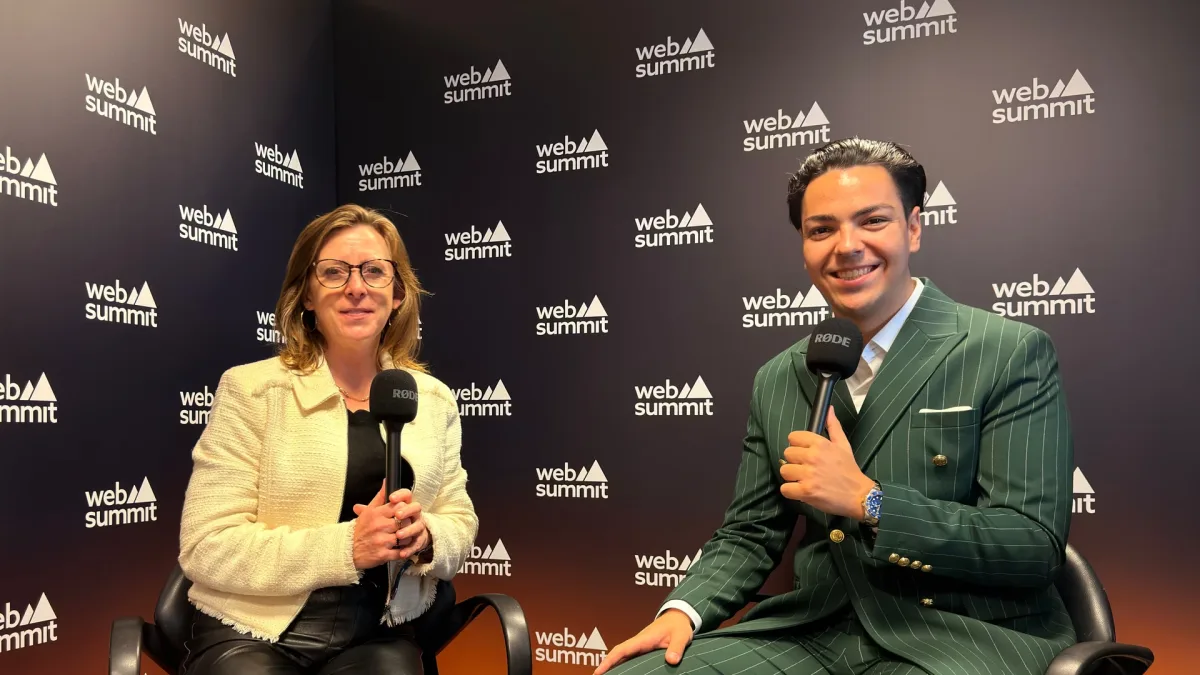
Speaking at Web Summit in Lisbon, Marnie Wilking, chief security officer at Booking.com, described how machine learning has transformed the threat landscape for travel platforms. Attackers are no longer limited to single exploits; they can now identify and combine multiple latent flaws in a system's codebase to breach defenses and commit fraud.
Wilking oversees cybersecurity, fraud, trust and safety, and corporate security at Booking.com, a role she has held since joining the company four years ago as chief information security officer. She spoke to Cristian Dina for the TNW Podcast, joining previous guests including Ronan Harris of Snap, Danila Shtan of Nebius, and Alexander Rinke of Celonis.
AI can find those and then figure out how to chain multiple of those together to actually find its way through the system or figure out how to perpetrate fraud on your platform.
Marnie Wilking, Booking.com
According to Wilking, some of these dormant vulnerabilities may have remained undetected for five to ten years. Organizations must now conduct comprehensive audits to locate and remediate these flaws before adversaries weaponize them.
Phishing in every language
The travel and hospitality sector experienced a surge in cyberattacks following the pandemic, as people resumed international travel and criminals recognized the financial opportunity. The November 2022 launch of ChatGPT provided attackers with a powerful tool to scale their operations.
Malicious actors now deploy phishing campaigns across multiple languages with grammatically correct text and personalized details. While attackers may lack authentic booking information, they can make educated guesses or harvest clues from public social media activity, such as travel announcements. They also target hotels and partner organizations directly to steal login credentials for Booking.com accounts or hotel systems, sometimes using compromised traveler accounts to generate fraudulent bookings that serve as springboards for further attacks.
In response, Booking.com has implemented mandatory two-factor authentication for both partners and guests. The platform employs machine learning algorithms to identify anomalous login patterns—such as unfamiliar devices, browsers, or geographic locations—and can trigger additional verification steps, including card re-entry, when suspicious activity is detected.
Attacks move to the supply chain
As Booking.com strengthened its own defenses, threat actors shifted their focus to the broader ecosystem. Property management systems, travel agencies, and connectivity platforms that synchronize calendars across Booking.com, Airbnb, and Vrbo have become primary targets.
Booking.com participates in the Retail and Hospitality Information Sharing and Analysis Center (RH-ISAC), where members—including competitors and partners—exchange intelligence about emerging threats without disclosing competitive data. A recent scam circulated through this channel inverted the traditional fraud narrative, requesting payment details under the guise of a refund.
Oh, you paid us too much. Click on this link and give us your credit card details so we can give you a refund.
Marnie Wilking, Booking.com, describing a scam message sent to guests
Many smaller hotels lack dedicated security personnel. Booking.com conducts security and fraud awareness sessions for its partners at venues across Amsterdam, Asia Pacific, and the Americas. The company's strategy encompasses three pillars: preventing attacks, detecting and responding to incidents rapidly, and educating stakeholders.
AI on both sides
Booking.com's security team deploys artificial intelligence to scan code repositories and external endpoints for potential weaknesses. Many of these flaws are not traditional security vulnerabilities but rather bugs and business logic errors that AI can exploit in combination. Wilking characterized this as an escalating competition to identify these weaknesses first.
She drew parallels between AI's current trajectory and previous technological shifts—the internet boom of the late 1990s, the mobile revolution, and cloud computing adoption—each occurring at an accelerating pace. When asked whether AI development should decelerate, Wilking emphasized that adversaries will continue advancing their capabilities regardless of broader societal decisions.
Whether we choose as a society to say we'd like to slow this down, the bad guys are not going to slow down.
Marnie Wilking, Booking.com
Booking.com has already deployed an AI-powered trip planner and is exploring AI applications for travel inspiration. Wilking's security team collaborates with product teams to address concerns around AI hallucinations—instances where the technology generates false information, such as inventing hotels or selling nonexistent attraction tickets—to ensure trust and safety.
From banking to travel
Wilking's career trajectory spans multiple sectors and security disciplines. She began with a mathematics degree before a Big Four consulting firm recruited her for IT security work at a major bank. She spent considerable time at Wells Fargo, eventually becoming security officer for its mortgage division. She subsequently transitioned to a smaller cloud-focused financial services firm, then served as chief information security officer at a healthcare technology company based in Auckland, and later held the same position at Wayfair.
For travelers, Wilking recommends enabling multi-factor authentication, using a password manager, and remaining vigilant about suspicious communications. If a message purports to originate from a hotel, she advises contacting the property directly through a known phone number or website rather than following links in the message.
Source: The Next Web