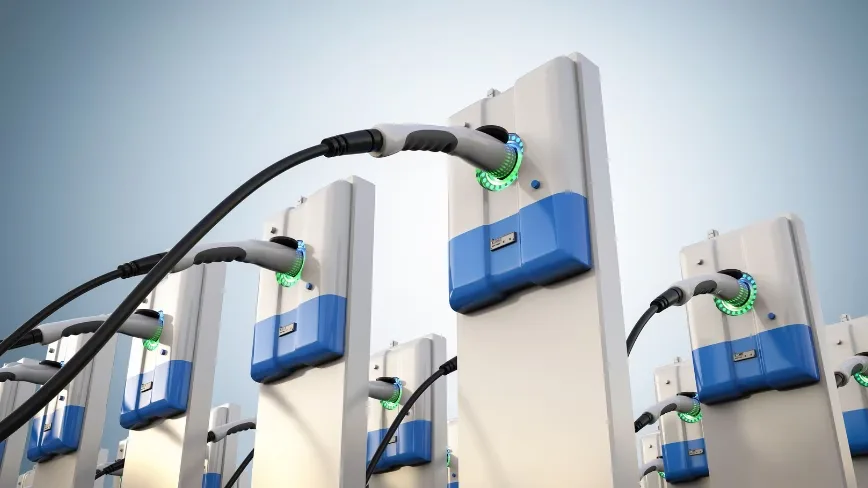
California has launched a $28 million incentive programme for public DC fast-charging infrastructure, offering grants of up to $100,000 per individual charging port. The funding covers as much as 100% of eligible project costs, with applications accepted between 7 October and 14 January on a first-come, first-served basis. Disadvantaged communities, low-income areas and tribal sites receive priority in the queue.
The subsidy structure ties payment levels to power output. Ports rated between 150kW and 274.99kW receive $55,000, while those exceeding 275kW qualify for the maximum $100,000—nearly double the lower tier. This approach prioritises raw charging capacity, yet evidence from charger manufacturers suggests a different factor matters more for actual usage.
Finnish charger maker Kempower analysed utilisation patterns across its network and found that plug availability had a far greater impact than power capacity. Sites with 100kW chargers showed roughly 3% utilisation, compared to just over 5% at 400kW installations. However, expanding from two to eight plugs at the same location lifted utilisation from approximately 2% to nearly 10%. Kempower's findings come from its own analytics platform rather than independent verification, and the company manufactures distributed-power chargers, which aligns with its architectural preference.
Europe has pursued a regulatory rather than subsidy-based approach. The Alternative Fuels Infrastructure Regulation mandates that member states establish recharging stations every 60 kilometres in each direction along trans-European core road networks. These facilities must initially deliver 400kW with one 150kW connector, scaling to 600kW with two 150kW points by the end of 2027. A single BYD flash connector exceeds this capacity by more than double.
Both strategies carry distinct shortcomings. Brussels establishes minimum standards but leaves funding to operators, while California provides capital but allows applicants to determine locations. Neither approach directly addresses the question of whether power or plug count should drive infrastructure investment.
California's rules include a provision favouring European equipment. Funded sites must dedicate at least 50% of connectors to the CCS standard, Europe's settled choice, even as North America increasingly adopts Tesla's connector design. This requirement positions Italian manufacturer Alpitronic as a leading supplier. Founded in Bolzano in 2009, Alpitronic held approximately 30% of European DC fast-charging capacity in 2024, and its Hypercharger range meets the 275kW threshold for maximum funding.
Regardless of geography or funding model, adding plugs remains the more economical path to increased usage. Tesla's latest Superchargers integrate eight stalls into a single delivered unit, with two units fitting on one truck, demonstrating how plug density can be achieved efficiently.
California has tightened eligibility criteria for this funding round. Charging hubs, hotels and business districts no longer qualify, and only projects with issued permits and completed utility designs will be considered. The $100,000 maximum rate is also temporary; a third funding window scheduled for February through May 2027 will cap all ports at $55,000 regardless of output, effectively ending the higher tier.
Source: The Next Web