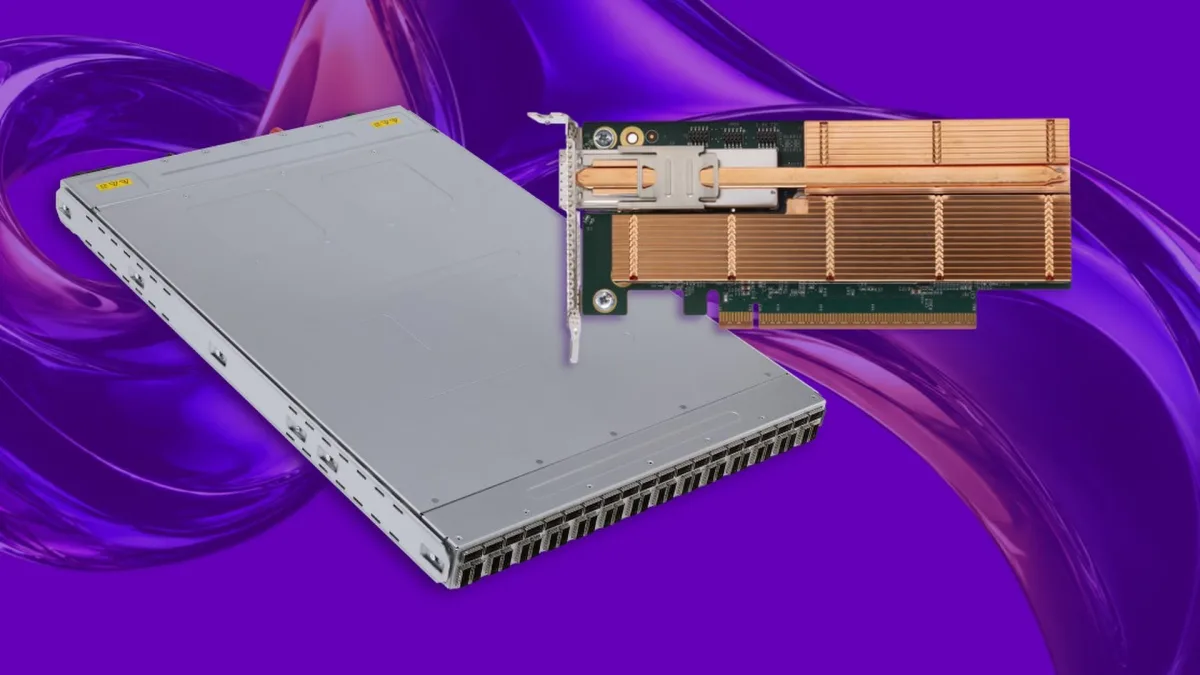
In sprawling AI infrastructure, thousands of processors must constantly exchange information. When network throughput lags, those expensive accelerators become idle—a waste of resources customers have already paid for. Cornelis, the networking specialist that emerged from Intel's 2020 spinout, is targeting this exact problem with its newly announced CN6000 lineup of 800G network cards and switches designed for AI clusters and supercomputing environments.
The company positions CN6000 as a direct competitor to Nvidia's InfiniBand infrastructure. According to Cornelis's own benchmarks, the technology delivers lower latency than Nvidia's offering. "Every minute an accelerator waits on the network is capacity our customers paid for and didn't use," explained CEO Lisa Spelman.
At the heart of CN6000 sits Omni-Path, the networking protocol that Intel abandoned in 2019 before handing off the entire business unit to form Cornelis the following year. The primary card variant achieves throughput of 1.6 billion messages per second. In head-to-head testing, Cornelis reports a 21% speed advantage over Nvidia's InfiniBand when transmitting small messages—though this metric comes exclusively from the company's own testing and does not necessarily translate to proportional improvements in overall job completion times, which depend heavily on specific workload characteristics.
Beyond the Omni-Path variant, Cornelis has rolled out a second card targeting conventional Ethernet deployments, which dominate most AI data centres today. This version will eventually support the emerging Ultra Ethernet standard, with that capability arriving at a later date.
The CN6000 cards maintain compatibility with processors from AMD, Intel, Nvidia and Qualcomm. Major server manufacturers including Dell, Lenovo and Supermicro have committed to integrating the technology into their systems, with commercial availability slated for early 2027.
Networking infrastructure has emerged as a critical battleground in AI development. Nvidia has invested heavily in optical interconnect technology, Huawei is prioritizing chip-to-chip wiring solutions, and emerging companies like Upscale AI are developing interoperability layers for heterogeneous chip environments. AMD, itself a Cornelis collaborator, is simultaneously developing its own rack-level systems to challenge Nvidia's market dominance.
Source: The Next Web