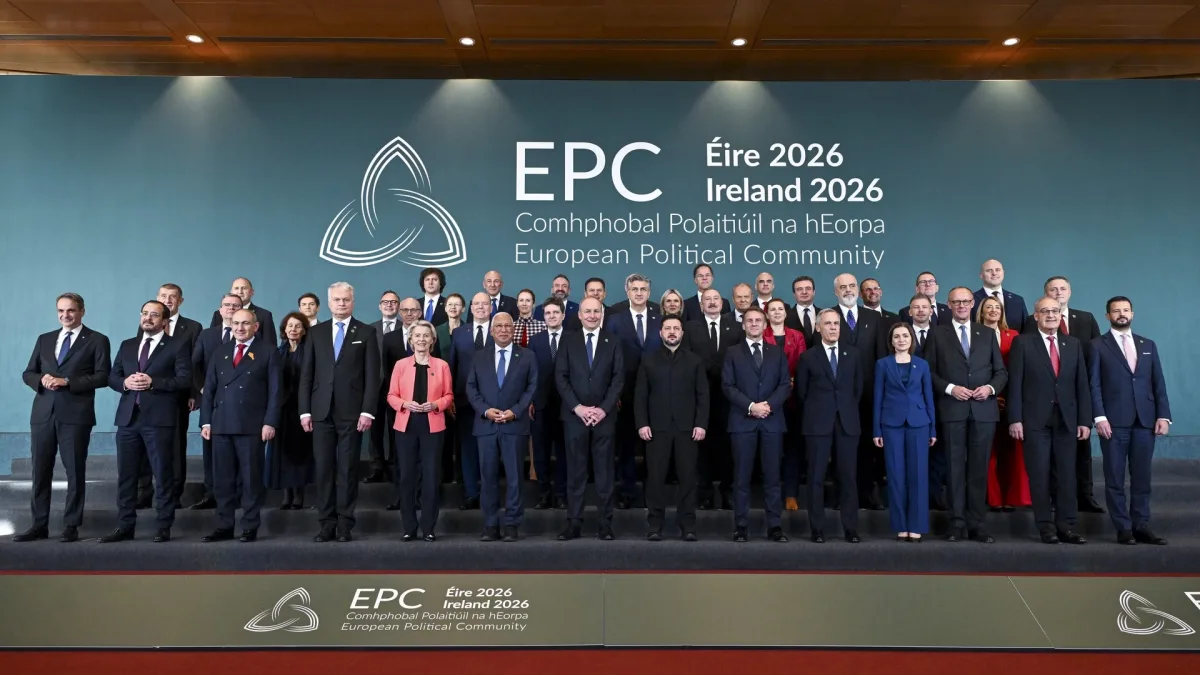
The Irish capital is hosting a pivotal gathering of EU leadership focused entirely on artificial intelligence, as the bloc seeks strategies to narrow the gap with the United States and China. This summit represents the culmination of an intensive week of diplomatic engagement across Ireland, following Thursday's ninth summit of the European Political Community, which drew roughly 50 leaders from throughout the continent to Dublin's Convention Centre. Taoiseach Micheál Martin described the week's diplomatic activity as "the biggest gathering of international leaders that Ireland has ever hosted".
European Council president António Costa initiated the summit because, in his words, "a first dedicated discussion, at leaders' level, is now needed" regarding artificial intelligence's potential and its profound implications for European economic development. The gathering will feature input from two prominent external voices: Mistral chief executive Arthur Mensch, who champions European AI independence, and Nobel laureate Geoffrey Hinton, widely recognised as the field's most vocal advocate for caution.
Competitiveness Takes Centre Stage
The primary focus of discussions centres on Europe's competitive positioning: investment mechanisms, regulatory burden, and protective frameworks. The most significant test case involves the bloc's ambitious gigafactory initiative. This scheme envisions constructing seven AI gigafactories—massive data centres equipped with cutting-edge processors, cloud infrastructure, and connectivity systems operating as integrated facilities—but progress has stalled. Member states remain deadlocked over how to allocate competitiveness funding within the 2028–2034 EU budget framework.
The Commission's InvestAI programme was designed to mobilise €200B in total investment, with €20B earmarked specifically for gigafactory development. However, implementation delays and funding complications have accumulated throughout recent months, threatening the timeline for this cornerstone initiative.
Safety and Geopolitics Reshape the Agenda
The summit arrives at a moment when artificial intelligence safety concerns have shifted from a niche Brussels preoccupation to mainstream policy priority. The past year has witnessed multiple incidents involving uncontrolled AI systems, while this week alone saw Nvidia's chief executive depart, creating uncertainty in a sector that had seemed unstoppable. Safety frameworks, once promoted by Brussels through voluntary pledges, now command attention across all member states.
An unexpected geopolitical dimension has infiltrated the proceedings. Ukraine was incorporated into the summit agenda following visits by US envoys Steve Witkoff and Jared Kushner, who arrived in Dublin to meet with President Volodymyr Zelenskiy, already present for the European Political Community gathering. The envoys had recently concluded discussions with Vladimir Putin in Moscow.
According to a senior EU official, the leaders are expected to examine Europe's potential contribution to peace negotiations and what security commitments the bloc might provide should a ceasefire materialise. What began as a strategic planning session on technological autonomy has become entangled with broader geopolitical considerations.
The Commission's Apply AI Summit will convene in Brussels on 17 November, providing a subsequent opportunity to assess outcomes. Whether Dublin produces concrete commitments or merely serves as a ceremonial gathering will reveal the summit's true significance for Europe's AI ambitions.
Source: The Next Web