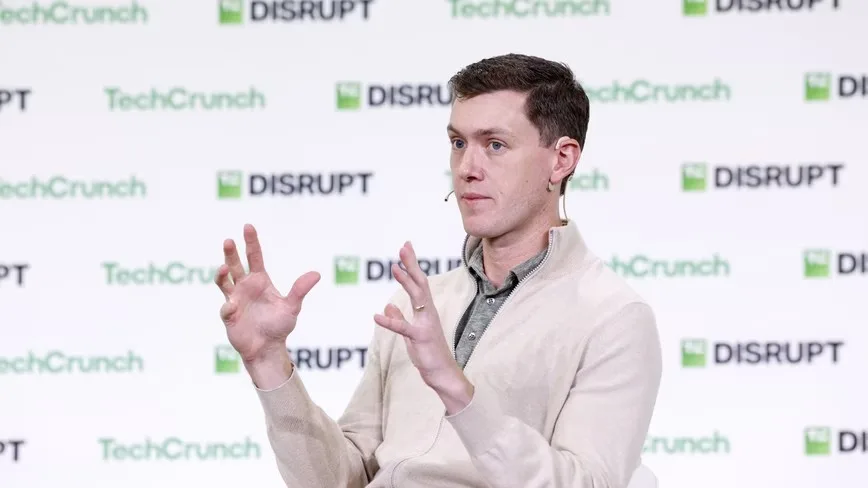
Speaking at TechCrunch Disrupt in San Francisco this week, Flock chief executive Garrett Langley stated that the company has never terminated any customer due to misuse of its licence plate recognition cameras. During his conversation with TechCrunch editor-in-chief Connie Loizos, Langley indicated that Flock would remove a customer only if they knowingly violated the law.
Most of the debate is nuanced into 'what if two officers out of fifty were caught?' Today, we haven't fired any customers, but it's not off the table in the case of some pretty drastic law-abiding issue.
Garrett Langley, Flock CEO, at TechCrunch Disrupt
The Atlanta-based company operates more than 100,000 cameras throughout the United States. Reports have documented dozens of law enforcement officers who faced arrest, termination or compelled resignation following misuse of Flock's national database, with many instances involving stalking. Both Florida and Texas have taken action against the company's camera systems. A federal judge recently determined that one police search using Flock constituted unconstitutional mass surveillance.
Misinformation and microphones
Langley attributed some of the opposition to what he characterized as online misinformation, according to reporting by The San Francisco Standard. He contended that social media had become "deeply intertwined with politics" and "saturated with false information". An Illinois city council member, Langley noted, had terminated his municipality's contract based on concerns about facial recognition technology, which Flock does not actually provide. Langley identified the "principal challenge" for Flock as the need to "better manage our narrative".
Regarding Flock's gunshot-detection microphones, Langley stated they listen for "just gunshots," according to TechCrunch. However, Flock's own website indicates the system can also generate alerts for vehicle crashes, fireworks and sideshows.
Flock's gunshot detection technology is primarily used to detect gunfire but is also capable of detecting fireworks, sideshows, and potential car crashes.
Paris Lewbel, Flock spokesperson, to TechCrunch
Lewbel clarified that Langley's remarks meant the system does not record or process spoken language. Additionally, the system currently cannot identify human screaming or signs of distress, Lewbel explained. Langley acknowledged that Flock had made an error when it tested human distress detection with a limited number of customers. The company has subsequently discontinued this feature.
'We shouldn't pause progress'
Langley drew a parallel between Flock and autonomous vehicles, arguing that self-driving cars are more secure than vehicles operated by people. A single incident, he contended, should not justify halting development, TechCrunch reported.
If we want to live in a society where, if you commit a crime, you have a higher probability of being held accountable, we shouldn't pause progress.
Garrett Langley, at TechCrunch Disrupt
Langley stated that Flock would furnish municipal officials with guidance and default settings, while limiting mandatory requirements and regulations. In August, he noted, Flock recommended that customers reduce their data storage window from thirty days to seven. Langley confirmed on stage that Flock maintains approximately 6,000 customers across the country, with roughly 60% consisting of law enforcement organizations. He indicated he has "no desire to sell" the organization. According to Reuters reporting this month, Flock intends to reduce its workforce by roughly 18%.
I think one of the unfortunate consequences of building a consequential company is this is the price you pay, and I think it's worth it because there's millions and millions of people who have a better life today because [of] Flock.
Garrett Langley, at TechCrunch Disrupt
The protest outside
Roughly twenty demonstrators assembled outside the Moscone Center approximately one hour before Langley's appearance, according to The San Francisco Standard. Several protesters wore crimson robes reminiscent of The Handmaid's Tale and carried cardboard representations of Flock cameras as headwear.
We didn't consent. It's basically a surveillance state we didn't ask for.
Kara Starkey, protester, to The San Francisco Standard
When TechCrunch asked Ashley Ortiz, an organizer with the local advocacy organization The Wolves, what question she would pose to Langley, she responded:
What about AI-powered mass surveillance should be making us feel safe?
Ashley Ortiz, The Wolves, to TechCrunch
Source: The Next Web