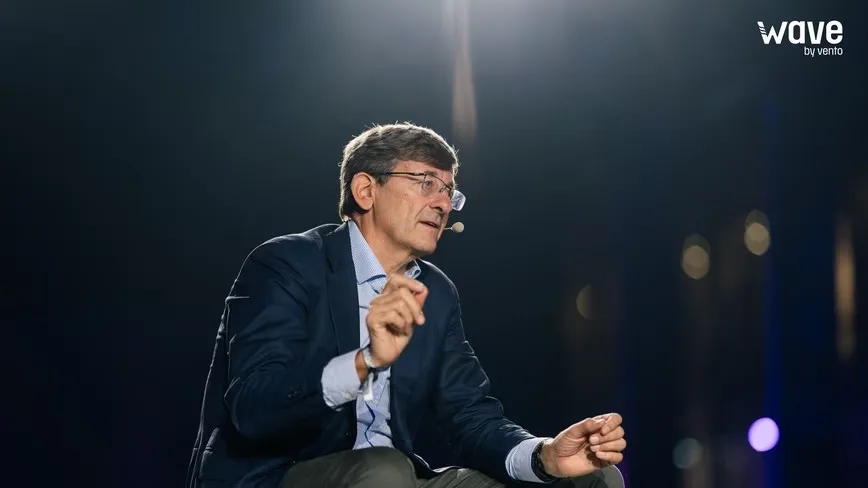
Speaking at Wave by Vento in Turin, Vittorio Colao, vice chairman for Europe, the Middle East and Africa at General Atlantic, outlined four critical challenges facing artificial intelligence: employment disruption, erosion of human judgment, concentration of wealth, and cyber threats. The venture investor emphasized that quality startups will continue attracting funding despite regulatory headwinds, though the landscape remains uneven across Europe.
When asked whether Europe's regulatory framework is impeding AI progress, Colao confirmed it is—but with important nuance. "But it is in different ways, and we cannot put everything in one bucket," he stated during his appearance, which was moderated by Ian King, a presenter and journalist at The Times.
Distinguishing between rules
While the EU's comprehensive regulatory package has brought some clarity, Colao suggested the improvements fall short. He identified GDPR as particularly problematic for AI development.
On intellectual property matters, Colao sided firmly with content creators. He rejected arguments from AI companies seeking exemptions from copyright enforcement. "So when AI companies complain about copyright laws, I say, you see, sorry guys, you want me to allow stealing?" he said.
Regarding the AI Act itself, Colao expressed frustration with its implementation challenges. "Good intentions, too complicated to implement, and now we are not capable of implementing it," he remarked. This assessment echoes criticism from other tech leaders; former Meta executive Nick Clegg described the legislation as a 'dog's dinner' last month.
Colao offered strong backing for the Digital Services Act, noting his government's role in its development. He argued that accountability mechanisms are essential when misinformation or harmful material circulates online. "I'm sorry for my American friends who don't like it," he said. "I think the DSA is a pillar of digital democracy." This comes as the US has sought EU court intervention to support Elon Musk's challenge against a €120M DSA fine imposed on X in September.
Closing the gap between innovation and governance
Colao highlighted a fundamental mismatch: technological advancement now outpaces the deliberative pace of legislative processes. He pointed to SpaceX and Starlink as examples of how private sector innovation reshapes the regulatory landscape.
To address this gap, Colao advocated for faster policy cycles managed by capable individuals drawn from both public and private sectors. Though companies may resist frequent regulatory shifts, he argued that adaptation is necessary given rapid global change. During his tenure as an Italian minister, he noted, the country established a satellite constellation within two years.
Colao also criticized fragmentation within Europe itself. Member states must embrace broader strategic thinking on space, defence and energy rather than allowing national interests to block collective progress, he said. He highlighted energy costs as a particular concern, citing France's resistance to Spanish energy exports as an example of how protectionism undermines European competitiveness.
Which startups will thrive
According to Colao, no single formula determines whether AI-native companies can compete with technology giants. Success depends on differentiation: startups that deploy AI internally, maintain close customer relationships and avoid commoditized approaches will prosper. Those offering undifferentiated services face steeper challenges.
At General Atlantic, Colao emphasized that team composition matters most. Flexible teams without rigid ideologies can adapt through pivots when necessary. Over the next 12 to 18 months, he predicted, genuinely strong companies will secure capital, while those pursuing short-term trends will encounter resistance.
Four priorities for industry and government
Beyond existential concerns often dominating AI discourse, Colao identified four concrete risks requiring collaborative attention between industry and policymakers:
- Employment and broader social consequences of automation
- Preservation of human decision-making capacity amid AI proliferation
- Preventing wealth accumulation in fewer hands, potentially requiring tax policy adjustments
- Strengthening defenses against cyber threats
Colao rejected dismissals of political concerns about job displacement, calling such worries legitimate. He advocated for educational initiatives ensuring young people develop stronger judgment as AI becomes ubiquitous. He urged the technology sector to engage constructively with governments on all four fronts rather than resist oversight.
Source: The Next Web