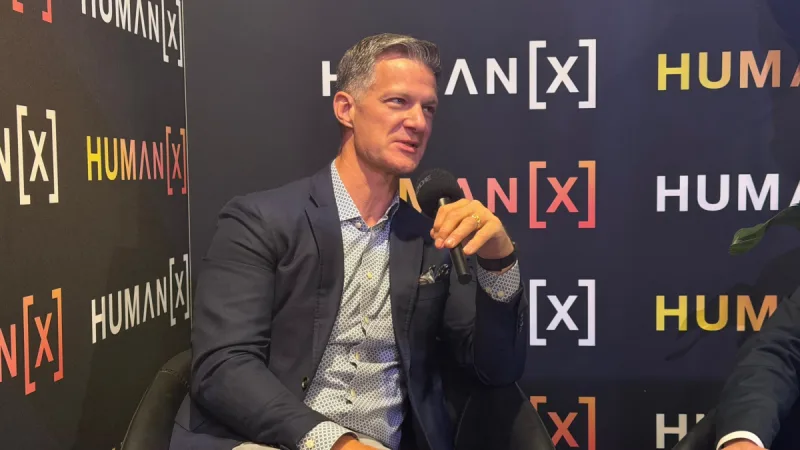
Jason Day oversees Luma's business across Europe, the Middle East and Africa, leading efforts at the AI research lab to develop multimodal models and creative tools. Luma Agents, the company's platform for creative intelligence, enables creators to work across any format while retaining contextual awareness and intelligence—whether drawing on Luma's proprietary models or integrating third-party alternatives. According to Day, this approach allows creators to work at the pace of their thinking rather than wasting effort connecting disparate tools and models together.
Day emphasizes the significance of this capability for the EMEA region, where linguistic diversity, cultural nuance and brand specificity often get lost when AI systems move between different products and models. Luma's design philosophy prioritizes maintaining all forms of context and intelligence intact, regardless of which underlying model operates within Luma Agents. The company works with Publicis, Serviceplan, Adidas, Lufthansa and Arla, helping agencies and brands develop locally tailored, culturally resonant campaigns at scale—without requiring team members to master prompt engineering. Day frames Luma's mission as enabling faster creative production while preserving the authenticity that connects work to its intended audience.
Building a world model that actually works
When asked about the industry's frequent references to building an "intelligent world model," Day explains that Luma's interpretation centers on creating unified general intelligence capable of generating, understanding and operating within the physical world. A genuinely effective world model, he argues, must possess comprehensive understanding of how the world functions. Achieving this requires interpreting information across every modality, with video taking particular prominence given Luma's background. Once AI systems can truly absorb what occurs in the world, Day contends, that intelligence becomes applicable to humanity's most challenging problems.
Video as the direct route to AGI
Day positions video generation as offering a straighter trajectory toward AGI and sophisticated robotics than other industry approaches suggest. Video naturally encodes physics, spatial relationships and fluid motion—dimensions that language can only represent abstractly. By training models to comprehend and produce video at a deep level, Luma is essentially teaching systems to grasp how the physical world operates.
Overcoming the EMEA challenge
Establishing Luma's first commercial footprint beyond North America presented substantial obstacles, Day acknowledges. While the company has assembled a capable team, developed strong market visibility and cultivated impressive client relationships, the path has involved navigating numerous hurdles. The most significant barrier, he suggests, involves shifting perceptions about artificial intelligence itself. The evidence from this year demonstrates that AI functions as an amplifier of exceptional talent, enabling professionals to produce superior work and deliver greater value to their organizations.
Initial concerns that generative technology would diminish creative employment or undermine artistic craft have given way to broader recognition that the technology actually strengthens creativity rather than threatening it. Day observes that the most compelling outcomes emerge when strategic thinking, creative vision and technological capability converge.
The next frontier in AI video
Looking ahead three years, Day anticipates transformative developments in AI video capabilities that don't yet exist. He notes that the past half-year has witnessed such dramatic improvements in AI models that the technology's actual performance has, perhaps for the first time, exceeded what people anticipated. AI-generated imagery and video have already reached a point where they rival traditionally filmed content in quality. Within the next 6 to 12 months, Day predicts, the distinction will narrow further until differentiation becomes practically impossible. This convergence raises significant questions about content authentication and brand protection that warrant coordinated discussion among policymakers, industry participants and creative professionals.
Despite these technical advances, Day remains convinced that AI ultimately serves as a catalyst for human artistry, innovation and creative expression. Luma's strategic focus centers on empowering these talented individuals to increase their creative output, a mission Day describes as an exciting undertaking for the coming three years.
Source: TechRound