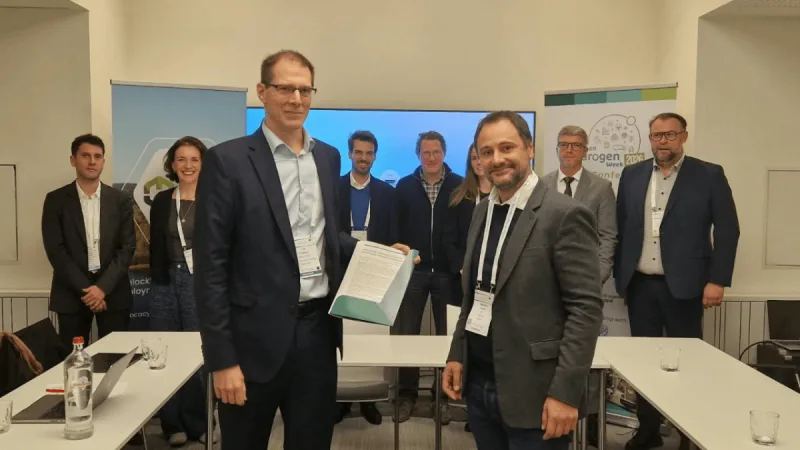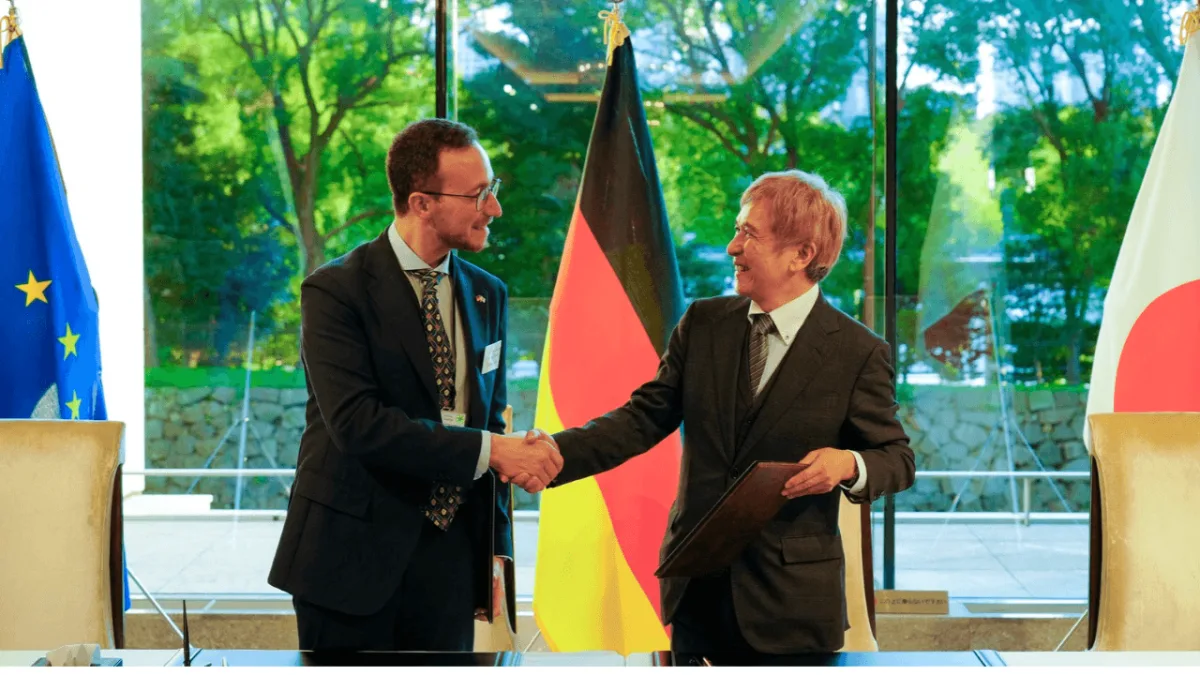
Proxima Fusion, a Munich-based fusion energy company, has inked Memoranda of Understanding with two Japanese firms—Fujikura and Kyoto Fusioneering—to establish industrial supply chains for commercial fusion power. The deals were announced in Tokyo during German Chancellor Friedrich Merz's visit to Japan and encompass high-temperature superconducting (HTS) tape production, plasma heating systems and fusion fuel cycle technologies.
The collaborations are designed to bolster Germany's industrial base in fusion energy by bringing Japanese manufacturing prowess and engineering know-how into Proxima's development of its Alpha demonstrator and future Stellaris commercial power plants. Germany's federal government has committed to hosting the world's first fusion power plant, a goal that hinges on establishing industrial-scale supply chains for specialized components not yet produced at the volumes commercial fusion will demand.
Fujikura partnership targets superconducting tape production in Germany
Proxima and Fujikura will jointly examine the technical, commercial and economic viability of setting up an HTS tape supply chain in Lower Saxony, Germany, with potential for local manufacturing. HTS tape serves as a critical material in compact, high-field fusion magnets essential to stellarators.
Proxima estimates it will need roughly 20,000 kilometres of HTS tape for its Alpha demonstrator and approximately 40,000 kilometres for each Stellaris power plant. As fusion approaches commercialization, surging demand for HTS tape will necessitate substantial investment in production capacity. Clearer visibility into long-term demand could enable manufacturers to expand output, cut expenses and create more robust supply chains. The partnership marries Fujikura's decades of experience in superconducting materials with Proxima's projected consumption requirements, while fostering European manufacturing capabilities.
A fusion power plant's supply chain has to be ready years before the plant itself. That is why we are working on HTS tape now, for our Alpha net-energy-gain stellarator and for the first stellarator-based fusion power plant, Stellaris. Fujikura is a clear leader in manufacturing high-temperature superconductors, and we are proud to work with them to build this capability in Germany. This is how Europe builds its fusion supply chain: by connecting long-term demand with world-class manufacturing expertise.
Dr Francesco Sciortino, CEO and co-founder of Proxima Fusion
Deploying fusion energy will require an industrial foundation capable of supplying high-performance HTS tape reliably and at scale. By working together, we aim to contribute to the practical deployment of fusion energy and the realisation of a sustainable energy future.
Naoki Okada, President and CEO of Fujikura
Kyoto Fusioneering to advance plasma heating and fuel cycle technologies
The second agreement with Kyoto Fusioneering expands an existing partnership on next-generation gyrotrons for plasma heating and fusion fuel cycle technologies. Gyrotrons produce high-power microwaves that heat plasma to the extreme temperatures necessary for fusion reactions. Fuel cycle systems manage and process the fuel required to maintain fusion operations.
Kyoto Fusioneering will supply engineering expertise and technologies to support fusion energy's commercial rollout in Germany, including participation in the national Fusion Hubs initiative run by the German Federal Ministry of Research, Technology and Space (BMFTR). The partnership leverages Japan's established fusion engineering capabilities alongside Germany's stellarator research heritage, including the Wendelstein 7-X programme at the Max Planck Institute for Plasma Physics, the organization from which Proxima Fusion emerged.
Germany is approaching fusion not only as a future source of energy, but as a pillar of its High-Tech Agenda to build national prosperity through advanced technology. Manufacturing and engineering are at the heart of that vision, and they are also at the heart of what Kyoto Fusioneering does.
Kiyoshi Seko, Representative Director, President and COO of Kyoto Fusioneering
Seko noted that the collaboration would bring the firm's plasma heating technologies to Proxima's stellarator programme and help establish fusion as an industrial sector in Germany. During the Chancellor's visit, Kyoto Fusioneering also hosted Proxima Fusion at its Tokyo Research Centre.
Building the industrial foundations for commercial fusion
Both partnerships align with Proxima's trajectory toward Alpha, a net-energy-gain stellarator demonstrator targeted for the early 2030s, and Stellaris, its inaugural commercial fusion power plant slated for later in the decade.
The company, which operates from Munich with approximately 200 employees, is advancing fusion technology grounded in the QI-HTS stellarator concept. Its commercialization strategy benefits from backing by the Alpha Alliance, a network encompassing more than 50 industrial partners.
The agreements tackle distinct yet interconnected needs for commercial fusion: superconducting magnets capable of confining plasma, technologies for plasma heating and systems for fuel cycle management. Sciortino emphasized that developing these capabilities would prove decisive in determining which nations emerge as leaders in the nascent fusion industry.
The global race to fusion will be won in factories and supply chains. Japan has spent decades building world-class fusion engineering capabilities; Germany has the leading stellarator engineering in the world and knows how to industrialise. In working closely with Kyoto Fusioneering and Fujikura, we are building a new industry together, one that makes both our countries more secure.
Dr Francesco Sciortino
For Proxima, these partnerships mark a significant milestone in converting Europe's fusion research strengths into an industrial supply chain equipped to support commercial power generation.
Source: Tech.eu