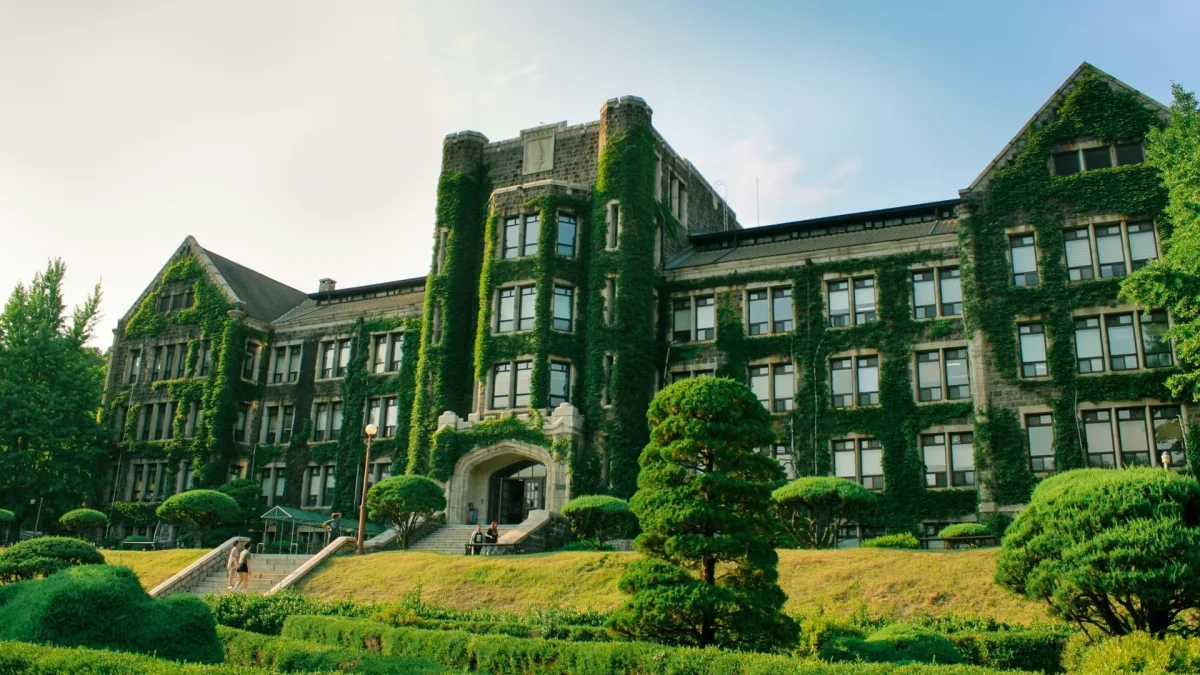
Faced with a high-profile cheating scandal, South Korean officials are preparing sweeping security measures for Thursday's college entrance exam. Education Minister Choi Kyo-jin announced to lawmakers on Monday that inspectors will examine all eyewear worn by test-takers, Reuters reported. The move comes after the top scorer on the national tax accountant exam publicly admitted to using a concealed camera paired with an AI tool to obtain answers during the test.
The Suneung exam, which more than 500,000 students will take on Thursday, will proceed as scheduled despite calls from some lawmakers to postpone it. Choi argued that delaying the test would create "even a larger disruption" for students, according to reporting by Kim Tong-hyung for the Associated Press.
Enhanced Monitoring at Test Sites
Each of the 1,300 testing locations will deploy at least one supervisor trained specifically to identify AI-enabled eyewear, the AP reported. Beyond visual inspections, the prime minister's office is considering additional precautions. Students may be required to surrender smart devices before entering exam rooms, and authorities are exploring the possibility of disabling public Wi-Fi networks at test centers.
Proctors have received updated instructions to watch for suspicious behavior that might indicate hidden camera use, including unusual positioning of hands or attention to sleeves, collars, and buttons. The education and science ministries plan to unveil further countermeasures on Tuesday. Potential steps include restricting cellular signals within test sites, though South Korean law currently prohibits electronic signal jamming.
Certain detection methods remain off-limits. Metal detectors and radio frequency scanners will see only limited deployment. Thermal imaging technology has been ruled out due to privacy considerations, and supervisors lack authority to search student belongings without explicit permission.
At the government-wide level, we would also need to give further consideration to measures that will make it easier to identify (AI) smart devices.
Song Geun-hyeon, senior Education Ministry official
Song indicated that officials are weighing whether to mandate that manufacturers design such devices to emit visible or audible signals during operation.
The Cheating Admission
The scandal surfaced on Sunday when Han Won-seok, 34, released a video through his lawyer's YouTube account with his face obscured. Han described his method: photographing exam questions using a miniature camera, transmitting the images to an AI system, and reading the generated answers on a mobile phone, Bloomberg reported.
I cheated using electronic devices and generative AI. My passing the exam with the top score was not the result of fair effort.
Han Won-seok
Han achieved the highest ranking in both administrations of this year's test. In April, he scored 397.5 out of 400, and in July's essay portion, he earned 663 out of 800, according to the AP. Prior to his confession, Han had publicly denied allegations that he wore AI-powered glasses. He also revealed that he employed the identical cheating technique on another accountancy examination.
Han submitted a written confession to Seoul police through his legal representative. Police confirmed they had transferred the matter to investigators, and Han pledged his cooperation. The finance ministry announced it would pursue suspension of his professional credentials, the Korea Herald reported. Under South Korean law, individuals caught cheating cannot sit for the exam again for a period of five years.
The presidential office characterized the incident as a "grave matter," Bloomberg stated. The chief of staff for policy convened an emergency meeting on Sunday to develop response strategies ahead of Thursday's exam, The Guardian reported.
Broader Context
This is not the first instance of AI-assisted cheating in South Korea this year. The AP documented earlier cases in which test-takers wore AI smart glasses during an English examination in June and during university essay assessments in October. Internationally, concerns about AI cheating are prompting policy shifts. Norway is developing a ban on AI glasses in educational settings, and several American universities have reinstated in-person examination formats.
In England, the university regulator released a report on AI on November 11 following consultations with more than 300 university students and staff members. According to Gizmodo, the report cautioned that tools designed to detect AI use are unreliable. The analysis suggested that universities may need to replace take-home essay assignments with supervised examination conditions.
Source: The Next Web