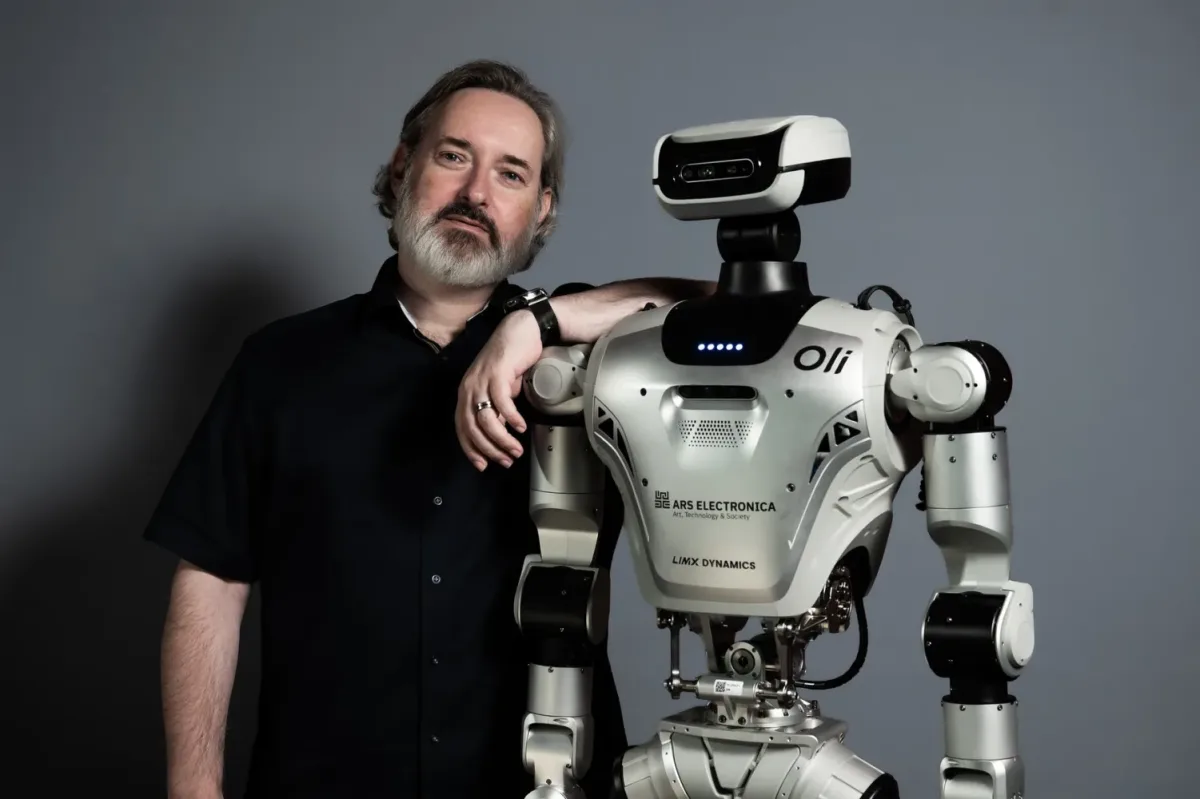
They perform surgery, defuse bombs, assemble products on factory floors, and increasingly, they walk on two legs through warehouses and test facilities worldwide. Robots have become ubiquitous, yet the question of what actually defines a robot remains surprisingly fundamental. The answer lies in three core capabilities: perception through sensors, processing via a control system, and action through actuators. These three elements transform an ordinary machine into something that can sense its environment, make decisions, and respond.
Manufacturers have long deployed robots to handle what the industry calls the "Four Ds": dull work (monotonous tasks), dirty work (unhygienic environments), dangerous work (life-threatening situations), and difficult work (tasks that strain human capability). Today's most advanced robots operate in industrial and logistics settings, while the most captivating ones—those with two legs, two arms, and a head—have captured both technological ambition and public imagination, stirring hopes and anxieties in equal measure.
From Fiction to Factory
The cultural fascination with humanoid machines predates modern robotics by decades. In 1920, playwright Karel Čapek introduced the term "robot" (from the Slavic word "robota," meaning work or forced labor) in his play R.U.R. (Rossum's Universal Robots). Fritz Lang's 1927 film Metropolis brought the first iconic humanoid robot to cinema screens, and Isaac Asimov's 1942 short stories established his famous Three Laws of Robotics. By the 1950s, humanoid robots had entered mainstream culture through manga, anime, and Hollywood films.
Industrial robotics followed a different timeline. Unimate, deployed at a General Motors plant in New Jersey in 1961 to handle hot die-cast parts and welding, marked the beginning of robotic manufacturing. The machine gained celebrity status in 1966 when it sank a golf ball on The Tonight Show with Johnny Carson. The 1970s brought crucial advances: microprocessors and sensors enabled greater precision, hydraulic systems gave way to electric drives, and in 1973, German pioneer KUKA introduced the first industrial robot with six electromechanically driven axes. One year later, Swedish company ASEA (later ABB) presented the IRB 6, controlled by an Intel processor.
The oil crises of the 1970s accelerated automation across manufacturing. Both the KUKA FAMULUS and IRB 6 became bestsellers as companies worldwide sought to reduce production costs. The 1980s saw explosive growth: major car manufacturers in the United States, Japan, and Germany converted factories to automated assembly lines. Four companies came to dominate the market—Japanese firms FANUC and Yaskawa, Swiss ABB, and German KUKA—establishing a pattern that would hold for decades.
China Reshapes the Global Market
The robotics landscape shifted dramatically in recent years. Through substantial government subsidies, integrated supply chains, and massive production expansion, China emerged as the global robotics powerhouse. More than half of all new industrial robots installed worldwide now operate in China, where over two million robots are currently in service—more than any other nation. Whereas Chinese manufacturers once imported robots from the "Big Four," they now produce more than 50 percent of robots installed domestically. For collaborative robots and mobile systems, Chinese suppliers meet approximately 90 percent of domestic demand.
The dominance becomes even more striking in humanoid robotics. In the first half of 2026, 97 percent of all humanoid robots sold globally came from China.
Why Build Machines That Look Like Us?
Balancing a machine on two legs presents extraordinary technical and financial challenges. Yet the logic behind humanoid design is straightforward: humans have shaped nearly every environment—homes, offices, schools, gardens—around our own proportions and capabilities. Chairs, tables, doorways, shelves, and stairs all reflect human dimensions. A machine modeled after human form can navigate these spaces more effectively than specialized industrial robots designed for single tasks. This becomes especially important for "general-purpose robots" expected to move between diverse environments and perform varied tasks rather than repeating one function endlessly.
The Evolution of Humanoid Machines
Elektro, built by Westinghouse Electric Corporation and unveiled at the 1939 New York World's Fair, stands as the first genuinely human-like robot. Standing 2.10 meters tall, it responded to voice commands, spoke through a built-in record player, and could even hold a cigarette and blow smoke via a bellows mechanism. Nearly 30 years passed before the next major breakthrough: WABOT-1, developed at Waseda University in Japan in 1973. Standing around 2 meters tall and weighing 130 kilograms, this fully functional humanoid could walk on two legs, featured touch sensors in its hands, and possessed cognitive abilities comparable to an 18-month-old child.
Honda's P-series research in the 1990s marked another watershed. After years of secretive development, the company achieved a breakthrough in 1996/97 with the P2 and P3 models, which could walk steadily on two legs, climb stairs, and maintain balance when pushed. In 2000, Honda introduced ASIMO, capable of running, balancing on one leg, passing a soccer ball, and recognizing faces and voices. The charming robot became a global symbol of humanoid robotics.
Boston Dynamics raised the bar further in 2013 with Atlas, whose hydraulic drives enabled extraordinary agility on uneven terrain and even parkour navigation. But the early 2020s brought a fundamental shift: artificial intelligence emerged as a technology that could transform acrobatic robots with no language comprehension into genuine general-purpose machines capable of understanding humans, perceiving surroundings, and learning new skills.
In May 2024, Chinese company Unitree Robotics began manufacturing the Unitree G1 at a facility covering more than 10,000 square meters in Hangzhou. In 2026 alone, approximately 20,000 units were manufactured and shipped globally. The company plans to increase annual production capacity to 75,000 humanoid robots and 115,000 four-legged robotic dogs through a fully automated "smart" manufacturing facility currently under construction.
Tesla began production of its humanoid robot Optimus in Fremont, California in late October 2026, at the facility where the Model S and Model X were previously built. According to Elon Musk, the factory is expected to produce 20,000 units per week within one year, though such projections have historically proven optimistic.
Teaching Robots to Learn
Artificial intelligence combined with physical bodies creates what researchers call "Physical AI"—machines capable of learning and performing new tasks autonomously. The primary method is "Imitation Learning," where AI systems translate video footage from a robot's cameras directly into movements. However, robotics developers face a critical shortage that their chatbot colleagues do not: training data. While text for language models exists abundantly online, video footage showing how to iron shirts, fill coffee machines, load dishwashers, or clean toilets from a first-person perspective is scarce. This gap has spawned an entire industry.
The gig economy has become the primary source of household task data. Workers worldwide film themselves performing everyday chores using smartphones, wearables, or VR headsets, creating vast video collections. Specialized agencies then enrich these two-dimensional images with three-dimensional data on hand movement, acceleration, and object rotation, producing structured datasets for AI training.
These agencies also create datasets under controlled laboratory conditions. In exact replicas of logistics centers or hospital rooms, human demonstrators equipped with body cameras, LiDAR sensors, and data gloves perform specific tasks while maintaining trained movement patterns. When humanoid joint design prevents robots from replicating human movements exactly, professional teleoperators use VR headsets to remotely control robots through specially rented apartments or purpose-built test villages.
"Reinforcement Learning" offers another training pathway through virtual simulation. Generative AI systems create physically accurate three-dimensional replicas of apartments, offices, or factory floors from photographs. A robot's digital twin then practices tasks—operating a coffee machine, for example—in this virtual environment. Each successful attempt generates a mathematical reward that reinforces desired behavior. After tens of millions of attempts, the digital robot becomes proficient, and those skills transfer to the physical machine.
A Three-Phase Rollout
According to industry projections, humanoid robots will enter human spaces through three distinct phases.
The first phase targets automotive and logistics environments. These settings are relatively controlled, designed for specific purposes, and operated by large corporations with resources to invest in expensive machines. BMW's Spartanburg plant in South Carolina already tests humanoid robots for placing sheet metal into welding fixtures. At BMW's Leipzig facility, they transport rear spoilers and perform quality inspections. Hyundai employs humanoid robots at its Robotics Metaplant Application Center in Savannah, Georgia to sort parts, assemble components, and lift heavy loads. Since 2023, Amazon has tested whether bipedal robots can sort, stack, and transport plastic containers in its logistics centers, and whether they could handle the "last mile" of parcel delivery. Manufacturers also see potential in hazardous environments such as nuclear plants, mines, and electrical substations.
Phase two envisions commercial service roles. In healthcare and nursing, humanoid robots could handle physically demanding tasks, deliver medication, and serve meals. Restaurants and hotels might employ them as autonomous service staff, while retail environments could use them to assist and advise customers.
The third phase imagines humanoid robots as universal household helpers. As general-purpose machines, they would load and unload dishwashers, wash and fold laundry, take out trash, cook, shop, and maintain clean homes.
Formidable Obstacles Remain
Achieving this vision requires overcoming substantial technical and practical challenges. In the 1980s, Austrian-Canadian roboticist Hans Moravec identified a paradox: computers and robots excel at tasks humans find difficult yet struggle with activities that seem effortless to us. While robots can transport multi-ton loads and repeat identical movements millions of times, folding a soft towel or grasping a lightweight plastic cup presents enormous difficulties. Although tactile sensor skin and visual-tactile AI models represent major advances, "Universal Grasping" remains one of robotics' greatest technical challenges.
AI systems also lack genuine understanding of the world and common sense reasoning. To interact safely and meaningfully with humans, robots must do more than imitate behavior. They must understand spoken language, interpret body language, grasp human interests and motivations, predict behavior, and act in ways humans can anticipate. Robots must also transfer knowledge across contexts and unfamiliar situations—no machine can memorize every road intersection globally, yet all must navigate them safely.
Battery life presents another critical limitation. Depending on size, weight, and activity level, humanoid robot batteries deplete within four hours—insufficient for serving breakfast, managing household tasks, grocery shopping, and preparing dinner, let alone spending a full day gardening.
Safety around humans poses unresolved questions. Machines weighing 50 to 80 kilograms must never stumble or fall onto people. Security vulnerabilities also demand attention: at a time when AI systems are compromising cybersecurity foundations, the question of how vulnerable robot control systems might be to hacking remains deeply concerning. Nobody wants a 1.80-meter-tall, 80-kilogram humanoid robot operating uncontrollably in their living room.
Current humanoid robot prices range from €20,000 to €100,000—far beyond private household budgets. Whether production volumes will increase sufficiently to reduce costs to consumer levels remains uncertain. Even if prices fall, maintenance expenses could prove prohibitive.
Privacy and Data Protection
Humanoid robots moving freely through kitchens, bathrooms, living rooms, children's rooms, and bedrooms will capture intimate details of daily life. Companies propose several protective measures.
Data processing should occur where it is generated—at the "edge"—rather than in distant data centers. Neural networks running on chips built into humanoid robots would analyze video input locally and delete images milliseconds later. Only mathematical results would transmit to manufacturer servers: "Gripping angle adjusted by 3 degrees." This "Edge Computing" approach prevents kitchen footage from reaching distant servers.
When video recording is necessary, filtering should occur before data reaches servers. Specially trained computer vision models would obscure all faces, screens, documents, photographs, and bills.
Reducing image resolution also minimizes data collection. Robots do not require 4K color images to navigate apartments, perceive spatial depth, or grasp objects. Low-resolution infrared point clouds, grayscale images, or heavily reduced resolutions suffice to recognize object shapes while preventing face and text recognition.
Defining "no-go areas" represents another possibility. Home offices, bedrooms, children's rooms, and bathrooms could become off-limits, with robots either prevented from entering or switching to purely geometric, sensor-based navigation that avoids processing image files.
Ultimately, these measures depend on trust. Consumers have limited ability to verify whether protective measures are actually implemented or whether data reaches American or Chinese manufacturer servers anyway. Even a "blind" robot transmits metadata revealing whether residents are home frequently, whether they live alone, sleep duration, eating and drinking habits, health status, and hobbies.
Infrastructure Demands
Millions or billions of humanoid robots working in factories, delivering packages, and maintaining households would generate unprecedented data traffic. Cameras, LiDAR systems, touch sensors, and microphones would produce enormous amounts requiring real-time processing. While robots' onboard chips would handle basic reflexes like grasping, complex tasks such as navigating urban environments demand substantial computing power located nearby. Enormous rural data centers would train AI models, but real-time processing would require local micro data centers in residential neighborhoods—infrastructure currently unpopular and fueling protests and influencing elections worldwide.
Dream and Nightmare
Will humanoid robots truly become household helpers in the near future? Elon Musk predicts a billion humanoid robots by 2040, while Rodney Brooks, inventor of the Roomba and founding figure of modern everyday robotics, dismisses such projections as pure wishful thinking.
Regardless of whether humanoid robots become functional, affordable, and safe, one certainty remains: their unique fascination ensures continued development.
Humanoid robots represent a canvas for humanity's grandest aspirations. Machines in our image could free us from tedious and dangerous work, perhaps even from work itself. Perfect beings that never sleep, sicken, err, or age could liberate us entirely.
Yet they also embody our deepest fears. Creating such perfect beings raises profound questions about human identity and purpose. If robots surpassed humans in every respect, might they eventually seize control? Might they decide humanity represents a weak, flawed evolutionary intermediate deserving elimination?
Humanoid robots symbolize creation and liberation, but also wounded pride and loss of control. They function as mirrors reflecting ourselves back to us.
Society's Role
What the reflection reveals depends largely on society's approach to technology. For humanoid robots to inhabit streets and homes, technically and economically convincing solutions alone prove insufficient. Society must willingly welcome these machines into daily life, and that willingness depends on believing the technology will genuinely improve existence.
Growing numbers of people worldwide—through demonstrations, protests, and ballot decisions—increasingly refuse to let powerful, wealthy industries operate unchecked. More question why technology profits are privatized while costs are socialized.
Discussing whether humanoid robot visions become reality requires addressing not merely technical or economic questions, but fundamental social ones:
- Who bears liability when a robot errs?
- What data about us is stored, where, and who owns it?
- How can productivity gains be distributed fairly?
- How should young people prepare for working alongside humanoid robots?
- How can resource consumption and environmental costs be controlled?
Finding answers requires the broadest possible public debate—not social media videos of robots performing kung fu or running hurdles, but genuine discussion about what role these machines should play in human life and what roles they should not.
Source: Ars Electronica