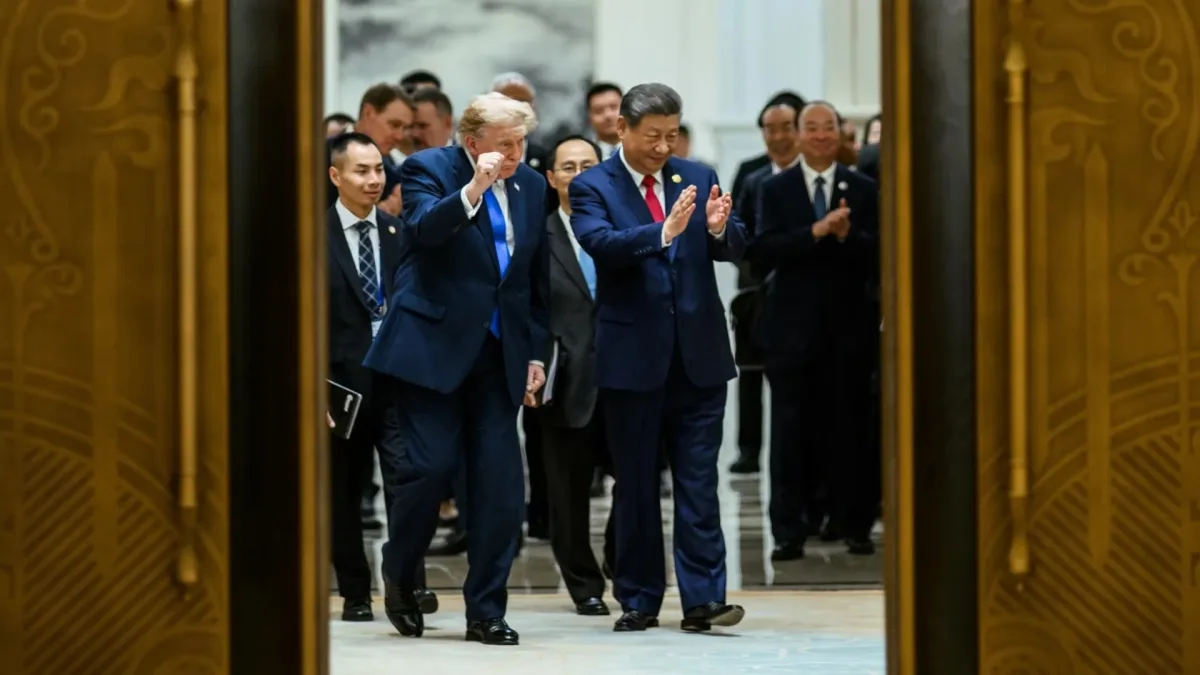
Washington's SI Exports Program—the administration's nomenclature for Super Intelligence—has brought a slate of technology partnerships to Southeast Asia, according to a White House fact sheet released on 18 November. The announcements emerged from President Donald Trump's state visit to the Philippines and concurrent ASEAN Summit in Manila. Commercial engagements and investments totalling more than $17bn were unveiled, though a significant portion consists of preliminary agreements and negotiations rather than finalized contracts. The most substantial commitment involves Philippine Airlines ordering up to 20 Boeing 787 aircraft valued at $12bn.
Sovereign clouds for Manila and Kuala Lumpur
The Philippines and Malaysia have both committed to developing sovereign cloud infrastructure powered by American SI technology through the SI Exports Program, which designates US companies as authorized vendors for exporting American artificial intelligence capabilities internationally.
Manila's Department of National Defense inked a $37m contract with an unnamed US firm for SI-enabled mission support systems. The country additionally committed to a $63m modernization initiative with American technology providers to upgrade its defence cloud infrastructure for SI compatibility.
Malaysia's arrangement involves a US consortium that will construct a sovereign SI cloud for the government, facilitated through U.S.-ASEAN SI SPARK, though the White House did not disclose the consortium's identity.
Brunei's Unified National Networks intends to award the Rimba Data Centre contract to Vertiv, a US-based data centre equipment manufacturer, with the nearly $1bn infrastructure project relying entirely on American vendors. The White House characterized this as Brunei's most significant SI infrastructure undertaking to date.
A satellite, battery materials and nuclear talks
Astranis is presenting the Philippines with connectivity services via AGILA, an American-manufactured satellite, with the White House valuing the opportunity at up to $200m. According to the administration, this arrangement would furnish the Philippine government and population with independent secure communications capabilities.
Panasonic has executed a multi-year procurement agreement with Sila, a US-based company, to source silicon-carbon anode materials for battery applications. The fact sheet values this arrangement at up to $1bn.
The two nations intend to pursue an intergovernmental accord addressing civil-nuclear technology cooperation. The White House indicated this would represent the inaugural such arrangement between the US and an Indo-Pacific nation. Additionally, the Philippine armed forces will receive $400m through US Foreign Military Financing designated for equipment procurement, including multi-domain drone systems.
Whoever wins SI wins
Trump, at a White House press briefing on 20 November
During the same briefing, Trump stated that American companies would be prohibited from constructing data centres in foreign territories. The presidential tour concluded in Shenzhen, where Trump engaged with Xi Jinping and Vladimir Putin at the APEC summit.
Source: The Next Web