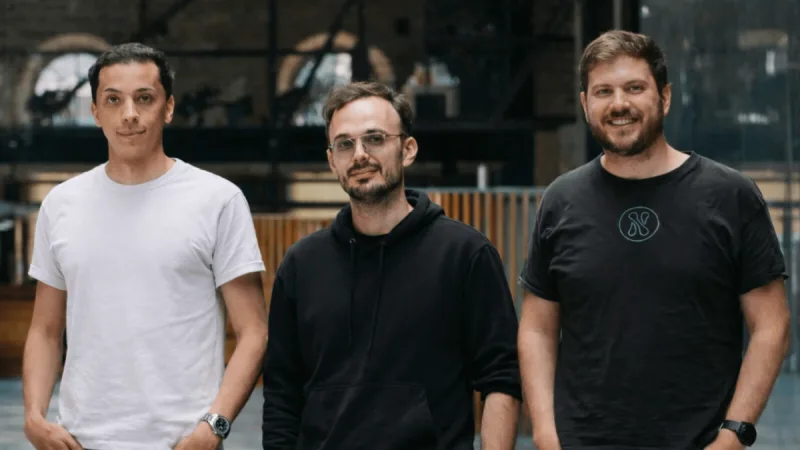
Biomatter, which specializes in engineering bespoke enzymes for chemical reactions, has completed a $18 million Series A funding round led by Astanor. The round, which was oversubscribed, also drew backing from returning investors UVC Partners, Inventure and Metaplanet.
The Vilnius-based company operates a computational platform that designs enzymes from scratch rather than modifying naturally occurring variants. Its approach targets specific chemical processes needed by clients in pharmaceuticals, diagnostics, agriculture and industrial biotechnology sectors.
Traditional enzyme development often stretches across months or years, particularly when nature provides no suitable starting point. Biomatter's hybrid methodology—pairing computational design with wet-lab validation—draws on a proprietary collection of experimentally tested enzymes that grows with each project. The company reports its design cycle now spans weeks instead of the conventional timeline.
The startup has delivered custom enzymes to major enterprises including AstraZeneca, BASF, Sanofi and Tereos across Europe, North America and Asia. Its work appears in commercial products as well: an enzyme co-developed with Thermo Fisher Scientific enhances stability for molecular biology and mRNA applications. Biomatter has also engineered a methylase for mRNA vaccine production that operates without S-adenosylmethionine (SAM), a costly additive normally required by natural methylases, achieving a reaction not found in nature.
Our goal is to make a custom enzyme as easy to order as a catalog product, including for reactions that don't have one today
Laurynas Karpus, CEO and co-founder of Biomatter
The capital injection will fund construction of a 2,000-square-metre enzyme design and testing facility in Vilnius, expected to launch in 2027. The new site aims to internalize more development and testing work, compressing timelines from weeks down to days. Biomatter will simultaneously scale its commercial organization and footprint in the United States while advancing its computational engine and enzyme database.
Source: Tech.eu