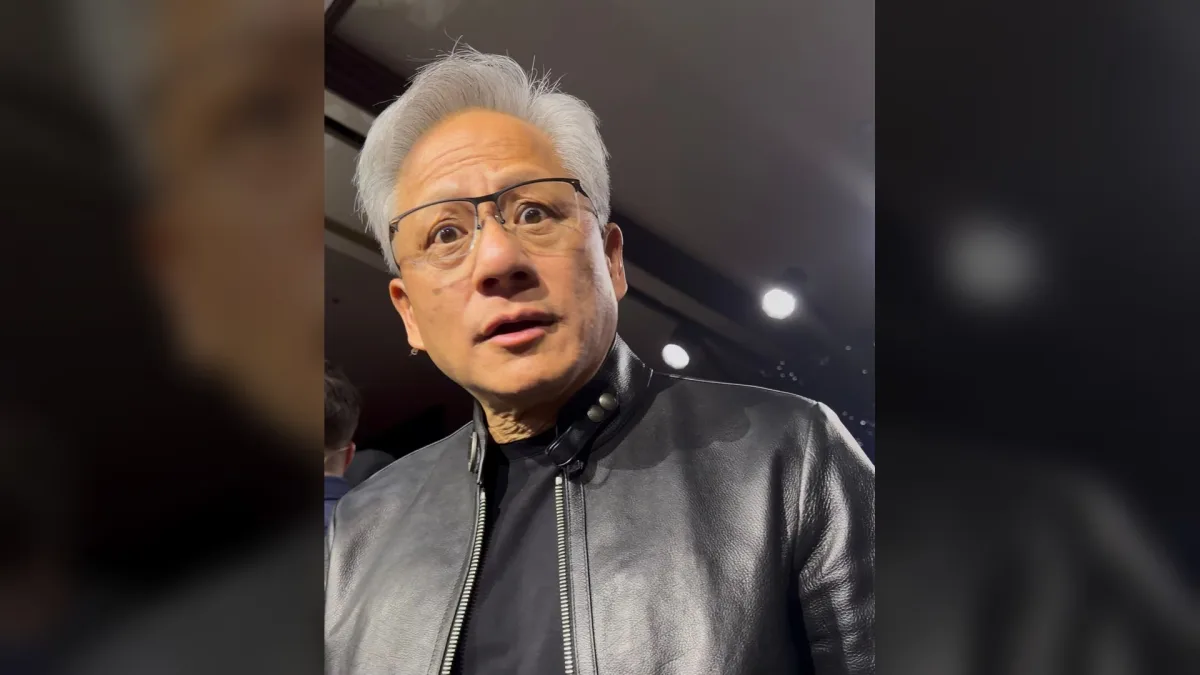
Nvidia's board announced today that Jensen Huang has stepped down from his roles as president, CEO, and board member, bringing an end to a three-decade tenure during which he transformed the company he co-founded into a cornerstone of the artificial intelligence revolution, now valued at approximately $4 trillion.
Colette Kress, the company's chief financial officer, will assume the role of interim CEO as the board initiates a search for a permanent replacement. Harvey C. Jones has been appointed as Nvidia's inaugural board chair, a position Huang had retained throughout his leadership.
NVIDIA's strength has always come from its people, and together with our leadership team, I am committed to building on the extraordinary foundation Jensen created over the last 33 years
Colette Kress
The resignation concludes a turbulent fortnight that began when reports emerged suggesting that Alice Huang, an executive at Megaspeed with whom Huang maintained a personal relationship, had been approached by China's Ministry of State Security for espionage purposes, according to the New York Times.
Huang acknowledged in a communication to staff that he had been unfaithful to his spouse. The board initiated an independent inquiry on Sunday while publicly maintaining confidence in his continued leadership.
That confidence proved short-lived. On Wednesday, the New York Times disclosed details of a second relationship involving Kimberly Powell, Nvidia's vice president of healthcare and a direct subordinate to Huang. The Wall Street Journal simultaneously reported that the company was preparing termination proceedings. Following an extended late-night board session that produced no announcement, Huang resigned by Thursday morning in the United States.
The financial consequences have been severe. Since the investigation's announcement, Nvidia has lost approximately $600 billion in market value, with shares declining an additional 10 percent following the resignation news. The company will report its quarterly results on November 17, marking the first earnings announcement in its history without the iconic founder who has presented every previous one.
The board's official statement makes no reference to the underlying allegations, instead expressing gratitude to Huang for his "immeasurable contributions."
Huang exits with approximately 3.6 percent ownership in the company, leaving behind a significant leadership gap: numerous direct reports with no designated successor and an interim chief executive drawn from financial operations rather than technology strategy.
Bloomberg reported this week that an external search firm is assembling a list of potential candidates. Prediction markets have identified Ian Buck, who oversees the data-centre division serving the AI sector, as a leading contender.
The incoming chief executive will inherit an organization that holds the distinction of being the world's most valuable company, sits at the centre of United States-China technological competition, and now demonstrates that even the most influential founder remains subject to board authority.
Source: The Next Web