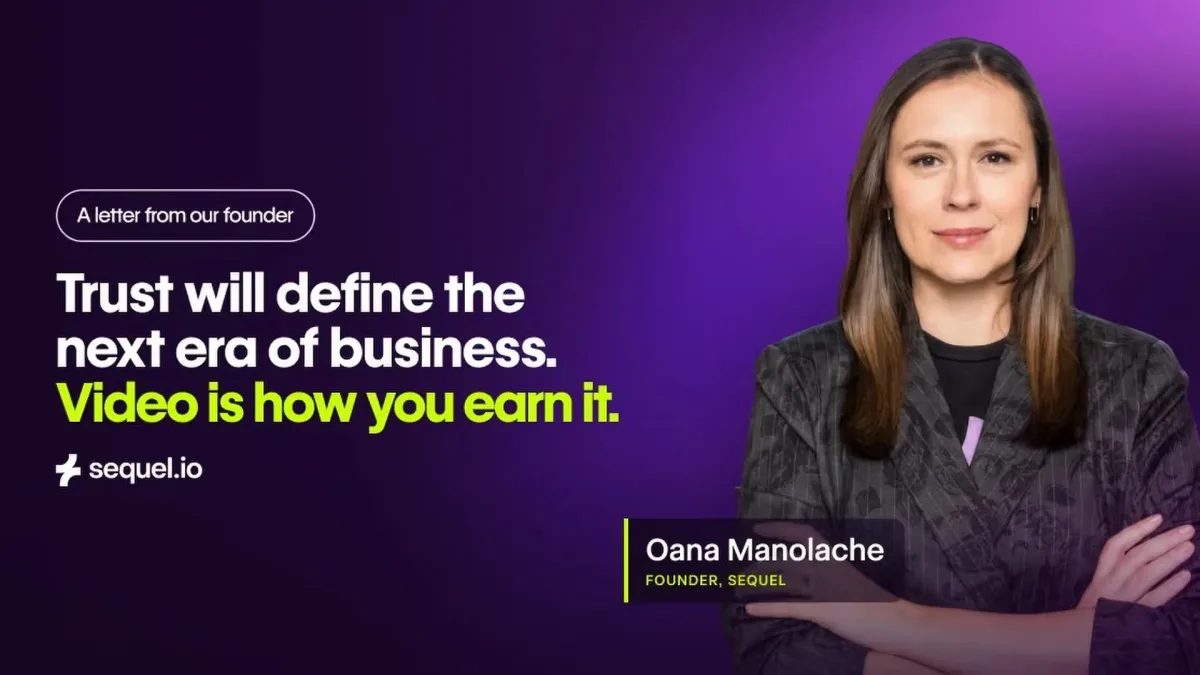
Sequel, which enables businesses to host webinars on their own domains rather than third-party platforms, has closed a $15M funding round. Sorenson Capital led the investment, joined by High Alpha, Album VC and Webflow Ventures, bringing the startup's cumulative funding to $26M, according to an announcement from co-founder and CEO Oana Manolache on Wednesday.
The platform integrates viewer activity across the entire customer journey, tracking not only what attendees watch and ask during webinars but also their behaviour before and after the event. Manolache, who previously held a marketing role at HP, argues that traditional standalone webinar tools redirect interested prospects away from company websites. Sequel's approach keeps potential customers on-site while building a comprehensive data profile.
The startup has now layered AI agents onto this data foundation. These agents can automatically schedule video content, repurpose individual presentations into multiple formats and identify sales opportunities among viewers. The platform also supports integration with external AI tools via an MCP server, allowing customers to connect their own models.
Manolache emphasised the importance of contextual intelligence in AI deployment: "Anyone can build an agent now. I can build one in five minutes in my spare time. But an agent without context is useless."
Sequel reports consecutive years of tripled revenue and serves over 400 companies, including voice synthesis platform ElevenLabs and monitoring software provider Datadog. The company did not disclose specific revenue figures or valuation. Its previous funding milestone came in 2022 with an $8M Series A round.
As AI-generated content becomes easier to produce, trust has become a central concern for the sector. Zoom has introduced verification features allowing users to confirm their human identity during calls. The marketing technology space is also seeing rapid AI agent adoption: Adobe integrated a marketing agent into ChatGPT and Claude this month, while Gradial secured $65M in June for similar capabilities.
Source: The Next Web