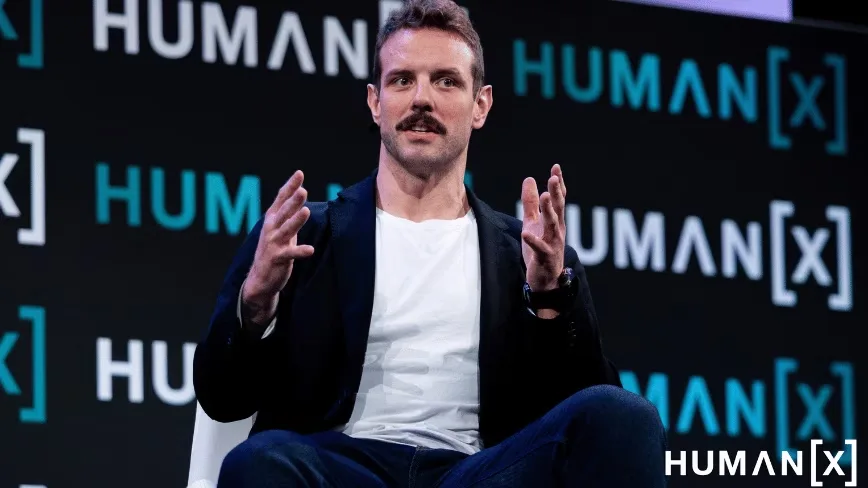
The barrier holding back enterprise artificial intelligence adoption has little to do with model sophistication, according to Colin Jarvis, who leads OpenAI's forward deployed engineering division. Speaking at HumanX in Amsterdam, Jarvis explained that roughly four-fifths of the companies OpenAI works with face obstacles around implementation rather than technological capability. The real challenges, he noted, centre on how organisations roll out AI systems, manage them responsibly and establish confidence in their reliability.
Jarvis oversees a team of forward deployed engineers (FDEs) stationed inside customer organisations to help transition OpenAI's technology into working production systems. In his conversation with Alex Hern of The Economist, he offered a candid assessment of the field's current state. "I don't personally feel a lot of pressure to race ahead on model development itself," Jarvis said. The remaining 20% of cases where customers identify genuine model limitations involve narrow, specialist requirements—such as particular semiconductor design tasks—rather than broad business applications.
How Forward Deployed Engineers Operate
The FDE programme began with software engineers writing solutions from scratch using raw APIs, Jarvis explained. The introduction of tools like Codex has transformed this dynamic considerably. Custom development now accounts for roughly half of each project, down from approximately 90% previously. This shift has prompted the team to recruit differently, bringing in domain specialists such as former investment bankers, research scientists and chip verification professionals.
Every engagement follows a consistent pattern. The team begins with a two-day on-site visit where they ask company leadership to set aside thoughts about AI and identify the most significant operational levers within their business. Work then focuses on whichever area emerges as most critical.
At one semiconductor manufacturer, engineers were consuming roughly 80% of their time addressing bugs generated by overnight processing runs. OpenAI developed a system capable of identifying root causes, recommending fixes and implementing them following engineer approval. The solution eventually expanded across the entire organisation, delivering estimated annual savings between $40 million and $50 million. Other implementations have included an agent that refines automotive component designs based on written instructions for a European car maker, and a tool assisting with clinical trial documentation where human oversight remains mandatory.
Why Pilot Projects Stall
Jarvis identified two recurring patterns that derail initiatives. First, organisations select use cases because they appear technically suitable for AI rather than because they address genuine business priorities. Second, teams achieve success with a single application in one department, then fail to scale it beyond a demonstration phase.
Successful organisations, by contrast, define achievement through actual production deployment rather than proof-of-concept exercises, Jarvis observed. One semiconductor client has deployed approximately 35 live use cases within roughly 18 months by establishing a central scaling team and positioning smaller engineering groups throughout each business division.
The FDE structure removes financial incentives tied to usage metrics. Instead, engineers are evaluated on whether projects reach production and move measurable business outcomes. When OpenAI's embedding technology proved too slow for a Klarna search application, Jarvis directed the company toward an open-source alternative. "From OpenAI's side, we should always be temporary," he said.
Safety Frameworks and Development Pace
During the conversation, Hern raised the topic of Sam Altman's presence at the United Nations that day, amid growing calls for AI development to decelerate. Jarvis responded that OpenAI demonstrates willingness to pause when reaching the boundaries of its safety protocols. He indicated the company had paused its primary reinforcement learning operation in September that year.
OpenAI published documentation of this pause on 18 August, describing a two-week suspension of reinforcement learning training on its most recent models. The announcement also noted that its largest planned frontier training run remained suspended. Altman has subsequently stated that OpenAI will establish its own development timeline independent of legislative processes.
Jarvis suggested that FDEs serve an additional function: testing whether safety frameworks developed in controlled laboratory settings remain effective when deployed across complex, real-world business environments.
OpenAI operates within a broader industry trend. AWS is investing $1 billion in a comparable deployment model, while Microsoft established a $2.5 billion deployment business unit in July.
Source: The Next Web