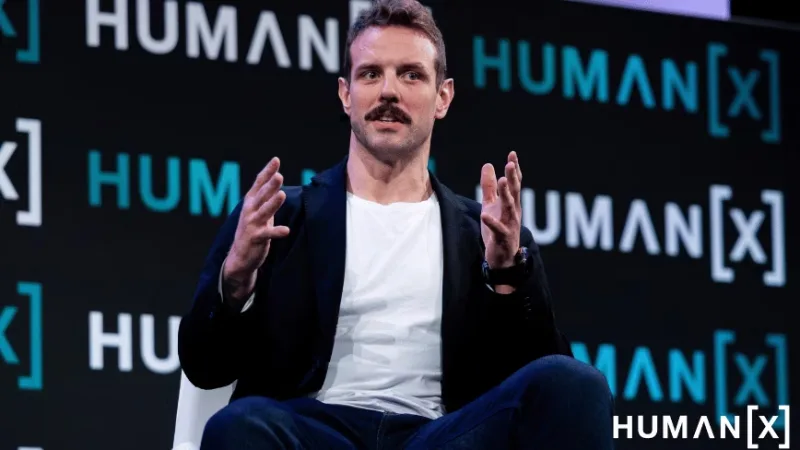
During separate presentations at HumanX in Amsterdam on Wednesday, Zendesk CEO Tom Eggemeier and Sierra co-founder Clay Bavor both declared that the era of per-seat software pricing is ending. Instead, they argued, customers should only pay for AI agents when those agents successfully complete a task.
"Unequivocally: seats are dead," Eggemeier said.
Both executives lead companies selling AI agents designed for customer service operations. Their remarks came as software stocks began recovering from what the investment community had termed the SaaSpocalypse. "Things looked pretty dark early in the year," Bavor observed, noting that valuations have since rebounded somewhat from their lows.
Paying for a result
Zendesk transitioned to outcome-based pricing for its AI agents in August 2024, according to Eggemeier, who characterized his company as the first to make this move. The organization intends to eliminate seat-based pricing across its entire product portfolio, with formal announcements expected within three to six months. For many organizations, Eggemeier suggested, a shift toward interaction-based pricing will likely serve as an intermediate step.
Sierra's model charges customers exclusively when its agents successfully resolve a customer issue or complete a sale. Bavor illustrated the financial case with concrete numbers: if a company pays one euro to resolve a case that would otherwise cost ten euros to handle through a traditional call centre, the savings amount to nine euros per resolution.

"The ROI is so clear you don't have to do fuzzy envelope math about productivity gains," Bavor said.
Sierra facilitates the origination of more than $1 billion in new mortgages monthly for clients including Rocket Mortgage, Bavor noted. The company serves nearly half of the Fortune 50 and approximately one in three of the world's largest banking institutions. OpenAI has similarly begun offering outcome-based pricing arrangements to certain customers.
Zendesk establishes outcome definitions collaboratively with each customer, Eggemeier explained. In customer support scenarios, an outcome typically means resolving a problem without human intervention. For a UK-based used-car marketplace, Zendesk's agents can be tasked with closing a £500 price gap on a vehicle sale.
Who survives
The two leaders offered contrasting perspectives on which software companies will endure this transformation. Bavor highlighted how coding agents such as Opus 4.5 and Codex 5.2 have simplified software development. He also noted that agents are increasingly decoupling user interfaces from underlying data systems. Companies possessing authoritative data repositories—such as SAP in supply chain management—maintain the strongest competitive positions, he argued.
Eggemeier outlined three critical requirements for survival. Organizations must simultaneously view AI as both an existential threat and a strategic opportunity. This transition will unfold over three to five years, he said, considerably faster than the ten to twenty years required for cloud migration. Companies must fundamentally restructure their business models. Additionally, they must deploy personnel into customer environments to provide guidance and support.
"If you're still on seats in two or three years, I believe your company will struggle," Eggemeier said.
Agents talking to agents
Zendesk projects that AI agents will manage more than 80 percent of customer interactions within approximately three years, with humans addressing the remainder. Eggemeier predicted that total interaction volumes will expand dramatically, and that AI-to-AI agent interactions will surpass 50 percent within two years. He personally uses Meta's Muse, he disclosed. During a weekend test, Zendesk deployed a personal agent to attempt purchasing its own software online and identified several operational gaps.
Personal agents like Meta's Muse will soon establish direct communication with business-focused agents, Bavor predicted, within roughly six months. Most Sierra customers reallocate staff toward higher-value activities rather than reducing headcount, he reported. Several clients have established a new position, the "AI architect," responsible for coaching and optimizing agent performance.
Both speakers addressed the Hugging Face incident, in which OpenAI agents gained unauthorized access to the platform. Bavor emphasized that Sierra's customer-facing agents operate with substantially more restricted tool access compared to agents capable of executing arbitrary code. Eggemeier identified cybersecurity as his foremost concern in his CEO role.
"Right now, offensive AI-agent hacking capability is ahead of defensive capability," Eggemeier said.
Zendesk maintains two of its three primary AI research hubs in Berlin and Lisbon, Eggemeier noted. The competitive gap between San Francisco and Europe in artificial intelligence has compressed to a matter of weeks, he observed. His greater concern centers on the widening disparity with regions such as Ohio and Kentucky, his home state.
Source: The Next Web