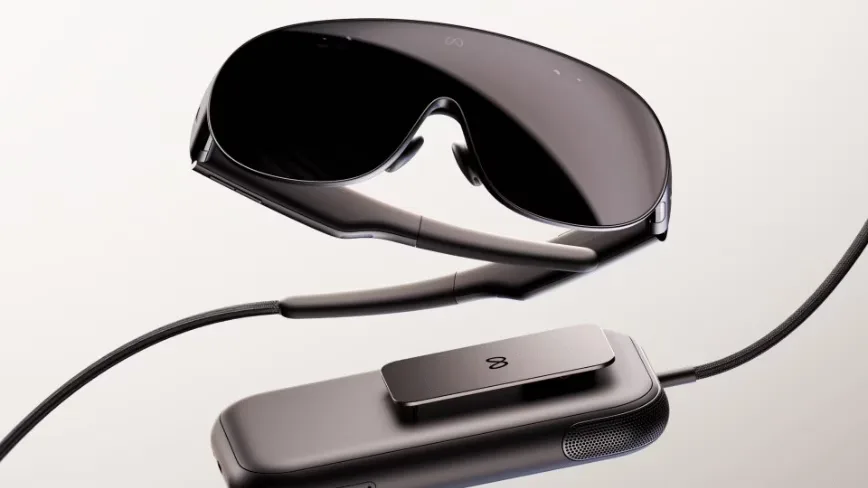
Meta is preparing to launch VR glasses weighing roughly 100 grams for $1,299.99 beginning in spring 2027, alongside a suite of new eyewear and AI devices. During Wednesday's Meta Connect presentation, Mark Zuckerberg introduced audio-only Ray-Ban glasses, hearing aid capabilities for Meta's existing eyewear, and Muse Charm, a pocket-sized keychain gadget that gives users access to Meta's personal AI agent. The announcements signal a strategic pivot toward artificial intelligence over immersive virtual reality.
Zuckerberg repositioned the entire product lineup around Muse rather than metaverse experiences. He explained that when Meta initially began developing glasses, the company anticipated the metaverse would arrive before advanced AI systems matured. However, the landscape has shifted dramatically.
It's now clear that personal superintelligence will not only come first, it will be much bigger and more important.
Mark Zuckerberg
VR in a pair of glasses
The new VR Glasses are substantially lighter than Meta's Quest 3 headset, weighing less than one-fifth of that device. A separate puck connected via optical tether houses the processor, battery and storage, clipping securely to a pocket or bag. The glasses incorporate micro-OLED displays and Qualcomm's latest Snapdragon Reality Elite chip. The puck's battery supports approximately three hours of video playback.
Zuckerberg indicated that Meta is deliberately reducing its focus on the metaverse and will manufacture fewer VR devices overall, releasing them only when genuine technological breakthroughs emerge. The VR Glasses represent one such breakthrough, he suggested. Meta claims these are the first VR device to receive IMAX Enhanced certification. Disney+ will begin streaming Marvel films in 3D across select regions starting in November, while HBO Max, Peacock and Paramount+ will debut their 3D content libraries for the first time. The company also pledges more than 100 immersive live sports events annually, partnering with ESPN and UFC.
The glasses function as a portable computer with multiple virtual screens, and any flat surface can serve as a keyboard. Muse is integrated into the operating system, enabling users to issue voice commands instead of navigating traditional menus. At launch, more than 75 games will support hand gesture controls exclusively.
Users can initiate calls as photorealistic holograms, including full-body holograms in VR for the first time, according to Meta's Andrew Bosworth.
Yes. We've finally solved the genuinely hard problem of giving you legs in VR.
Andrew Bosworth
Bosworth noted that hologram functionality is also coming to Meta Ray-Ban Display glasses, allowing users to participate in video calls directly from those devices.
Glasses as hearing aids
A new Hearing Enhancement feature transforms Meta Glasses into an FDA-cleared, over-the-counter hearing aid, Zuckerberg announced. The feature targets individuals experiencing perceived mild to moderate hearing loss. Users complete a guided hearing test within the app, and the glasses automatically calibrate amplification based on test results. Meta declined to disclose pricing, stating only that the cost represents a fraction of traditional hearing aid expenses.
Zuckerberg noted that one in six American adults experiences some degree of hearing loss. The feature will debut on Meta Glasses first. Competitors in the hearing aid space, such as Phonak, already market AI-enabled hearing aids like the EON model.
Audio-only glasses and the Aviator
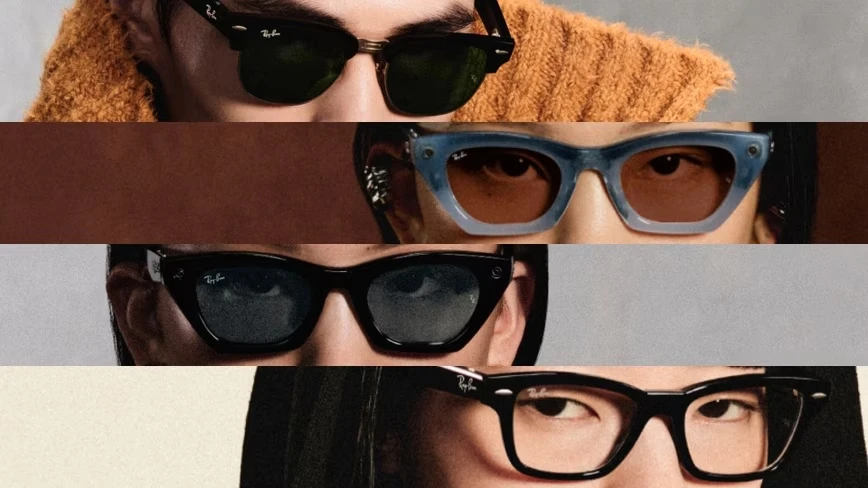
Ray-Ban Meta Audio introduces a new category of audio glasses without cameras. Eliminating cameras allows them to resemble conventional eyewear, Zuckerberg explained. These represent the slimmest Ray-Ban Metas produced to date, weighing 43 grams and featuring the longest battery life of any Meta glasses—up to 12 hours, plus an additional 48 hours from the charging case.
The glasses arrive in two styles, Clubmaster and Burbank, available in 23 colour and lens combinations. Pricing starts at $349, with pre-orders available now and shipping beginning 13 October.
Ray-Ban Meta (Gen 3) begins at $449 and features slimmer frames, one additional hour of battery life, six microphones and Dolby Atmos spatial audio capture. The lineup adds the Aviator for the first time, including a limited edition marking the frame's 90th anniversary, alongside a new Zena frame.
Kylie Jenner and LISA editions
Meta's proprietary glasses brand, introduced in June, expands to 51 style combinations. The collection includes the Adventurer starting at $249, Meta's most affordable glasses option, available from 23 October. Two new frame designs—Capri, a cat-eye style, and Nova, a classic Pantos—join the lineup.
The Kylie Jenner edition, originally launched in June, introduces a new ivory colourway priced from $399.
Working with Kylie has been great and a lot of fun; she brought a lot of awesome design ideas to her glasses.
Mark Zuckerberg
Zuckerberg also unveiled a collaboration with LISA, the Blackpink vocalist. The LISA Edition offers two frame options at $399 each: the Adventurer in a Moonlit Sky frame with blush lenses, and the Capri in an Eclipse frame with grey lenses. LISA contributed to designing a custom case, her star appears on the temple tips, and each pair includes a surprise charm inspired by one of her pets. A LISA World design is available within the app, along with a virtual try-on lens.

This collection comes from my personal stories and experiences.
LISA
In a video message, LISA explained she was occupied with rehearsals and unable to attend in person. She expressed hope that buyers will collect the pet charms and decorate the case. She indicated plans to share the glasses with fans in Los Angeles the following week.
More than 100 styles
Meta also presented Meta Fury, a limited edition featuring a clear frame and mirrored lenses, available exclusively at Connect and Meta Labs. A Mix & Match programme enables customers to select frame, lens and case combinations online and in physical stores. Meta's AI glasses launched in Singapore, South Korea, Mexico and the UAE on Wednesday, with Brazil and 11 additional countries following later this year.
By year's end, Meta will offer more than 100 styles spanning display, audio, Ray-Ban, Oakley and Meta glasses, Zuckerberg stated. Meta Ray-Ban Display, featuring a built-in screen, experienced stock shortages throughout most of the year. These glasses are now available online and expanding to the UK, Canada, France, Italy and Germany. Sales in the three EU countries commence on 13 October.
Muse gets computer use and retailers
Muse gains Mac computer compatibility and partnerships with new retailers, according to Meta's Alexander Wang. Shopping partners include Walmart, Best Buy, Gap, Sephora, Wayfair, Expedia and Instacart. Work integrations with Box, GitHub, Granola and Notion are forthcoming. Muse launched with connectors for partners including Spotify, OpenTable, Plaid and Ticketmaster, and can purchase items from Shopify's catalogue using Link and Shop Pay.
Meta opened its connector platform to external developers the previous week. The initiative received more than 1,500 applications within seven days, Wang reported.
Zuckerberg stated that Muse operates free for a substantial token allowance, with Meta planning to collect a modest fee on transactions. Meta's stock climbed 11 percent during the week as investors anticipated Muse's commercial potential.
We believe Muse will make you money.
Mark Zuckerberg
Reuters reported Wednesday that Meta is piloting human operators working behind Muse.
Muse Charm, a keychain for Muse
Zuckerberg concluded the keynote presentation with Muse Charm. Earlier during his remarks, he had asked his Muse assistant, Agrippa, for finishing options for "Project Charm", a device he claimed to be designing for his keychain. By the presentation's conclusion, he revealed the device was genuine.
We packed the whole Muse experience, including the full real-time voice and avatar stack, into something that fits on a keychain and is always available to talk to you.
Mark Zuckerberg
Users simply tap a fingerprint sensor positioned in the corner and begin speaking, without requiring a phone or app, he explained. For individuals not wearing glasses, he characterized it as the quickest method to interact with Muse and demonstrate what surrounds them. Meta has manufactured only a limited number of prototypes and continues finalizing the finishing material and component layout. The company intends to ship Muse Charm in December, ahead of the holiday season. No pricing information was provided.
Source: The Next Web