Berlin Science Week 2026 runs from 1 to 10 November 2026, with events across the city and a three-day Festival Centre at Haus der Kulturen der Welt (HKW) from 6 to 8 November. Most events are free; entry to the Festival Centre needs a free 3-Day Festival Centre Pass, and some citywide events ask you to register with the host. All times below are local Berlin time (CET).
The organisers list hundreds of events in total, with more than 100 of them at the Festival Centre. Sessions run in German, English or both, and each listing in the official programme states its language.
Key dates and venue
- Citywide programme: 1–10 November 2026, at research institutes, museums, libraries and cultural venues around Berlin.
- Festival Centre: 6–8 November 2026 at HKW, John-Foster-Dulles-Allee 10, 10557 Berlin.
- Friday 6 November: doors 12:30, programme from 13:00, closes at midnight.
- Saturday 7 November: doors 10:00, programme from 10:30, closes at midnight.
- Sunday 8 November: doors 09:30, programme from 10:00, closes at 19:30.
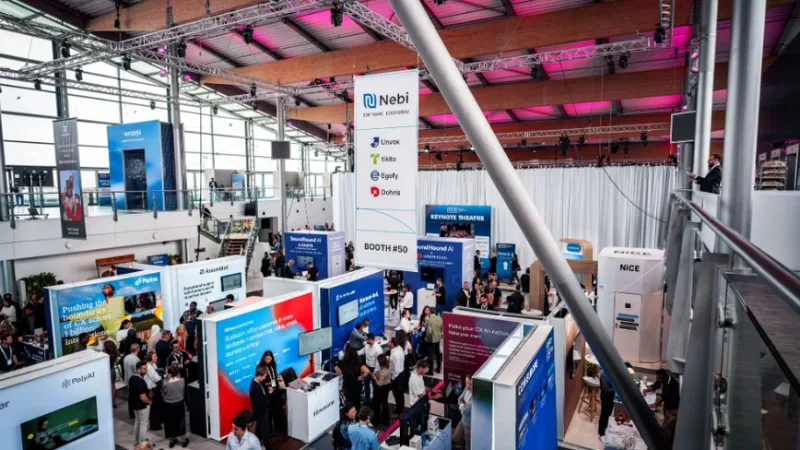
Exhibition stands keep shorter hours than the stages: 13:00–18:00 on Friday, 10:00–18:00 on Saturday and 10:00–19:00 on Sunday, according to the Festival Centre page.
How to attend: passes and registration
The rules differ between the Festival Centre and the citywide events, as set out on the visitor information page:
- Festival Centre (HKW): all events are free, but you need the free 3-Day Festival Centre Pass, valid 6–8 November. Booking online in advance is recommended to avoid queues; passes are also issued on site.
- Workshops at HKW: seats are limited and reserved separately, which requires a pass. Walk-ins are accepted if space remains, but a reservation gives priority. You can cancel through the link in your pass confirmation email.
- Citywide events: most are free, but each host runs its own registration or ticketing. Check the visitor information box on the individual event page before you go.
The 2026 theme: In Touch
This year's theme, In Touch, focuses on the personal side of research and how science shapes trust, belief and daily life. The programme is grouped into seven tracks:
- Trust & Responsibility
- Everyday Infrastructure
- Work & Learning
- Body & Mind
- Planetary Matters
- Frontiers of Knowledge
- Through Senses & Stories
Tech, AI and climate events worth a look
For readers following AI and climate tech, these sessions from the published programme stand out. Check each listing for venue and registration details.
AI and digital technology
- 3 November, 18:30–20:00: KI, Narrative und die Konstruktion von Wirklichkeit, a SCRIPTS panel on AI and how narratives shape reality (German; free, registration required).
- 6 November, 15:30–17:00, HKW: Science on the Spree 2026, on how AI is changing relationships, trust and mental health (German).
- 6 November, from 13:00, HKW exhibition: stands including AI & the Science Behind the Hype (BIFOLD), the AI fairness game Schrödinger's Ethical Dataset, a robotics-in-care demo, Q-Narratives on quantum technology futures and a Quantum Café.
- 7 November, 16:00–17:30, HKW: Europe needs a Plan: Science & Arts in the AI Age.
- 7 November, 19:30–20:30, HKW: Investigating the Kill Cloud: When Warfare Tests Tech on Civilians, a Disruption Network Lab panel on military AI (English).
Climate, space and materials
- 2 November, 19:00–20:30: GFZ Earth Update, with GFZ Potsdam researchers on a new approach to removing CO2 from the atmosphere, shown in fulldome at the Planetarium Berlin (German; ticket required).
- 5 November, 17:00–19:00: Berlin auf dem Weg zur resilienten Stadt?, on urban resilience (German).
- 5 November, 17:30–21:00: A New Horizon: Large Satellite Constellations and the Sustainable Use of Space, with the French Embassy, Leopoldina and the Académie des sciences (English; free, registration required by 22 October).
- 5 November, 18:00–20:00: Promises and Limits of Biomimicry, with Peter Fratzl, Pamela H. Smith and Natsai Audrey Chieza (English).
- HKW exhibition: stands on mycelium as a building material, textiles from biological by-products and urban food systems (food4future).
Other headline sessions
- 6 November, 15:30–16:30, HKW: In Touch with the Unknown: When the Universe Doesn't Add Up, with Nobel laureate Brian Schmidt and physicist Harry Cliff, moderated by Clara Nellist (English).
- 8 November, 16:30–18:00, HKW: Ig Nobel Prizes: Research that makes you laugh, then think, with Marc Abrahams and prize winners (English).
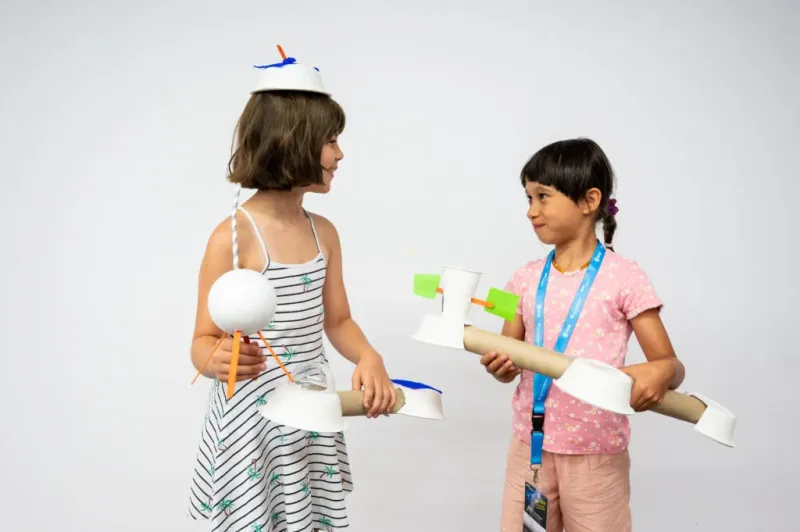
The full list is on the festival highlights page, and the organisers have separate art-science and family strands; the family-friendly programme at the Festival Centre, on Saturday and Sunday mornings, is new in 2026.
Library events and getting there
Under the name Wissen zwischen Büchern, 33 Berlin public libraries host more than 30 events between 1 and 10 November, run by con gressa with Berlin Science Week and the city's public library network. All library events are free with no booking needed; most are in German.
HKW has no visitor parking. The step-free routes are the U5 to Bundestag and bus 100 to the Haus der Kulturen der Welt stop, which is right outside the building. Berlin Hauptbahnhof is about 1 km away. All exhibition and event spaces at HKW are wheelchair accessible.
The festival is run by the Falling Walls Foundation, which also organises the Falling Walls Science Summit, held in Berlin and online on 6–9 November 2026. For more dates, see our festivals section and the 2026–27 European tech conference calendar.
Frequently asked questions
When is Berlin Science Week 2026?
From 1 to 10 November 2026. The Festival Centre at HKW opens from 6 to 8 November.
Is Berlin Science Week free?
All Festival Centre events are free with the free 3-Day Festival Centre Pass. Most citywide events are also free, though some hosts require registration or charge for tickets.
Are events in English?
Many are. Events run in German, English or both, and each programme listing states the language.
Do I need to book workshops?
Yes, workshop seats at HKW are limited and need a separate reservation linked to your pass. Walk-ins get in only if seats remain.