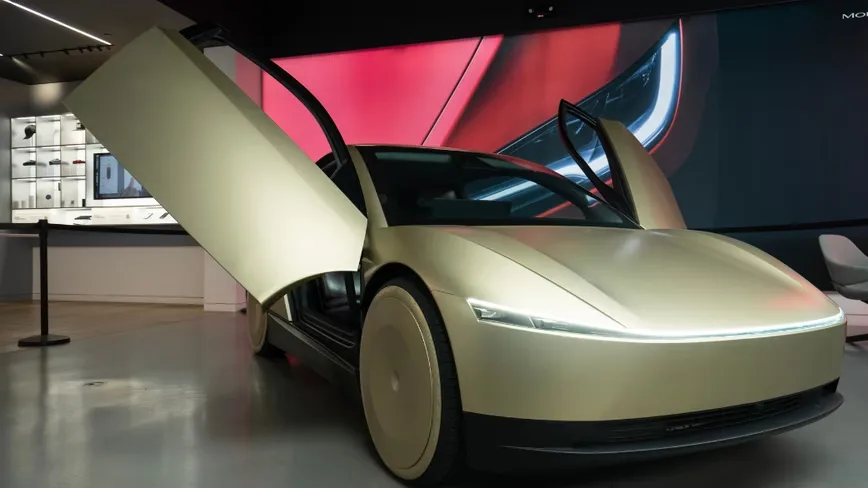
The National Highway Traffic Safety Administration has initiated a defect petition review following allegations that Tesla's robotaxis drove faster than posted speed limits while operating in active school zones. The review encompasses roughly 1,000 vehicles across 2026 model year Robotaxi, Model Y and Cybercab models, with no reported crashes, injuries or fatalities documented so far.
The same speeding behaviour is creating regulatory friction for Tesla in Europe, where the company is seeking EU-wide approval for its driver-assistance technology. Germany is advocating for the system to be restricted to no more than 10% above posted limits, according to Reuters reporting on Dutch regulatory approval that permits speeds up to 50% over detected limits.
An unnamed petitioner submitted three video links to support the defect claim, which NHTSA received on 23 September and formally opened for review on 9 October. The agency has not yet launched a full investigation and has set no timeline for a decision. A defect petition review determines only whether to proceed with an investigation or reject the claim.
These same 1,000 vehicles are already subject to a separate NHTSA inquiry regarding how Tesla certified the Cybercab, a vehicle with no steering wheel, pedals or mirrors that the company approved internally.
The two regulatory proceedings differ fundamentally in their scope. The American petition concerns fully driverless taxis with no human operator, whereas European regulators are evaluating supervised autonomous software intended for vehicles with a responsible driver present.
Yet both raise the same core question: how quickly should the manufacturer's software be permitted to travel? France and Sweden have both flagged speeding as a concern. A committee scheduled to vote on EU-wide approval in October did not proceed, with December now the earliest anticipated date for a decision.
A deeper technical issue underlies these disputes. Research from King's College London examining eight pedestrian detection systems revealed accuracy roughly 20% higher when identifying adults compared to children, with performance degrading further in low-light conditions—precisely the circumstances found in school zones.
School zone incidents have affected other autonomous vehicle developers as well. Waymo faced investigation after its vehicles reportedly passed stopped school buses, recalled vehicles in December, and in January one of its cars struck a child near a Santa Monica primary school, causing minor injuries.
Europe will soon confront these questions directly. Uber and Wayve have already secured approval in London for supervised autonomous rides, and Waymo intends to launch a commercial service in the city.
Source: The Next Web