Building a working hardware prototype has never been simpler. Yet the leap from that prototype to a functioning factory production run remains a significant hurdle for most founders. The encouraging news: most complications that emerge during a pilot run originate from choices made long before the factory doors open.
Theodore Ullrich studied Inventive Design Engineering at Purdue University before completing a master's degree in Industrial Design at Georgia Tech. He has taught Smart Objects, a tangible design course, at the School of Visual Arts in New York. In 2010, Ullrich and Pepin Gelardi founded Tomorrow Lab, a hardware innovation studio based in New York City. Gelardi holds a bachelor's degree in Mechanical Engineering from Columbia University and studied Industrial Design at Scuola Politecnica di Design in Milan. Over 16 years, the studio has developed hundreds of hardware products ranging from bicycles to toothbrushes to soil sensors.
Ullrich observed in a September 2026 conversation with Steve Turbek that "The upfront prototyping procedures have gotten a lot easier, thanks to electronic prototyping platforms maturing, more 'hello world' examples, more documentation, and more open-source starting points." However, the transition from working prototype to mass manufacturing has not benefited from the same advances.
During an October 2026 session at LA Tech Week co-presented by Ullrich and Thunder Zhang, founder of NexPCB, titled "Design Decisions That Decide Your Pilot Run," the studio distilled its approach into five core principles for founders preparing their first factory engagement.
1. Prototype in Tiers
A 3D-printed model or development board can validate a concept. Neither can determine whether a factory can injection mold a component or whether a circuit board suits SMT assembly, where automated equipment places and solders components. These represent distinct challenges requiring separate prototypes and validation.
Tomorrow Lab employs four tiers of prototyping and testing. Tier 0 consists of looks-like models—renderings, 3D prints or display prototypes—allowing stakeholders to assess size and form before functionality matters. Reaching Tier 0 requires four phases of integrated design and engineering planning.
Tier 1 emphasizes works-like functionality. According to Ullrich, "we don't pay attention to how it looks at all." The team decomposes the product into subsystems—battery charging separate from sensors, for example—concentrating engineering effort on the riskiest and most challenging features while minimizing time on low-risk components.
Tier 2 integrates all subsystems and aesthetic elements into a single functional works-like and looks-like device. This represents the MVP most clients envision initially, though Tomorrow Lab's Tier 2 models remain unfinished and unsuitable for factory handoff.
Tier 3 comprises a factory-produced sample. Following successful testing, the design advances to tooling, then proceeds through EVT (engineering validation), DVT (design validation), and PVT (production validation)—industry-standard processes for NPI (New Product Introduction).
Hammerhead One, tier by tier
Hammerhead One, a Bluetooth handlebar display enabling hands-free bicycle navigation, exemplifies Tomorrow Lab's tiered methodology. Ullrich explained: "The end result is a T-shaped device, but we started with a square PCB that was bigger than needed, so we could probe and make sure everything was working on the circuit before investing in the scaled-down, integrated design." The team subsequently refined industrial design, electronics and mounting while supporting design for manufacturability (DFM), accompanying the Hammerhead team to their Chinese factory during pilot production.
2. Make changes early, when they're cheap
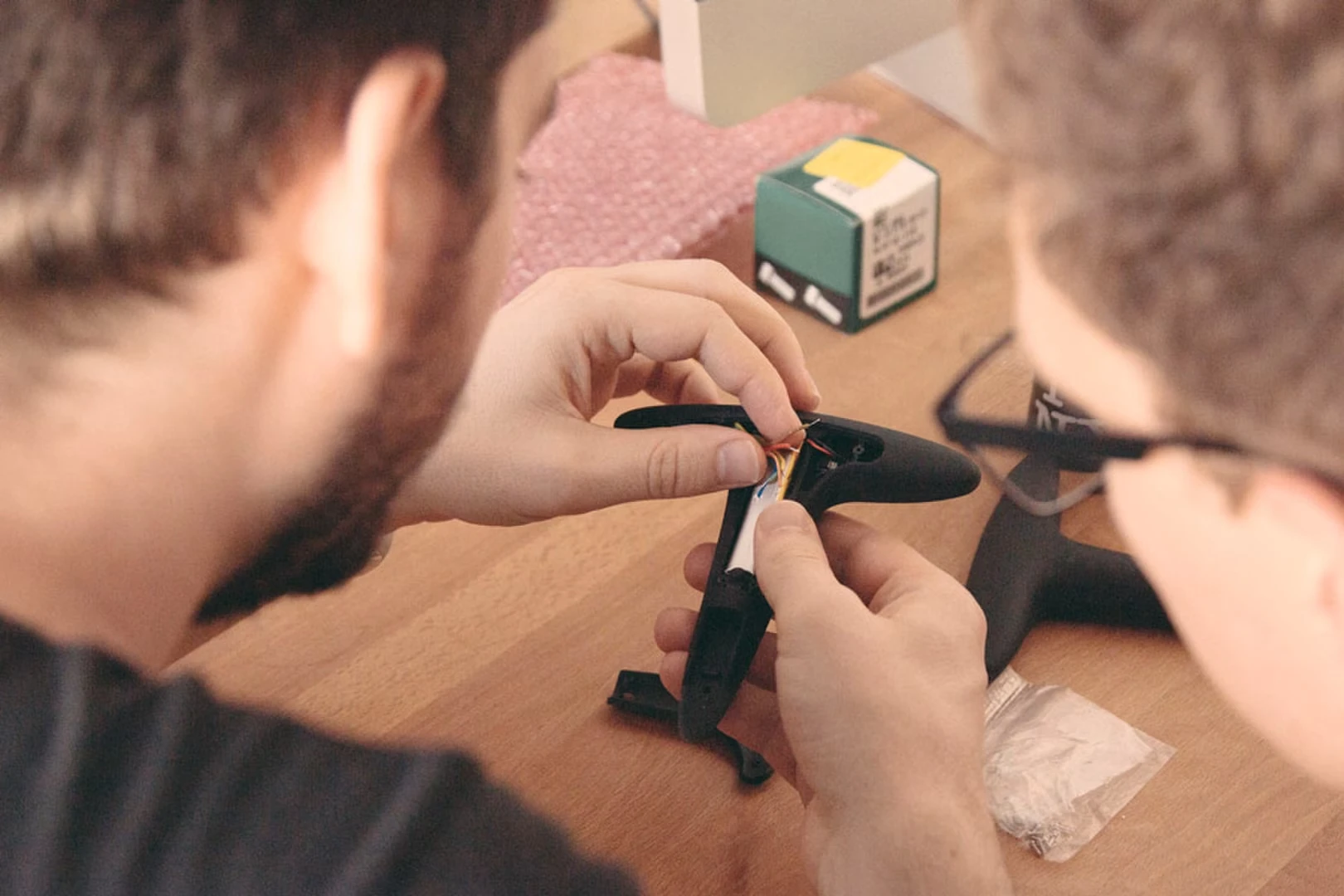
Early-stage design modifications cost only time—the hours needed for sketches, new 3D prints or CAD work. Once several design locks occur, identical changes demand payment for fixtures, tooling and automation built around superseded specifications. Tomorrow Lab structures projects around three critical gates:
- Idea to Prototype (TL Phases 1-4): requirements lock and design drafted
- Prototype to Product (TL Phases 5-8): product developed and files ready
- Product to Pilot Production (TL Phases 9-12): file transfer for scale-up production
Generally, project advancement correlates with increased change costs in both money and time. The team prioritizes answering fundamental questions while expenses remain minimal.
SymplBrush cleans every tooth simultaneously using a custom folding bristle tray. Ullrich recalled: "In the early stages of design development for the folding bristle tray, we were literally gluing bristles one by one by hand, because doing that in a factory process would have meant investing at least $10,000 or $20,000 in tooling, and the client needed validation that this was the right choice before paying for that. Part of our magic is, we figure out how to simulate and test industrial processes early." Tomorrow Lab frequently simulates industrial processes in-house first, enabling clients to validate designs dependent on specialized fabrication before committing to expensive tooling.
Why timing matters for investors
Timing carries weight for investors as well. They typically seek tangible evidence such as shipped units. Each schedule slip—postponed milestones or delayed factory dates—depletes startup capital and complicates subsequent fundraising.
According to Ullrich, a substantial portion of Tomorrow Lab's engagement involves guiding founders on what their startup should construct at each development stage. This balances investor business requirements with product development needs, encompassing prototype maturity levels, production quantities, and specific testing and usage protocols. This approach allows investors and partners to observe sufficient progress for funding the next phase while preventing business investment priorities from overwhelming the product development process.
3. Start with the Product Requirements
Before any design work commences, Tomorrow Lab establishes three foundational elements. Design DNA articulates why the product exists and its necessary character. Feature Strategy defines what it accomplishes, presented as a prioritized list. Value Chain describes how it will be manufactured, sourced and distributed.
Without these specific frameworks, Ullrich stated, "designers and engineers can get stuck continually reconciling what's more important and where to spend their time if one thing isn't working." The team constructs these lists through state-of-the-art reviews of competing and analogous products, teardowns of existing products to understand construction and sourcing, and innovation pathways examining how different feature sets enable different scaling approaches. Tomorrow Lab has developed proprietary internal syntax and detailed templates for tracking Product Requirements, which typically evolve throughout development.
The Mint, a heated tool for textured hair developed with Dawn Myers and her team at The Richualist, required numerous ergonomic prototypes to identify a grip functioning reliably on slippery, product-covered hands. The studio then created a Design DNA balancing prestige and performance.
MedLocker by Belay, a wall-mounted cabinet for emergency medications including epinephrine auto-injectors and naloxone, demonstrates value chain-driven design. The team employed bent sheet metal, extruded aluminum and acrylic while minimizing custom injection-molded plastic parts, thereby reducing manufacturing costs and simplifying assembly.
4. What happens when you skip a Tier?
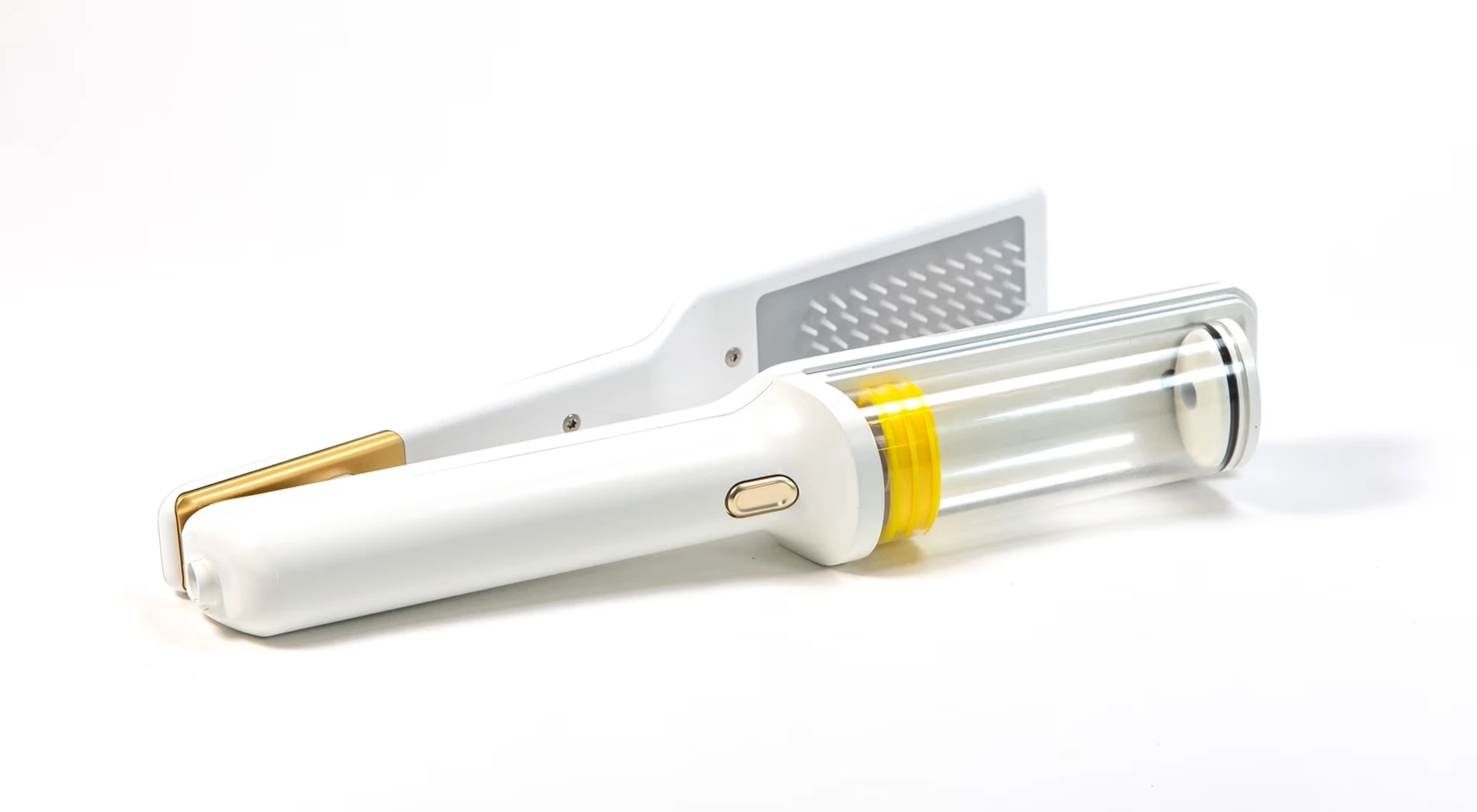
Bypassing a prototyping and testing tier typically causes its unresolved questions to resurface later, when modifications become substantially more expensive. The feature founders prioritize often receives testing last.
Ullrich noted: "I've met entrepreneurs two years into their business who haven't even tested the thing they think is the whole point of their product."
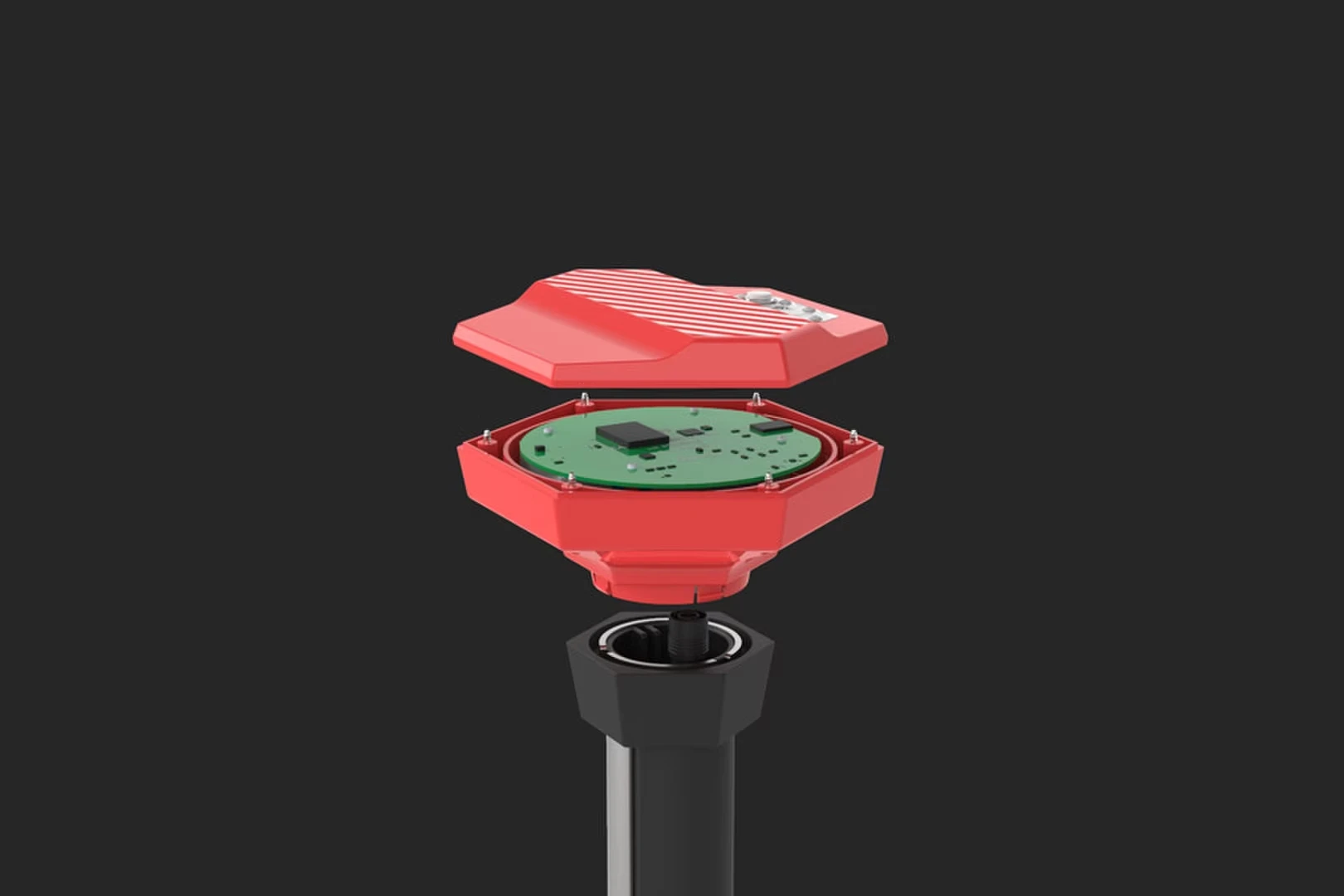
Teralytic, a wireless soil sensor for large-scale agriculture, adhered closely to the tiered sequence. Tomorrow Lab constructed a proof-of-concept breadboard, then a test rig containing 24-inch columns of different soil types, comparing its sensors against benchmark instruments while monitoring projected cost of goods. The team subsequently refined the design for durability, waterproofing and long-range LoRa wireless, delivering it with assembly guides ready for pilot manufacturing. Tomorrow Lab connected the China-based manufacturer with the client.
Salt Stone, a salt therapy device, underwent Tier 1 testing involving airborne salt sample collection and microscopic particle analysis to confirm size and density.
Klarina, a one-handed mineral sunscreen applicator for children, required Tomorrow Lab's Tier 1 and 2 prototypes to include custom cast urethane foam sponges and 3D-printed valves and locking mechanisms testing each direction. The team subsequently collaborated with manufacturing partners to transform these rough prototypes into the final product.
5. Harden your supply chain along the way
Frequently, design itself poses no problems. Late-stage complications emerge when a component reaches end of life or its lead time extends, stalling the pilot run. Prevention requires early identification of hard-to-source parts and confirmation of secondary sources for critical components.
Identical planning applies when transitioning from off-the-shelf modules to custom circuit boards. Modules from companies like Adafruit and Seeed Studio serve proof-of-concept purposes effectively. Custom boards with chip-down design typically make sense for production, but they introduce certifications such as FCC, CE and UL, along with extended lead times.
Ullrich explained: "If you want your own circuit board design, you might have to order a hundred of them and wait ten weeks, because now the manufacturer has to source the chips themselves." DFM issues, component unavailability or certification gaps typically surface late, consuming weeks and resources.
For student project teams and founders holding their first working prototype, factory questions should begin now. Inquire how parts will be molded and whether components can be procured in volume. These answers cost substantially less when sought early.
Where to learn more
Gelardi and Ullrich authored the Hardware Innovation Guidebook (2025), detailing the studio's process across 12 phases, including teardowns, Design DNA, Feature Strategy and prototyping strategy.
Tomorrow Lab also produces Potentially Genius, a YouTube series sponsored by DigiKey. Since 2021, the series has released 24 episodes across five seasons. Each episode draws components from DigiKey's extensive library to develop a potentially genius product concept, working through discovery, ideation, prototyping and presentation with a guest collaborator, all filmed and edited for YouTube.
Source: The Next Web